 Loading...
Mont-Saint-Michel, France
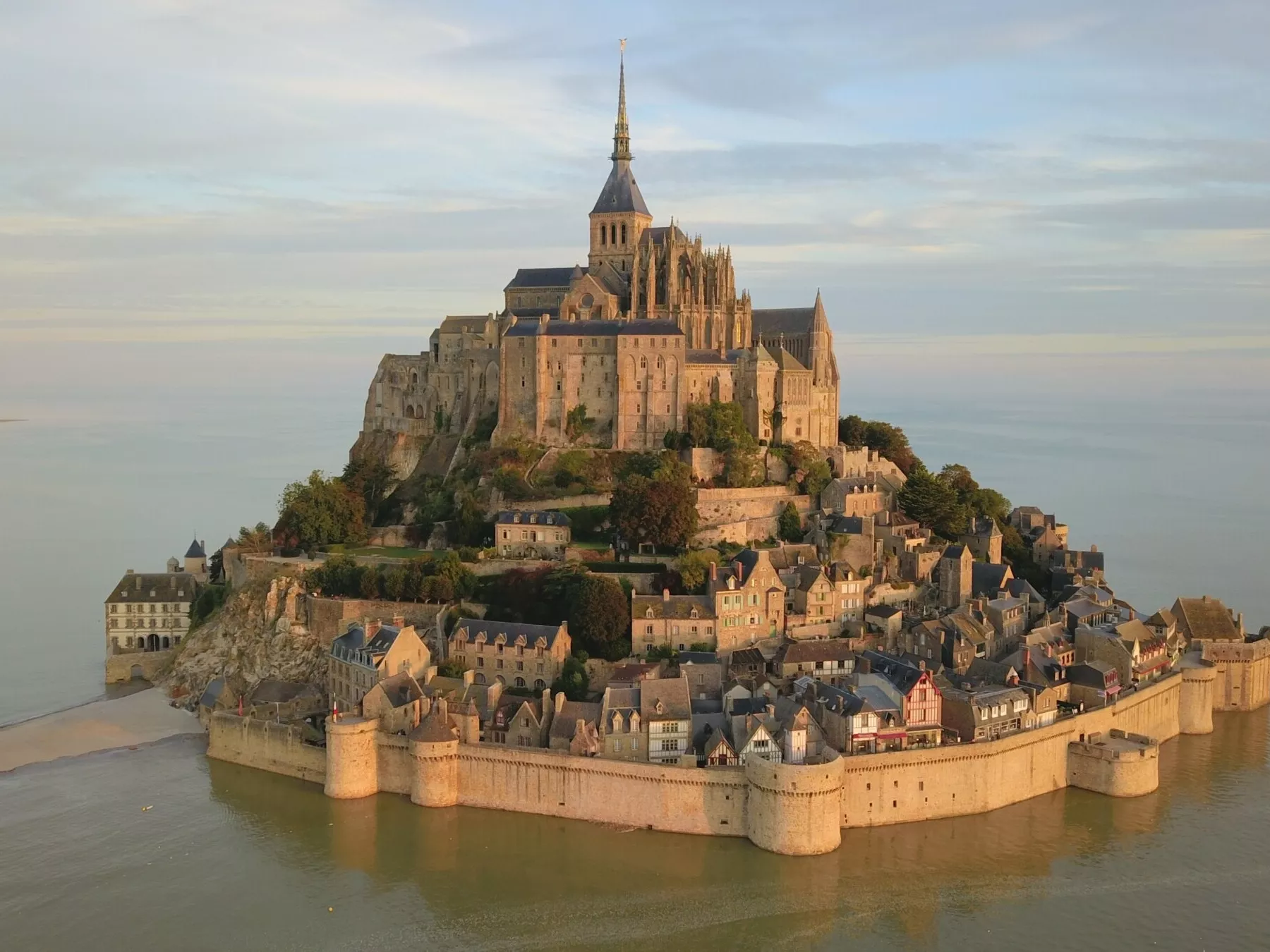
The city is a mirage between sea and sky, which UNESCO has classified as a World Heritage Site. You can’t even tell for sure if it’s an island or not: the rock with the abbey is either connected to the mainland or separated from it depending on the tide.
According to legend, the local bishop of Aubero received two dreams from the archangel Michael and ordered him to build a sanctuary on the rock. On the third time, the archangel explained in a more accessible way and burned a hole in Aubert’s head – in fact, that is why the place is called literally “St. Michael’s Mountain”. Today it is the most visited place in France after Paris. Everything here is so surreal that Peter Jackson himself took the city as a basis for designing Minas Tirith in the movie adaptation of The Lord of the Rings.
The main reason to come: the Abbaye du Mont-Saint-Michel, an architectural puzzle of the ages. At the top is a church with Gothic vaults and a cloister (courtyard), one of the most beautiful in France: a colonnade open to the sky and the sea. Inside is the refectory, where the light falls strictly from one side, creating an almost theatrical effect, and the hall of knights.
Monsanto, Portugal
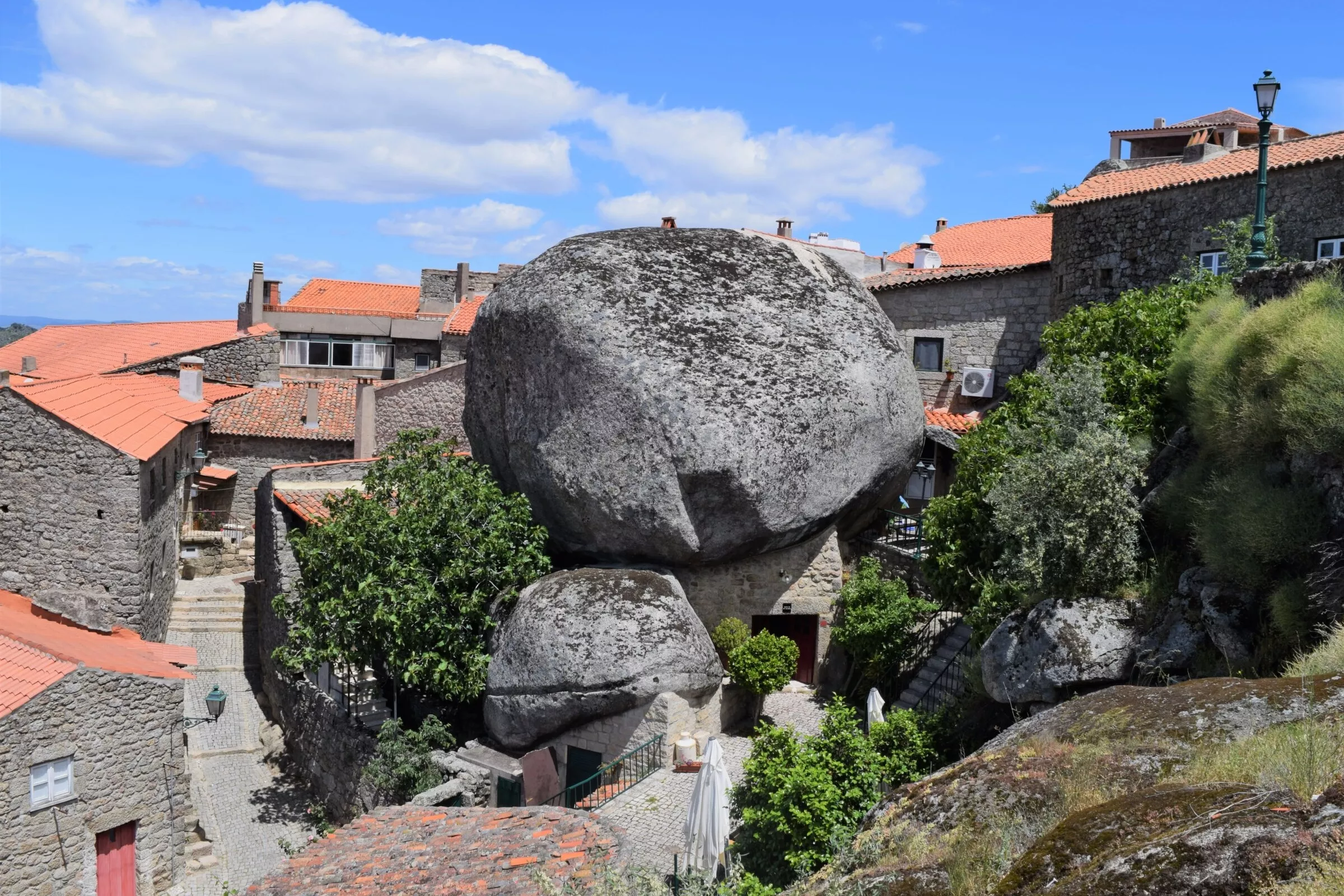
Not even a town, but a village three hundred kilometers from Lisbon. A place out of science fiction: typical Portuguese friendly houses are literally squeezed between or even under giant, gloomy boulders, as if nature and architecture had agreed not to interfere with each other. Despite its quaintness, in 1938 Monsanto was awarded the status of “Portugal’s most Portuguese village” and was honored with a trophy – a silver rooster still adorns the Torre de Lucano tower.
This is where the Portuguese serve their specialty, cod, which they love so much that they have even nicknamed it fiel amigo (faithful friend). To be 100 percent ready for the train, you can read Fernando Namor’s novel Tales from a Doctor’s Life on the plane – the Nobel Prize nominee lived and drew his stories from Monsanto.
The main reason to come: Castelo de Monsanto is the ruins of a Templar fortress. It was built on Roman fortifications and given to the Templars in 1165. In 1815 the gunpowder stored in the fortress exploded and so it turned into ruins. It’s also where the TV series “House of the Dragon”, a prequel to the legendary “Game of Thrones”, was filmed.
Flom, Norway
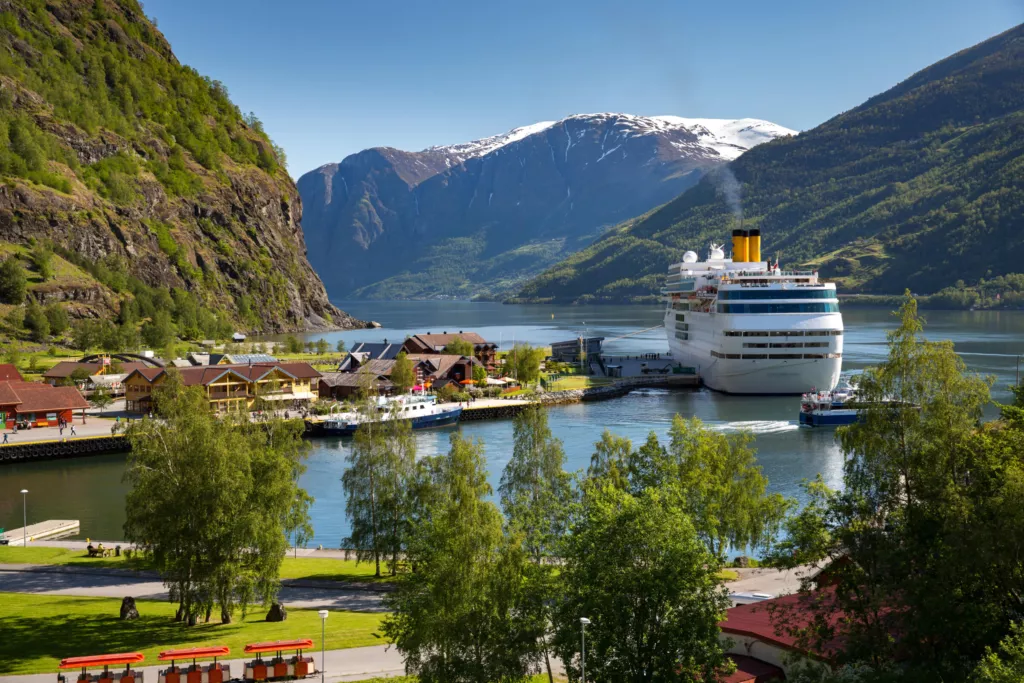
All of Norway in miniature: fjord, waterfalls, mountains and absolute silence, which is interrupted only by the sound of a train going up one of the most railroaded roads in the world. But, of course, Flom gives more than just a postcard feeling – for an active vacation there are fjord cruises and kayaks. It’s also a paradise for bike enthusiasts, who can easily rent bicycles right at the station.
650 meters above the fjord is the Stegastein observation deck, and nearby is the Aurlandsdalen Valley, a narrow arm of the Sogne Fjord with mirror-like water and sheer cliffs. And of course, on the way back from Flom, you can’t miss the Kjosfossen waterfall, which has a total height of 225 meters. It is best visited in spring and early summer. The local delicacy is brunust, a brown goat cheese. It doesn’t sound like much, but it actually has a caramel and creamy flavor that pairs perfectly with waffles.
The main reason to come: the Flom Railway, a ride on which looks like a diafilm. It’s an engineering marvel in Norway: in just an hour, the fjords outside the window are replaced by highlands, waterfalls and sheer cliff faces. In one of the tunnels the train turns 180 degrees inside the mountain – hold on tight!
Burano, Italy
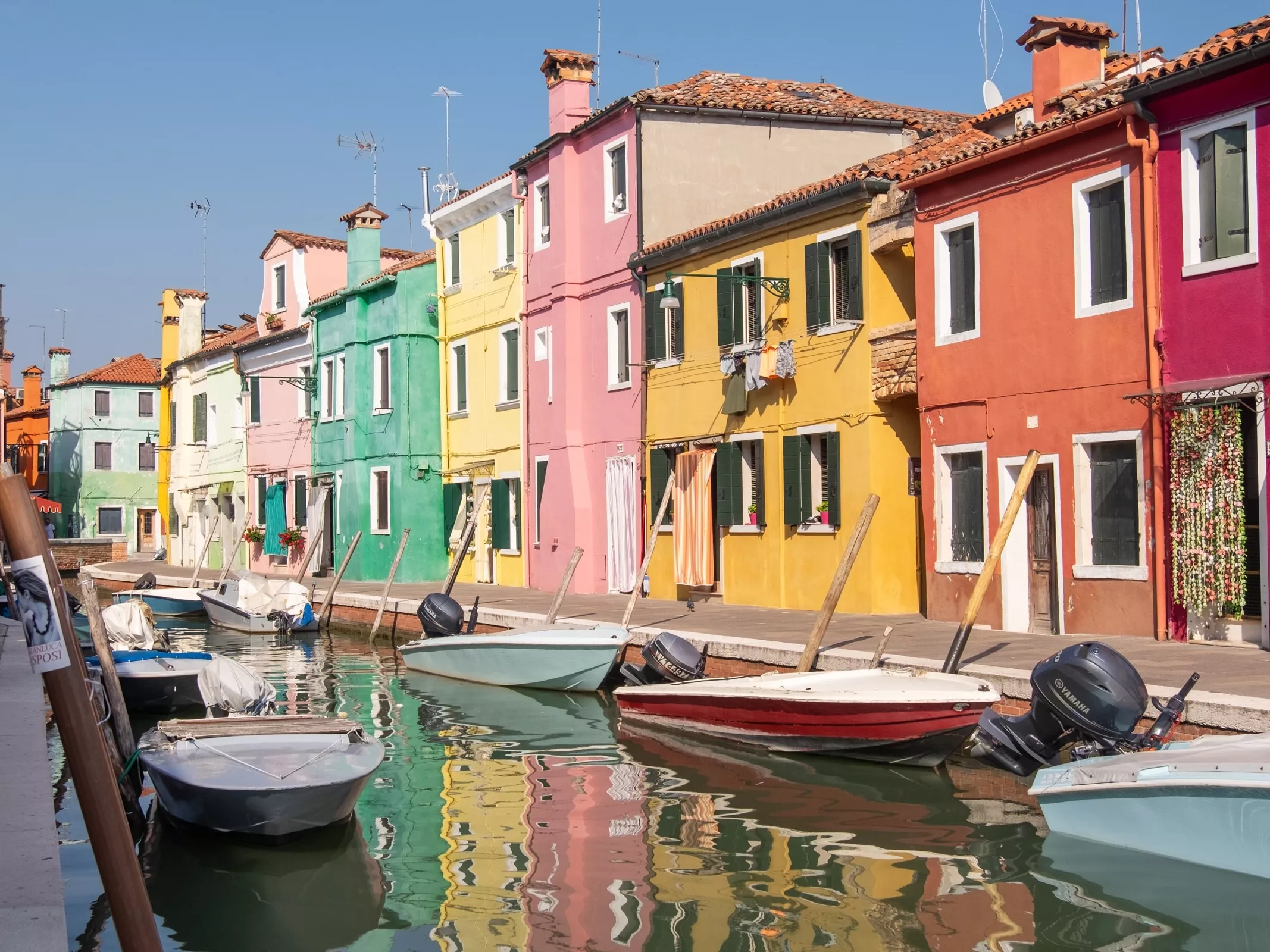
A suburb of Venice built around playing with color – so much so that it becomes architecture itself. The houses are painted in rich, almost unreal shades, from lemon to fuchsia. Originally it was practical (fishermen used it to find their houses in the fog), but today it is enshrined in law: if you want to repaint the facade, you have to get permission and choose a color from the approved palette.
Burano is a kind of little Venice for connoisseurs: it’s quieter and slower, with the same small bridges and canals. The town is also famous for its lace (definitely worth at least a visit to the local Museo del Merletto). There is even a legend: allegedly once a young fisherman was tried to seduce a mermaid – but unsuccessfully, he was engaged. The siren, admiring his resilience, gave him a wedding lace made of sea foam, which is how Burano’s craft came into being.
The main reason to come: to get a boost of color therapy and taste fish at trattoria Al Gatto Nero, the best restaurant in the world according to Jamie Oliver.
Arucas (Gran Canaria, Spain)
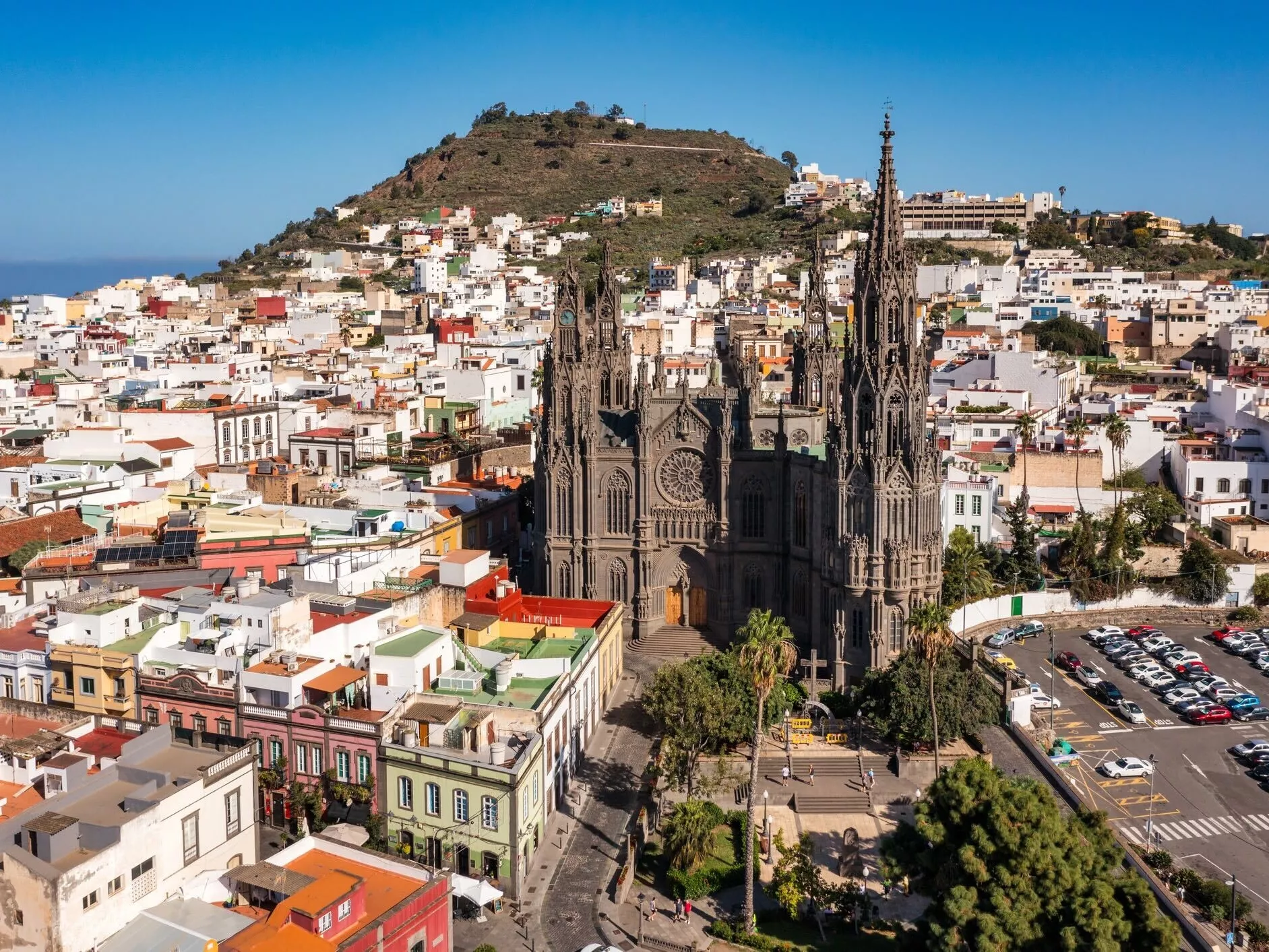
Not exactly the Canary Islands as they are usually imagined – more like a version of Count Dracula. The landscape is amazing, with palm trees next to black stone buildings, which have been abundant since the volcanic eruptions that created the Arucas Valley. There are banana plantations and the stunning palm grove of Barranco de los Palmitos all around.
The famous Arehucas rum has been produced here since the 19th century. You can visit the factory after a walk through the neat streets of the old center. Many celebrities have their own pre-approved rum casks here – for example, Julio Iglesias’ cask. And, of course, you can’t forget that this is still the Canaries: it has its own festivals and raucous parties.
The main reason to come: the neo-Gothic cathedral Iglesia de San Juan Bautista – it looks like the European Middle Ages happened in the subtropics. Inside, in addition to unique stained glass windows, there is the famous work “The Crucified Christ” by sculptor Manuel Ramos.