 Loading...
This piece is part of a larger magazine project, Cities and People (ZIMA. WORLD), which this year promises to turn into a book of a generation – a generation of people searching for themselves in different countries. It’s a story about the process of fitting into a foreign culture, a foreign life – and how, over time, they become their own. It’s about how one gets the feeling: this is my city.
Turks are a passionate people. In fact, they have two passions: love and hate. There are no indifferent people here; they are completely devoid of the northern European indifference. Maybe that’s why they love to marry women of Slavic origin. I’ve often asked them, “Why?” And I have heard more or less the same perplexed answer: “Why? They are beautiful!”. Light skin and blue eyes… What else do you need?
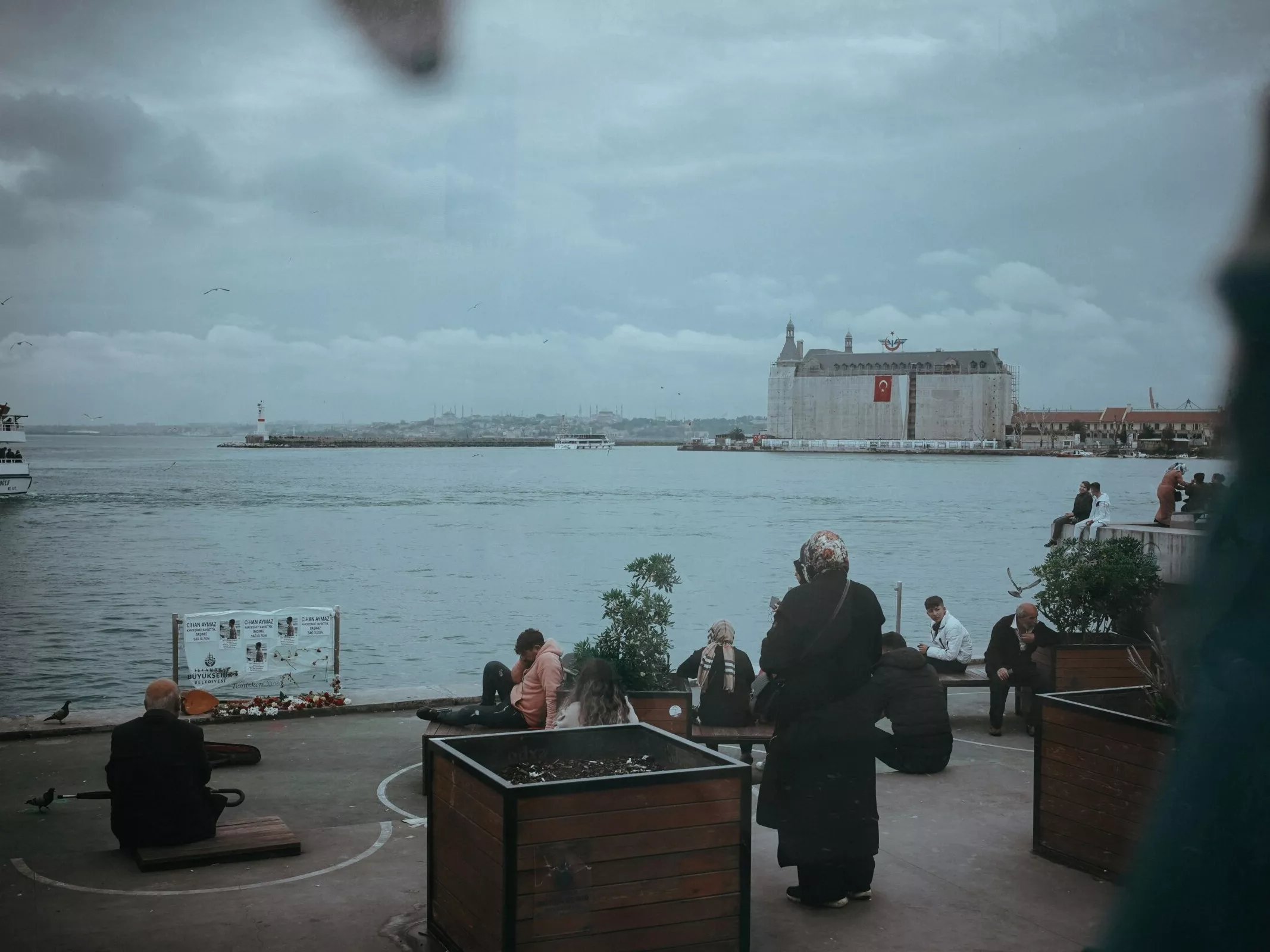
Istanbul is one of the greatest cities in the world. It is so beautiful that I can compare it to only one city on earth – Rome. But if Rome is a gigantic warehouse of played sets from different eras, Istanbul is a constantly changing, pulsating, expanding space.
Today, Istanbul begins just off the shores of the Bosphorus and ends somewhere near the Sea of Marmara. The population is steadily growing due to migrants from the Middle East. After all, Istanbul is one of the few eastern cities where women are not allowed to wear burqas. In addition, everyone is attracted by Istanbul shopping. Here you can buy absolutely everything. It is a giant and the best shopping center in the world for every purse. In addition, Istanbul is a gastronomic capital. Few people know that Turkey produces a huge amount of wines. Of course, they are inferior to French or Italian wines in terms of technology and, most importantly, marketing. But in terms of their taste – not at all! You should definitely try them.
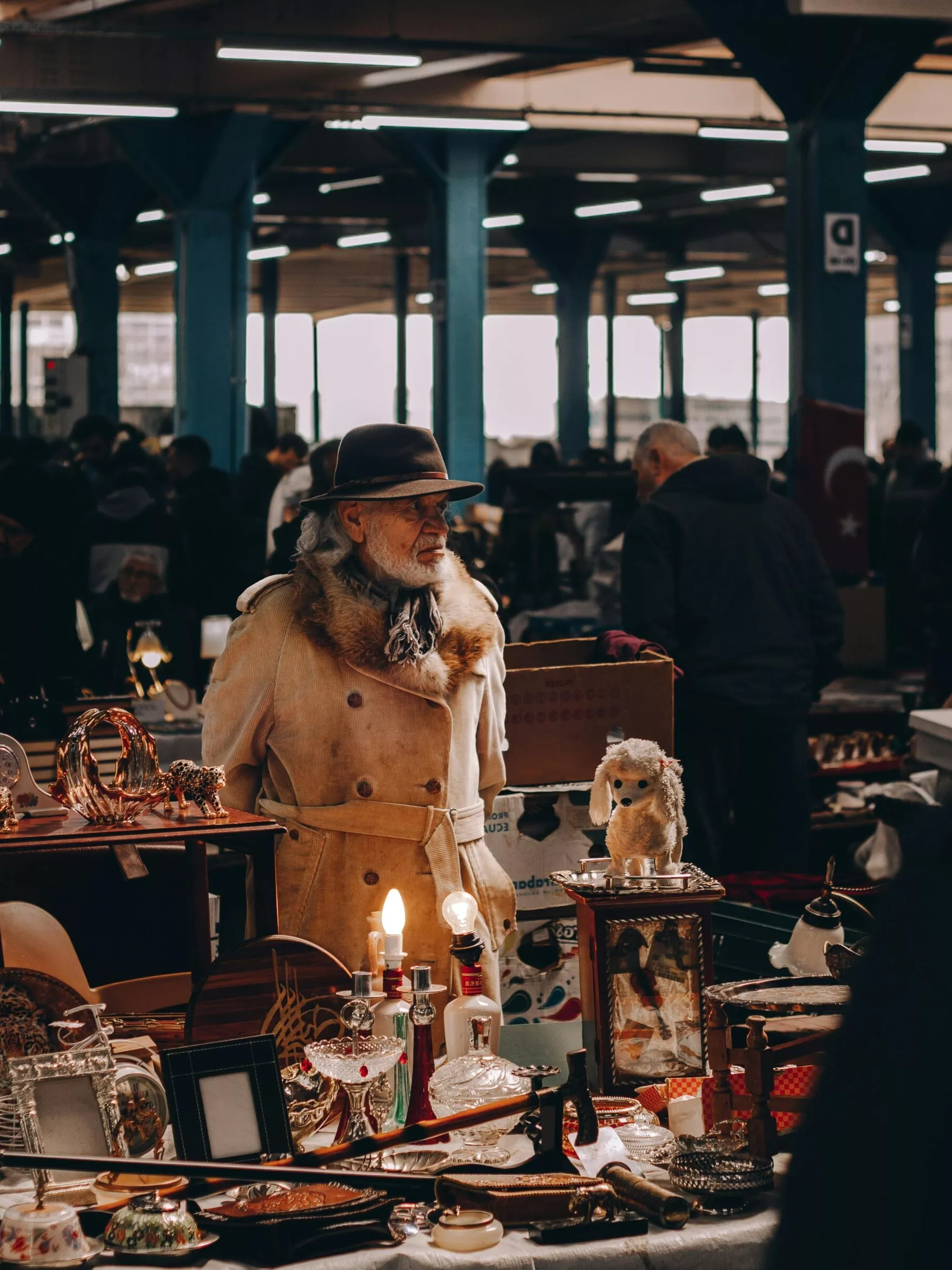
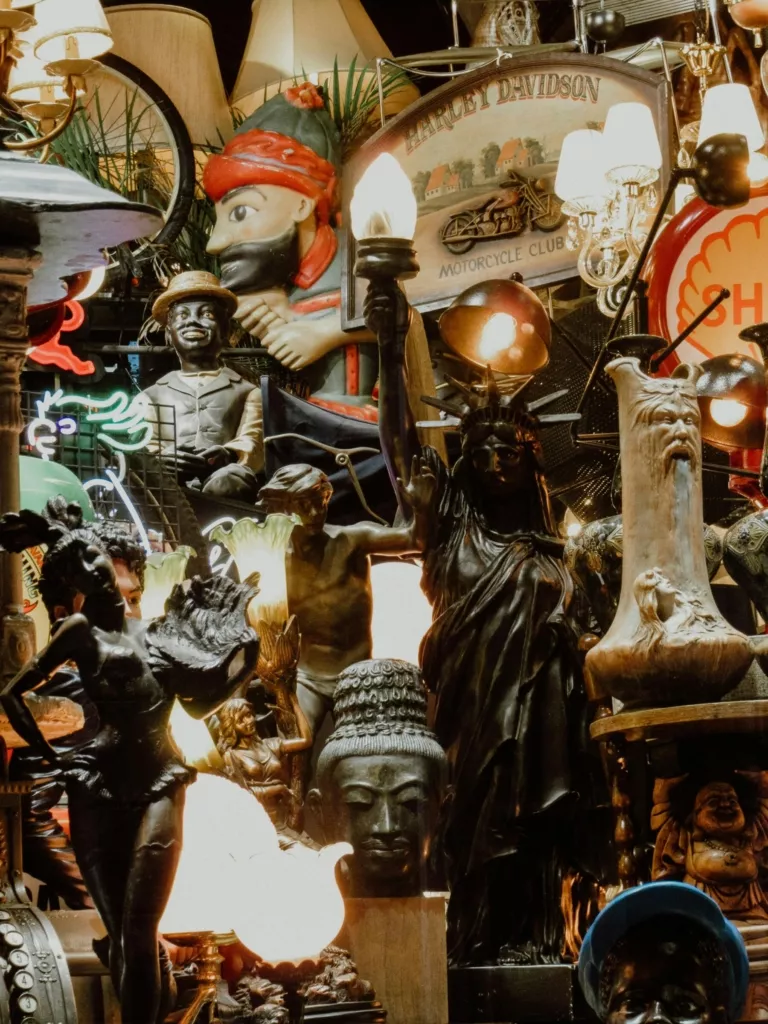
In Istanbul, I always try to visit the antique markets. I recommend to everyone the six-storey antique complex “Horhor”, which specializes in various sultan antiques. There is a wonderful market “Bomonti”, which is also worth going to. They are all open on Sundays from very early in the morning. There is a great selection of things there, especially related to history and the Ottoman Empire.
One catch: to visit the antique market, you need to know at least a minimum of words in Turkish, otherwise you will be lost. There are also little secrets that it makes sense to master in advance: for example, every woman should know that the characteristic gesture with the raising of the head and raising the eyes to the heavens means “no”. But lowering your eyes and looking down means “yes”. Turks can be very intrusive, and it is better not to mislead them, so as not to increase their onslaught. And many shy Russian women have a dull gaze, which means “I agree to everything”.
There are many Greek Orthodox churches in Istanbul. But two of them, the oldest ones, are located on the roofs of two neighboring buildings – inns of Russian merchants of the nineteenth century. This is the Karakei neighborhood, Mumhane Street, the name of which means “Candle House”. Services are regularly held there. In one of these temples there is a small museum dedicated to the great Russian exodus – photos, books, personal belongings. Stunning murals on the walls and Russian Orthodox icons taken in exile have been preserved.
Constantinople – that was the name of Istanbul until 1930 – became for many people the first stopping point on the emigrant route. Some went straight to Europe, others decided to stay longer. Most of them did not plan to leave for a long time. They thought that everything would change, the Bolsheviks would be thrown off, and everything would be like before again. Some fled, taking only family icons and albums with family photos, and some, like Felix Yusupov, prepared more thoroughly, taking with them several priceless paintings from their collection.
There were ladies who left Russia with a full closet – summer and winter. Who knows how a forced trip will turn out? You should always be ready for any weather and the most unexpected twist of fate.
Symbolically, it was Constantinople that became the first city to shelter Russian refugees who managed to escape the bloody mess of the civil war and happily avoided the Cheka’s clutches.
At first, the Turkish welcome did not seem very hospitable. Typhus and other contagious diseases were rampant on the ships carrying refugees. For forty days, the city epidemiological service did not let the former subjects of the Russian Empire ashore. Life on the ship for them was a living hell. Incredible overcrowding, cramped quarters, lack of drinking water and food. And, of course, the exorbitant prices at which traders (and these were mostly Greeks) sold food from their boats. Floating shops with vegetables, bread and drinking water were endlessly shuttled between the ships docked in the harbor. The Russians had no currency, so they paid with wedding rings, diamond earrings, icons, and other valuables.
As a rule, the Russians managed to get almost everything down during these forty days of quarantine. Everyone, of course, had different opportunities, but all had the same desire – to survive at any cost, to escape from the fate that awaited them in the new Russia. True, there was a vague hope that the Bolsheviks would get restless and calm down, and it would be possible to return to the old life. Needless to say, this did not happen to them? It was difficult for all of them. Because they had no local currency – piastres – they had to live in abandoned houses that were either unfinished or abandoned after fires, and most often in former factories and plants.
Only a very few Russian emigrants could afford to stay in such a first-class hotel as the Pera Palace. For example, Alexander Vertinsky lived there for a while. And I still remember the plaque with his name on the wall in the lobby. After the renovation it was taken down. By the way, Lev Trotsky stayed in Pera Palace when he went into exile. So the paths of all VIP exiles usually led there.
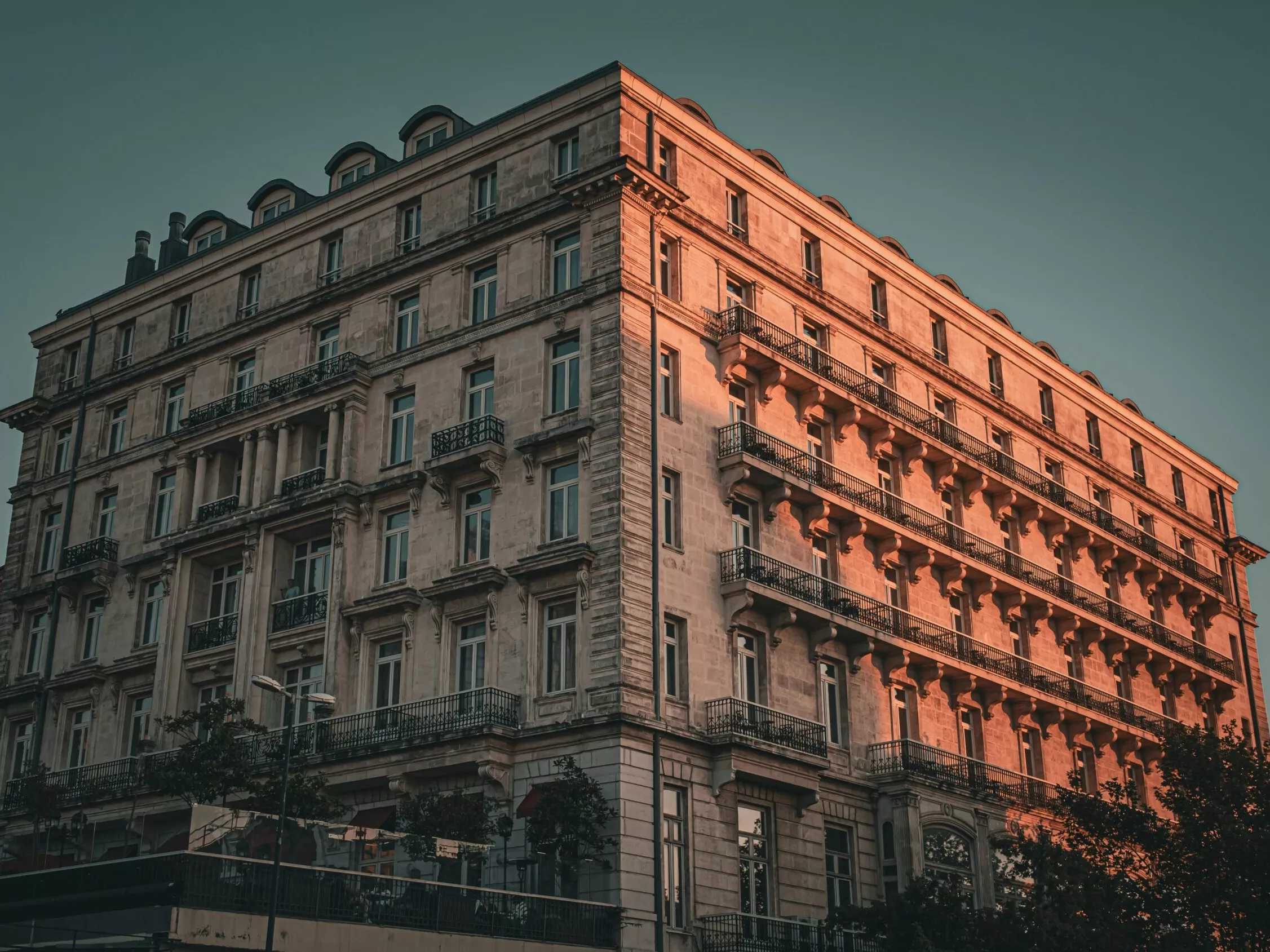
In the noughties, the Pera Palace underwent a rather radical renovation. The rooms became noticeably smaller. Nevertheless, the interiors of the elegant lobby have been preserved in their original form, as has the ancient carved elevator, which looks like a cast-iron gazebo – one of the main attractions of Pera. Whoever has ridden it, accompanied by an attendant dressed in the trademark livery! Mata Hari, Josephine Baker, Ernest Hemingway, Greta Garbo, Jacqueline Kennedy, Joseph Brodsky, Agatha Christie… The list is endless. By the way, the local restaurant “Agatha” is named in honor of the queen of detectives. It makes sense to go there for a five-hour high tea. In terms of the number and variety of sweets, it may well give a head start to London’s Ritz.
There is also a “spy” bar there. Along with Berlin and Shanghai, Istanbul was known as one of the capitals of world espionage. It was here that an explosion nearly took the life of German military attaché Franz von Pappen, who tried to prevent Turkey from concluding secret agreements with the Allies in 1942. As legend has it, a mysterious lady in furs and a veil forgot her purse in the bar of the Pera Hotel. And after she proudly left, the purse exploded. The waiters were injured, Venetian mirrors and crystal candelabras shattered, but Pappen survived. Ironically, he would return to Istanbul in 1969. He would again stay at the Pera, where he would pass away in his room at the age of 89. Such are the vagaries of fate!
Very close to the hotel, on Pera Street, is the building of the former Russian Embassy. Here the refugees could live completely free of charge. There are descriptions in the memoirs of how they slept on the steps of the wooden staircase leading to the second floor. Each of them was entitled to a step, where at night they lay almost in stacks. In summer you could sit in the garden. They slept under palm trees. They slept in all the offices, in all the reception chambers. The Russian Embassy was the main place of attraction for the Russian emigration and fulfilled its main mission – to give shelter to homeless compatriots.
Russian people are enterprising and savvy, and they immediately realized that it was impossible to sit idly by. Something had to be done. So with the last of their money, they started opening street stalls, some small stores, then cafes, cabarets, and restaurants. One of them – “Rejans” – survived to our days and last year celebrated its centenary. However, at the same time it was renamed into “1924”. The interior is remarkable because it used to be an operating room of an Italian bank. It still smells of big money. Elegant chandeliers, live music, broom tiles on the floor – a complete immersion in the Art Nouveau era. In such interiors you can play “The Days of the Turbins”, “The Run” or “The Walking Dead”. Prices are high, the public is clean, and the cuisine is French with a white-immigrant Russian accent.
But the cabarets and nightclubs opened in the twenties have not survived. From memoirs we know that once there was a cabaret called “Black Rose”, where Vertinsky sang and Iza Kremer performed, and Russian girls at the entrance sold bunches of flowers. By the way, it was with the arrival of the Russians that the first flower bazaar opened in Constantinople.
Of course, the emigrant path is never lined with roses. Constantinople frightened everyone with its unfamiliar language. As a rule, Russian emigrants were fluent in French and German. In Bohemia, everyone spoke Czech relatively quickly. In Belgrade they also got used to it quite well. But in Turkey the language was a disaster. No one knew it, except Crimean Tatars and wealthy Baku residents who had moved in large numbers from civil war-ridden Azerbaijan.
The second problem faced by Russian emigrants was the decree of the first president of Turkey, Ataturk, in 1925, according to which all newcomers who did not have Turkish passports had to take Turkish or Soviet citizenship or leave Turkey. Only Russian women who had managed to marry wealthy Turks and Greeks could stay.
As Vertinsky wrote in his memoirs “By the Long Way”, divorces in Constantinople were pouring out of the horn of plenty. The collective letter of the Turkish women, which was sent to the president, also played a role. It said in black and white: “These furies of the North, driven out by the revolution to our shores, ruin our families, sow discord in the hearts of Turkish men, get them drunk on vodka, dance tango and foxtrot with them, seduce them in Russian cabarets and let them try cocaine. Kick them all out of Turkey so that we can get back to our old lives.”
Here we must admit that the reputation of Russian ladies was partly compromised by the behavior of a large number of girls from the brothels of Rostov-on-Don and Odessa. There they refused to serve the Red Commissars for free and rushed to Constantinople, where they pretended to be aristocrats and ladies of society. It was easy to meet them on the beach “Floria” – the first public beach in the city, which appeared again thanks to emigrants from Russia. Until the beginning of the XX century, there were no beaches in their modern form in the Ottoman culture: Turkish women, as you know, do not sunbathe and do not bathe in the sea. Russians brought a new tradition, together with the fashion for one-piece swimsuits emphasizing the figure.
Some were more fortunate then, some less so. But that Constantinople, which we know from Alexei Tolstoy’s novel “The Walking on Flours” or from Mikhail Bulgakov’s play “The Run”, that city of despair, poverty, cockroach races, some joyless debauchery – in reality became a refuge and saved the lives of thousands of people. And it must be said that in most of their memoirs, Russians remembered it even fondly. They survived, they made it to the promised land with its oranges and pomegranates. They even managed to love this city with its mullah shouts, its countless minarets, its cats and packs of stray dogs.
In some ways it hasn’t changed at all since then, and in other ways it has become almost unrecognizable. Not to mention the fact that it changed its name to Istanbul.
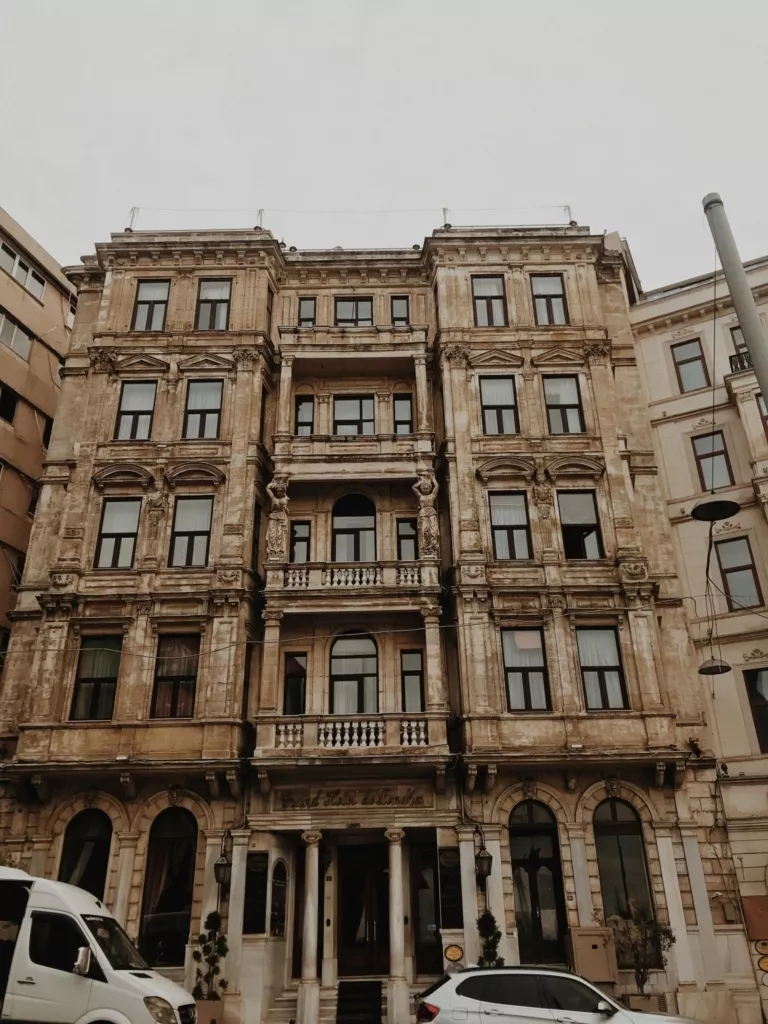
For over thirty years I have been staying at the same hotel, the Grand Hotel de Londres, the same age as the Pera Hotel. I have my own room on the fourth floor overlooking the Bosphorus and a framed photograph of me in the lobby. This hotel used to be for 2nd class passengers on the Orient Express. For as many years as I’ve lived there, I can’t help feeling that the whole place is the setting for some vintage detective story. And it is. On a rare visit, I don’t see a film crew with cameras, spotlights, and illuminators. Turkish filmmakers have chosen the Grand Hotel de Londres to shoot their TV series. Of course, this creates some inconvenience for the guests, but I am sympathetic to it. All the more so because I try to spend a minimum of time in the hotel.
Usually in the morning I go to the corner of a familiar cafe to drink freshly squeezed juices. There is nowhere else in Istanbul that I can find such pomegranate and orange presse. After that, I head to Istiklal Street, which means “Independence.” There I walk for a long time along the ancient churches located one after another. Armenian temple, French, Greek, Italian… And somewhere between them there is a passage named after the great French singer Charles Aznavour. And then there are the Greek and Arabic commercial passages. And all of them get along with each other, all of them coexist peacefully under the same sky and sun, which in Istanbul shines on everyone.
***
Museums and palaces
The Pera Museum
A museum with a rich collection of Orientalist paintings and antiques, which often hosts exhibitions of contemporary artists as well.
Asmalı Mescit, Meşrutiyet Cd. No:65, 34430, Beyoğlu,
peramuzesi.org.tr
Dolmabahce
A luxurious palace on the banks of the Bosphorus, where Ottoman opulence and European elegance come together. The last residence of the Ottoman sultans and the last address of Mustafa Kemal Ataturk.
Vişnezade, Dolmabahçe Cd. No:1, 34357, Beşiktaş
millisaraylar.gov.tr
Beylerbey
The summer palace of the sultans on the Asian side of the strait. The interiors are not as luxurious as those of Dolmabahçe, but the view of the Bosphorus is magnificent.
Beylerbeyi, Abdullahağa Cd. No:12, 34676, Üsküdar
millisaraylar.gov.tr
Sakip Sabancı Museum
A private museum with a stunning collection of calligraphy, paintings and world-class exhibitions. Located in a mansion right by the water.
Emirgan, Sakıp Sabancı Cd. No:42, 34467, Sarıyer
sakipsabancimuzesi.org.
Markets and Passages
“Avrupa.”
A historic shopping arcade with ornate columns and small antique shops. Tourists hardly ever come here.
Hüseyinağa, Sahne Sk. No:30, 34435, Beyoğlu
Chukurjuma
A street of antique shops. Here you can find everything from a porcelain Ataturk to a Soviet radio receiver.
Firuzağa, Çukurcuma Cd. No:49, 34425, Beyoğlu
“Haciopulo”
An ancient Greek arcade lost in the Istiklal neighborhood. Inside, quiet coffee shops and the spirit of Istanbul’s bohemians.
Şehit Muhtar, İstiklal Cd. No:116, 34435, Beyoğlu
Walks
Prince’s Islands
An archipelago off the coast of Istanbul where you can escape from the noise of the city. There are no cars, but old mansions and the smell of pine trees. Smaller, quieter and cozier than the others is Burgaz Island. There you will find the house of writer Sait Faik, beaches, bicycles and tea in the shade of trees.
Ferry from Kabataş or Kadıköy
In the issue “ZIMA. WORLD.” collects key events of the art world, author’s city guides and portraits of the main persons of Russian-speaking emigration who are changing the world culture right now. You can order the magazine by clicking here.