 Loading...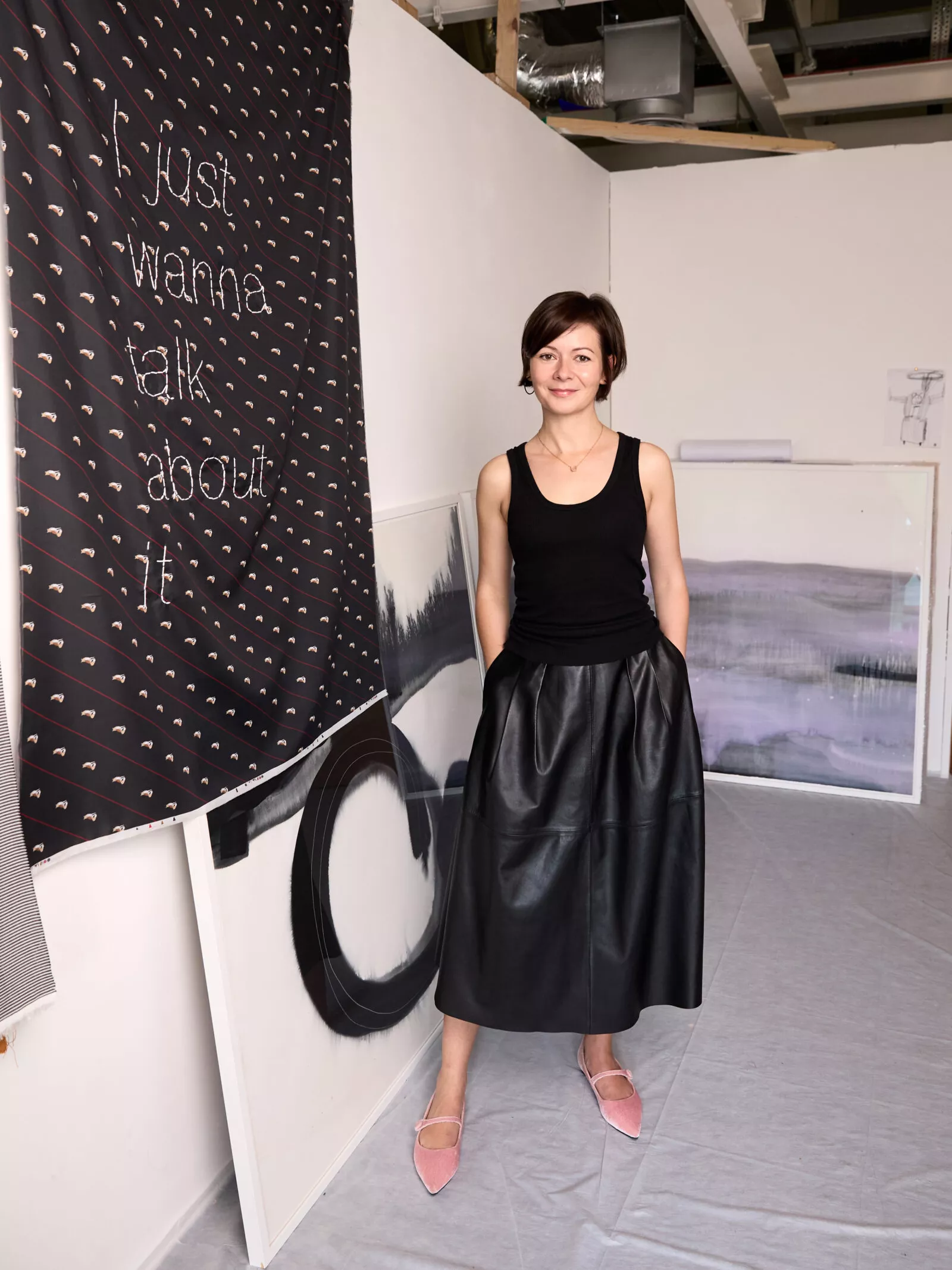
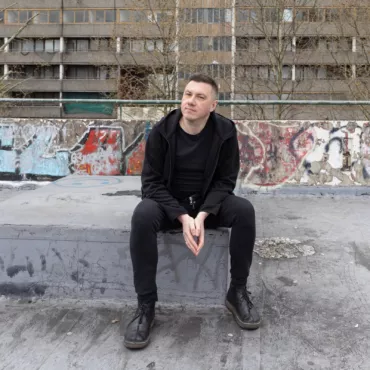
Pauline’s studio is located on a street between respectable Regent’s Park and artistic Camden Town. It’s tucked away beneath the brick bulk of a post-war apartment building, as long as a railroad train, and occupies a few small rooms in the basement. The entrance is marked by a handwritten sign that is easy to miss against the brickwork. But open the dark door and you’ll find an electric light-filled, cozy space filled with creativity.
Polina shares the studio with artist friends who are migrants like her. They do not create joint works, but this community is important: the studio becomes a small community of people who have found themselves in a new country and a new artistic environment. The artist comes here almost every day, and this rhythm of return, repetition, and presence becomes a way to keep her inner balance.
Polina moved to the UK three years ago on a Global Talent visa, that rare and, as she says, “cool opportunity to be here”. But that opportunity arose out of an inability to stay in Russia. Emigration in her case does not cancel her connection to her homeland, on the contrary, it makes it more acute. Everything that happens here is inextricably linked to what happens there.
Polina is a graphic artist by training, a graduate of Stroganovka, with extensive experience of working with paper and composition on the sheet. She used to do book illustration, for example, working on Jules Verne’s novels. This is an art that requires precision, conformity to the text, meticulousness. Working with a book was a fascinating process, but over time the artist felt that the constant need to follow someone else’s story was limiting, and the technique with slow, time-consuming work on each sheet was constraining. “I realized that I wanted to work quickly, freely, without having time to hate the work,” says Polina. This is how watercolor appeared in the artist’s practice and became not just a technique, but a form of liberation. It flows, changes, migrates on wet paper. There is an element of unpredictability and spontaneity inherent in it. Polina works on a wet tablet, vertically, very quickly: the sheet can be twisted, washed, scratched, rubbed. Paper proves to be an enduring interlocutor, and its fragility is a strength.
The series, begun in 2023, comprises twenty sheets and develops like a short story or a future comic book: all the works are in the same format, like pages of a diary. They contain characters and landscapes, lines and branches that should eventually converge into a coherent whole.
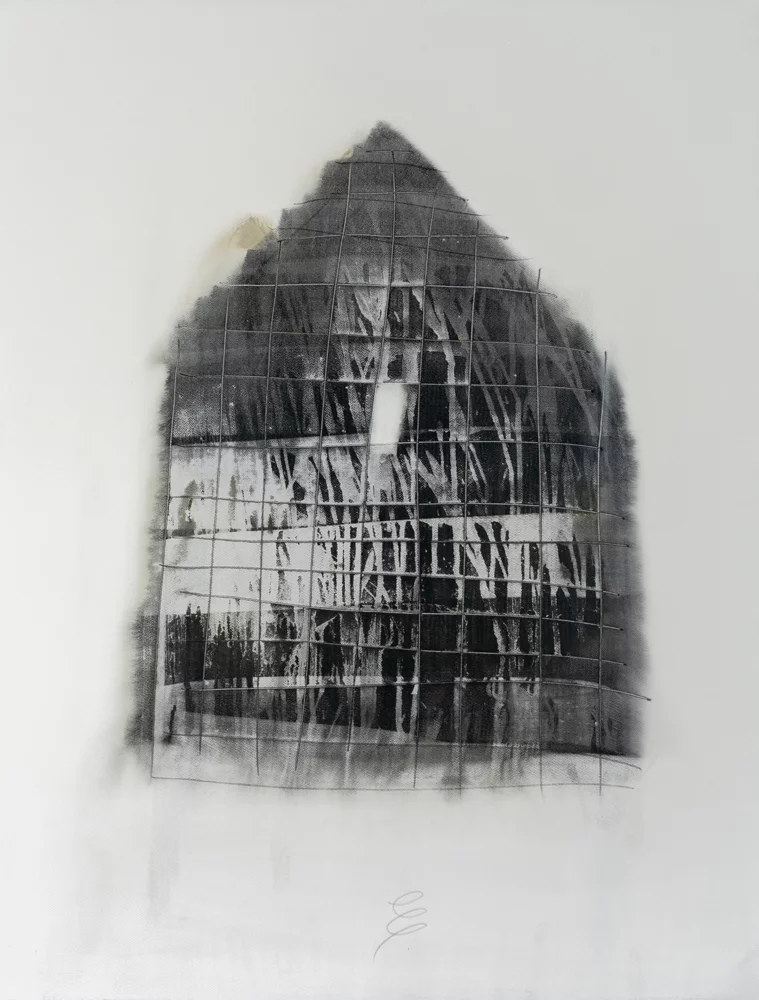
It began with the work My Place, an image of home, at once a refuge and a trap. The space still retains light, but no longer belongs entirely to man. This duality is visualized through the blurring of boundaries, the graphic grid of cage-like lines and the intrusion of natural forms into the interior space. The house remains home, but it is no longer possible to stay in it completely and no longer possible to leave it completely (My Place, 2023).
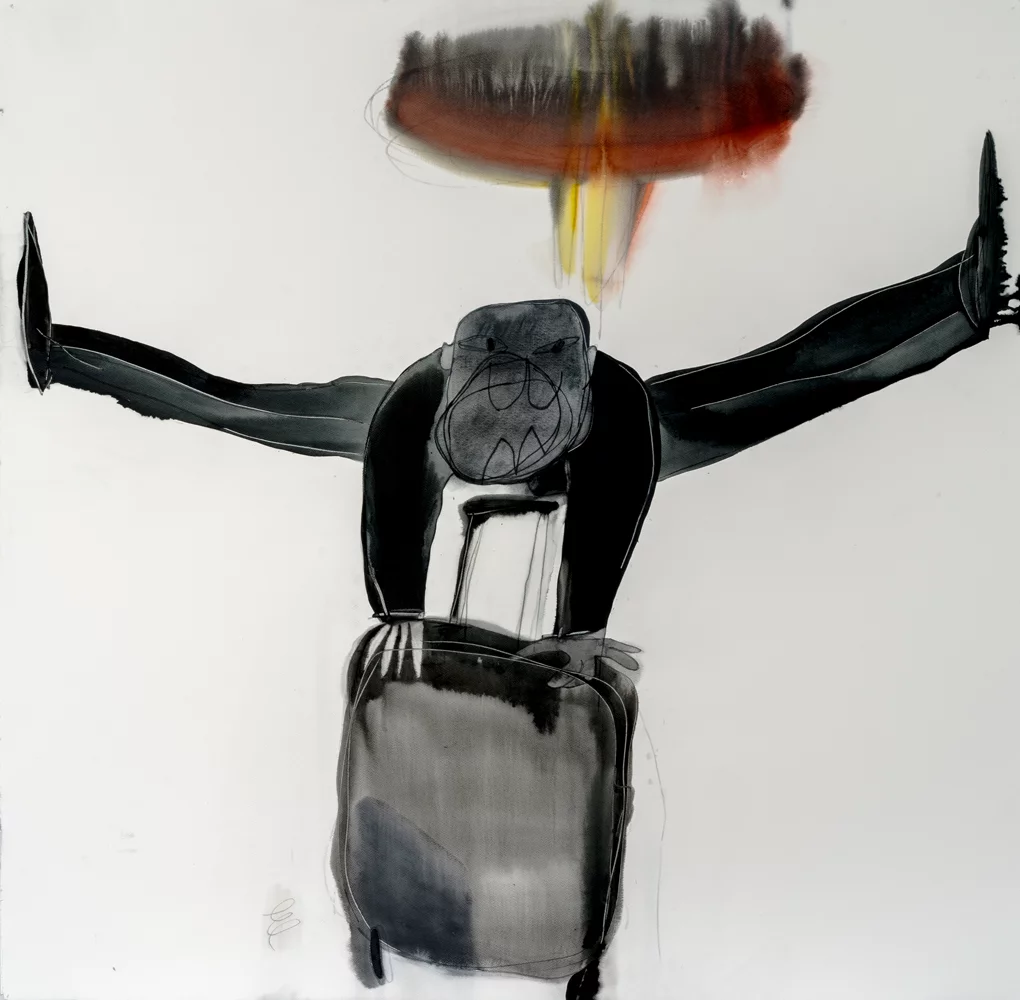
In the next sheet, a figure appears as if shot out of a cannon: a creature with a suitcase as the last fragment of a house, in sudden movement, with a face twisted with screaming and horror, almost munchkin-like. There was a lot of talk about nuclear war at the time, and this character seems pushed out by the explosion into a new reality (Boom! 2023).
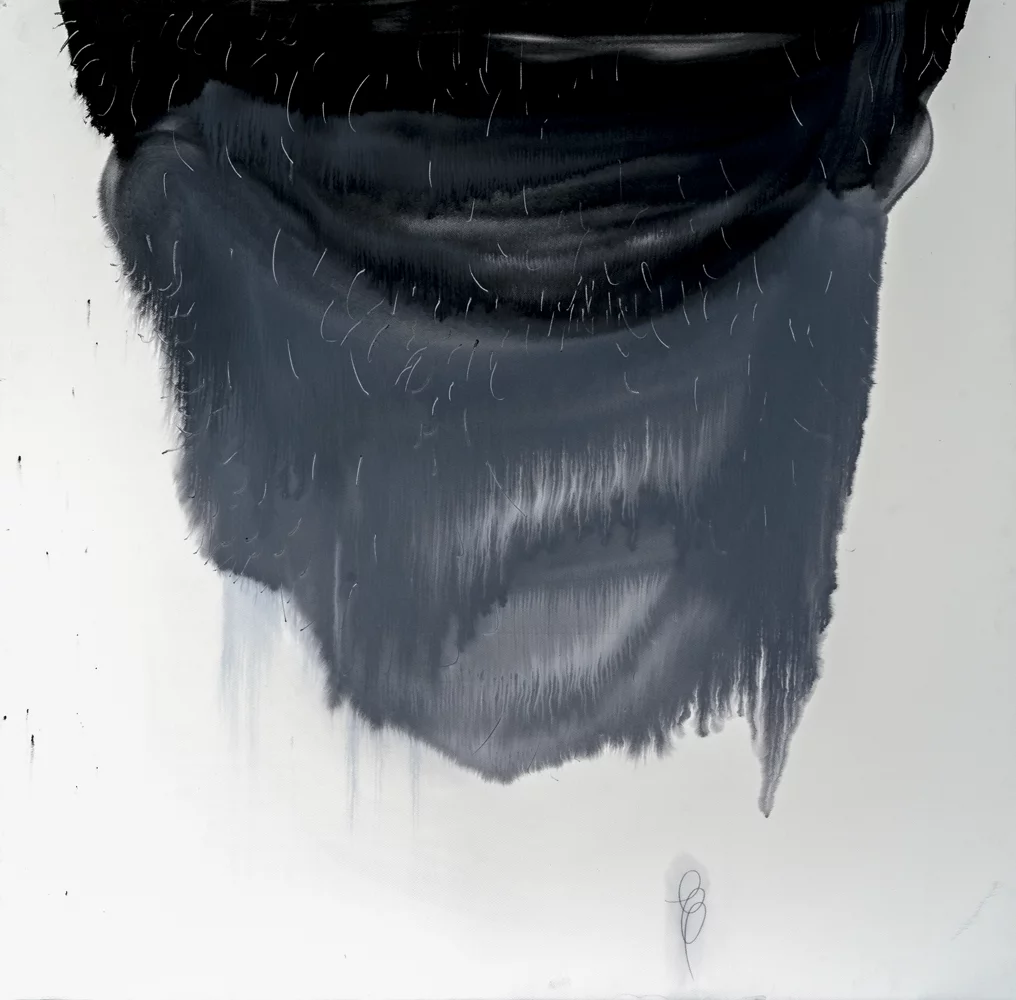
Then there is an overhanging dark mass – something animal, disturbing, or a problem that cannot be defused, hanging in the air. In its composition, this sheet is reminiscent of Anselm Kiefer’s painting, where forms exist in a state of historical suspension, neither falling nor disappearing, retaining the traces of a catastrophe that has already occurred but not completed (Untitled, 2023).
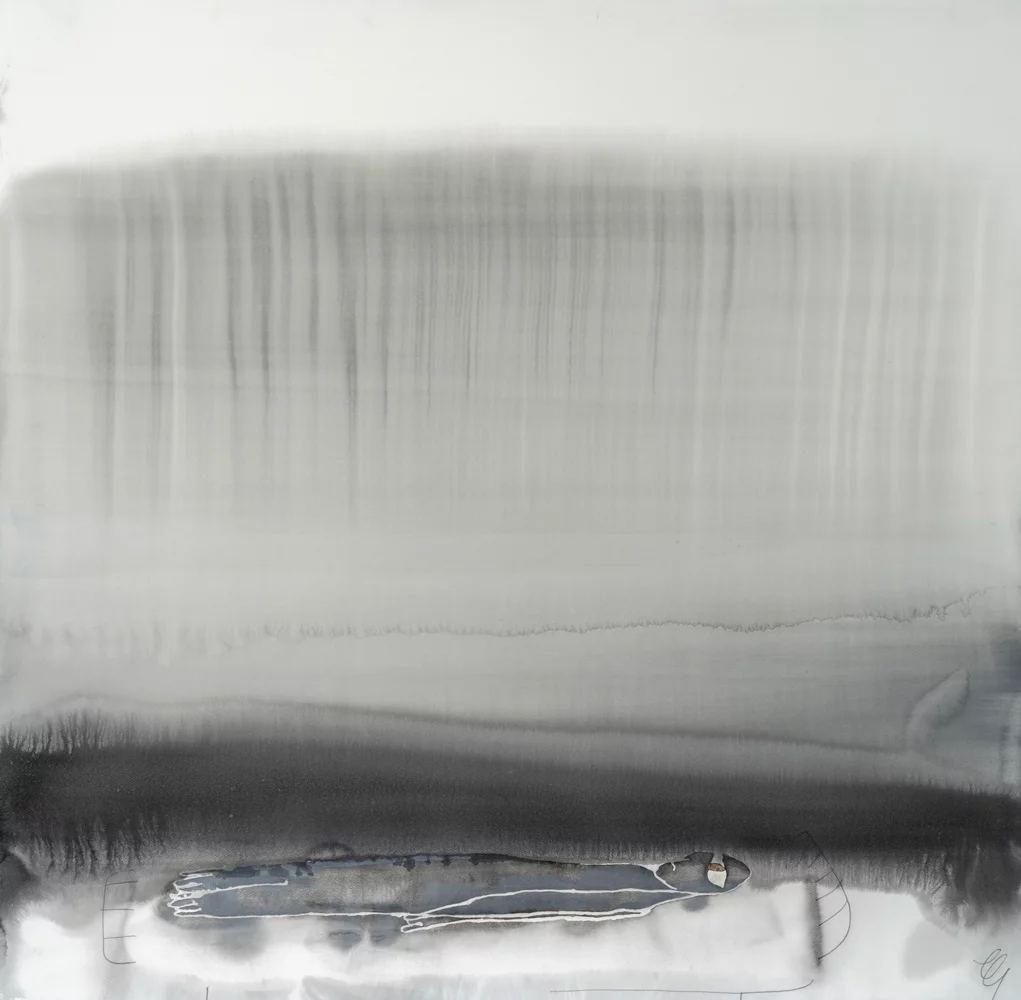
A key character in the series is Sleeper, shown at The Last Train (in London in November 2025). A man lies in bed, as if caught between waking and a nightmare. He is dormant, but something is happening around him without his participation: a pressure, an overhang, a parallel reality. The Pauline figures have no gender: they are neither male nor female, but simply beings. This refusal of certainty makes experience and anxiety universal (The Sleeper, 2023).
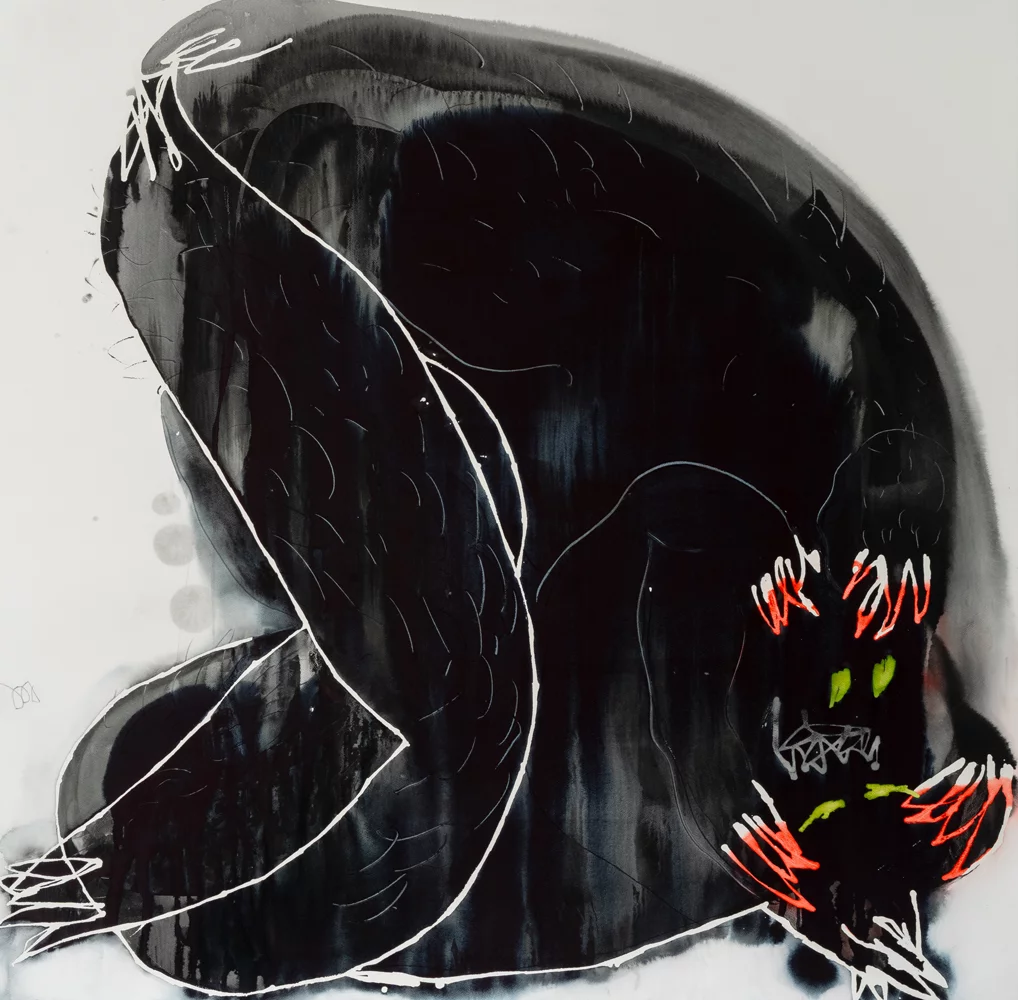
In other works, anthropomorphic figures with bright color accents – with green eyes and red hands – appear: whether hugging, fighting, or making love, pathetic and terrifying at the same time (Someone with Someone, 2024).
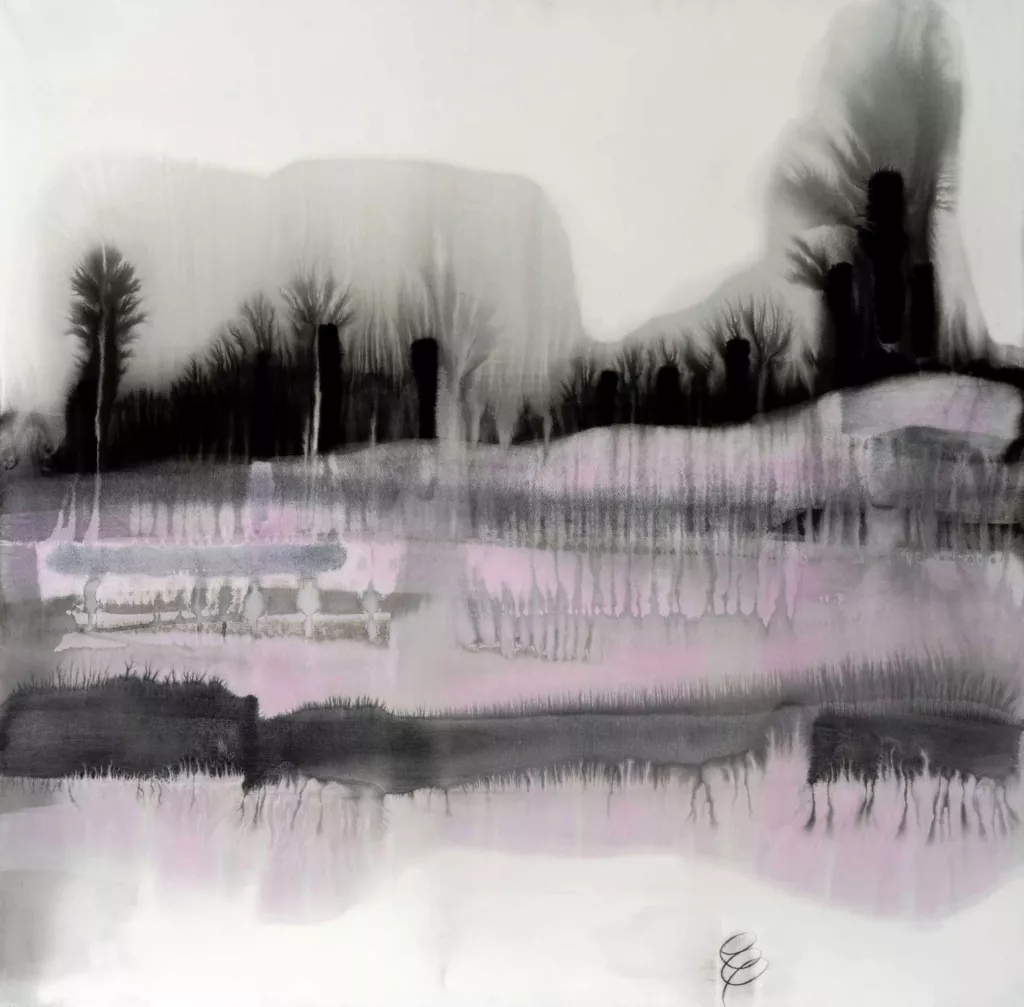
As the series develops, the dark, shapeless mass of the first works gradually becomes more and more formalized into landscapes, and glimpses of delicate purple appear. The blue color emerges as if born from the silver of the London air. The longer you look at these watercolors, the more they appear: the road, trees, human figures and snow appear in blurs. Winter, it would seem, remained far away, in Russia. But Polina came to England in December 2022, when it was snowing here, and this coincidence was almost symbolic (Untitled, 2024).
Polina’s practice today unfolds in two directions at once. Alongside the watercolor, intimate, diary series, there is a direct, almost documentary project – the textile flags of the PomidorDuo group, created together with the artist Maria Krol, now living in Israel. They worked together in Russia and now continue their conversation from a distance, creating projects piece by piece and putting them together during meetings. These flags are about propaganda, freedom of speech and personal responsibility. The artists deliberately choose fabrics with defects: burned out, rejected, “aged”, rubbed by life. All inscriptions are made by hand, without printing: it is important that the word that comes from the media turns into a personal gesture. This art speaks directly and seeks a bridge to the viewer, talks about censorship and self-censorship, about what people are willing to do for freedom of speech, not only in relation to the state, but also in the family, at work, in everyday life.
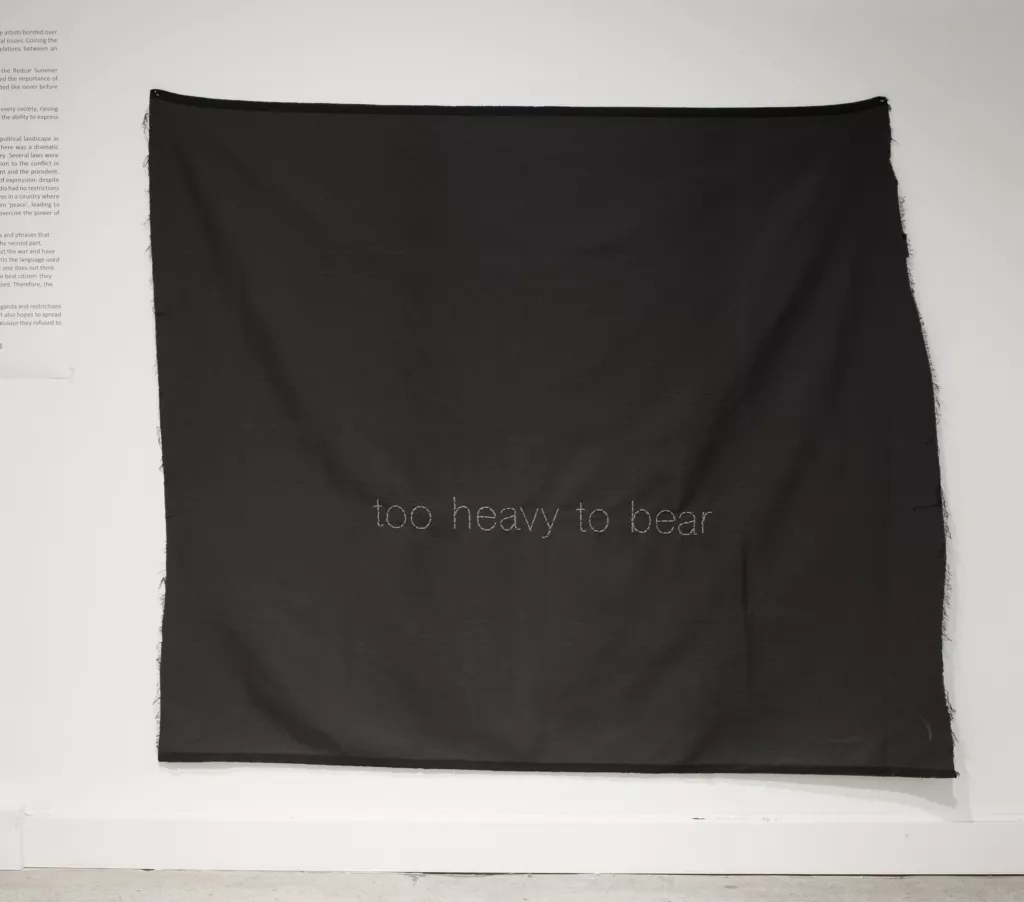
Material is fundamental here. Fabric can be easily transported, shipped, hung in new spaces. Flags become travelers like the artists themselves. Some works retain the Cyrillic alphabet as a sign of origin and impossibility to break the connection.
Polina talks about those who stayed in Russia: friends with a “resistance gene”, their bright inner fire that cannot be extinguished. “Those who want to stay together, it is impossible to separate them,” says the artist. Perhaps her watercolor diary is about this too.