 Loading...
January – March: Up Helly Aa – Shetland Islands, Scotland
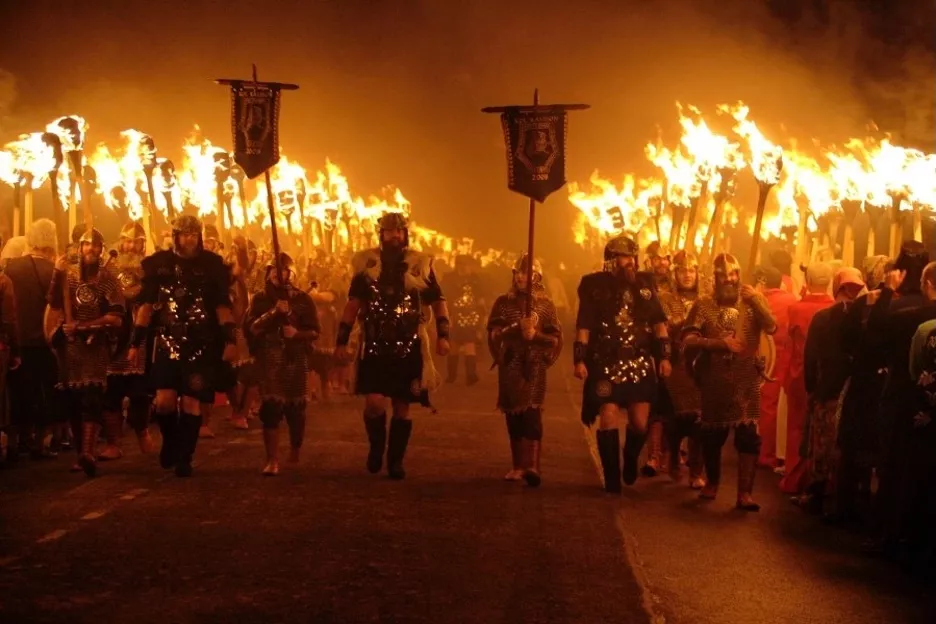
A fire festival held from January to March in various communities in Shetland. The festival originated from the Vikings, and the name can be roughly translated from Old Norse as “all the saints”. At the same time, the holiday bears little resemblance to Halloween: if Up Helly Aa can be compared to anything, it is with Russian Maslenitsa. The culmination takes place on the last Tuesday of January in Lerwick, the capital of the archipelago. Toward evening, torchlight processions begin, with participants dressed as Vikings and legionnaires. The festivities are led by a pre-selected leader who plays the role of a historical character (for example, last year – Norwegian King Eystein Magnusson). After that, the torches go into action: the crowd burns a huge wooden galley, symbolizing the transition to brighter days and purification by fire. And of course, like any Scottish celebration, Up Helly Aa ends in the pubs with music and dancing until morning.
February: Carnevale di Venezia – Venice, Italy
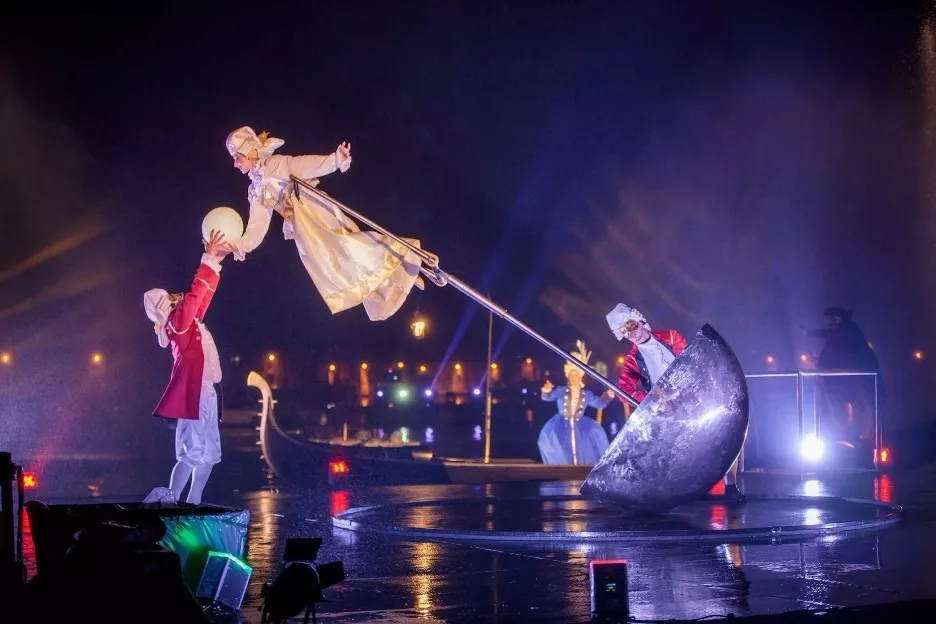
The most famous and oldest festival in Europe – it has been held since the 11th century! However, masks were worn a few centuries later: among other things, so that aristocrats could blend in with the crowd and allow themselves various pranks. Carnival traditionally begins in February and lasts until Catholic Lent. Each year the festival has a new theme, in 2026 the Olympics and the gods. The Theater on the Water will feature a performance about a fisherman who undergoes the Olympic trials to gain immortality, and the Ambrosia’s Chant gala dinner entices guests to “amidst subtle seduction, playful irony and creative duels, you’ll challenge the night while sipping ambrosia, the drink of eternal bliss.” Even if you don’t attend the parties, you can’t hide from Carnival in Venice: every day there are performances in Piazza San Marco, impromptu parades in the streets and, of course, contests for the best mask.
May: Cooper’s Hill Cheese Rolling and Wake – England
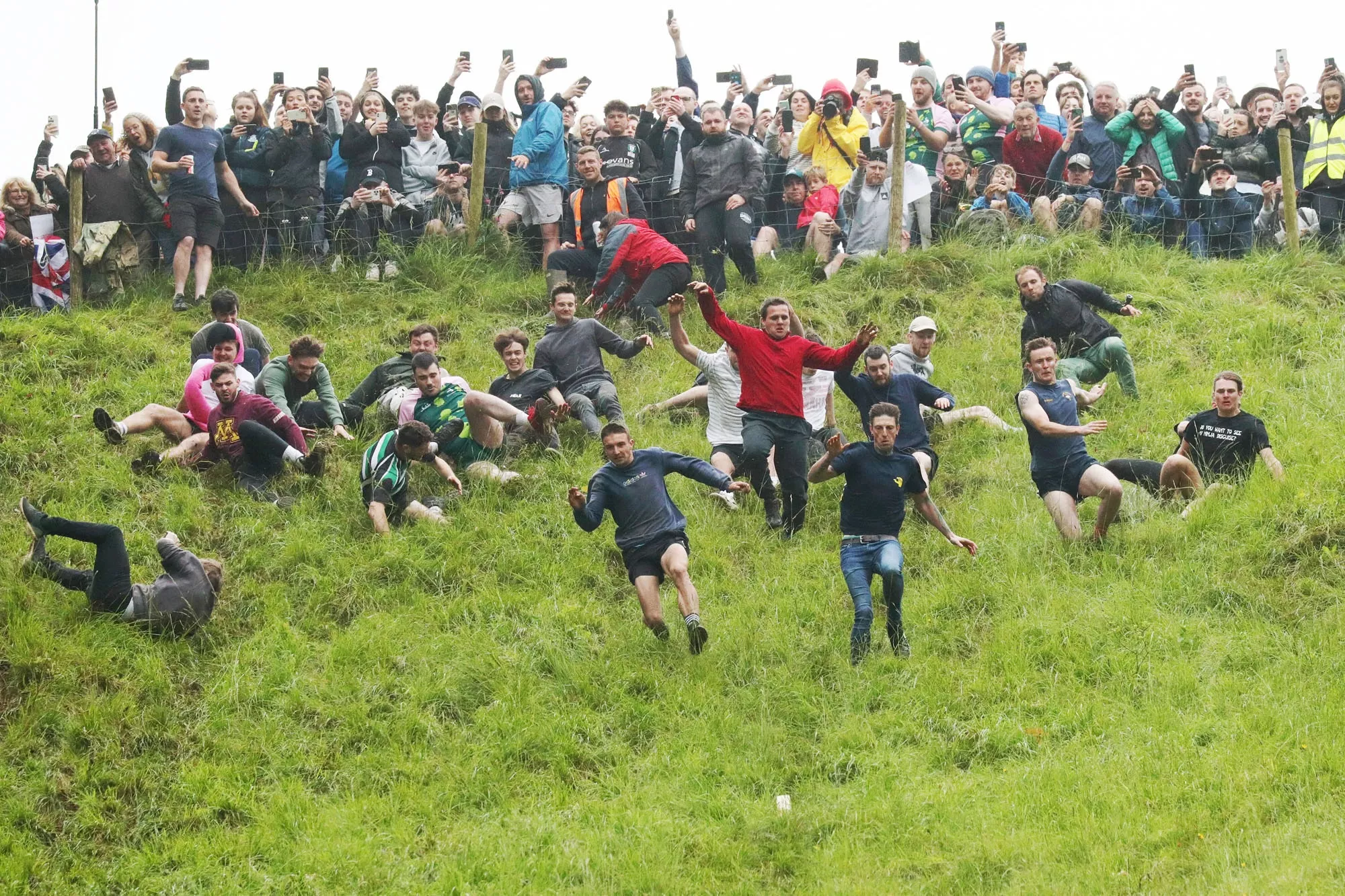
A feast of food and absurdity that has something of Carroll’s Alice in it. On the last Monday in May, a cheese head weighing about 4 kilograms is launched from Cooper’s Hill in Gloucestershire. Runners have to catch up with it – whoever crosses the finish line first gets the cheese, even if they don’t catch it. The festival is free, even registration is not required: anyone can run. It is considered chic to come up with a strange costume; injuries are common as the slope is very steep. The first written evidence of the Cheese-Rolling dates back to 1826, but the tradition is much older: it is believed that Cheese-Rolling originated as a pagan spring rite associated with the awakening of the earth and a request for a good harvest. Of course, it is not limited to sport – after the winner’s awarding there is a big picnic with tea, and in the evening the celebration continues in the pubs of Gloucester or Cheltenham.
June: Primavera Sound – Barcelona, Spain & Porto, Portugal
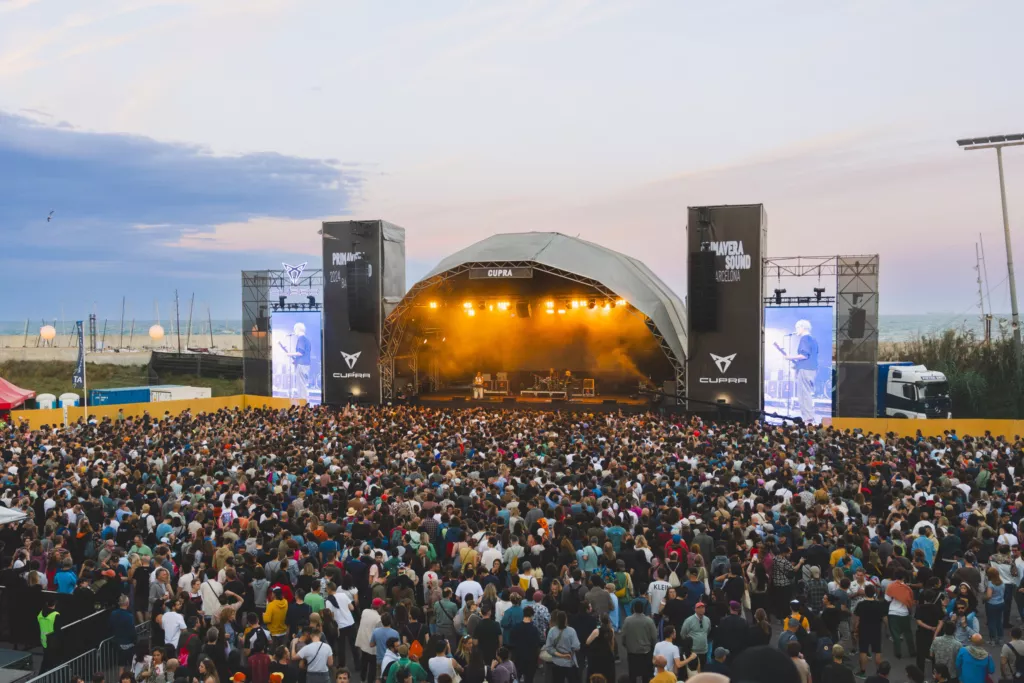
Europe’s largest music festival with a reputation as one of the most progressive. It takes place in summer at two venues at once: at the industrial and maritime Parc del Fòrum in Barcelona and in the green Parque da Cidade in Porto. The atmosphere is also different: in Barcelona the festival is a glassy separate city within a city with sets 24/7, in Porto it is much more chamber-like and romantic. The program in the two cities is partially repeated, so it almost makes no sense to visit both venues. Usually during the daytime there are new names, but the evening is dedicated to legends. So, in this year’s schedule Addison Rae neighbors with The Cure, Doja Cat – with Massive Attack, and the star parade is completed by three idols of millennials: The xx, Gorillaz and my bloody valentine. Another hidden gem is Primavera a la Ciutat, concerts in clubs a few days before and after the main program.
July: Montreux Jazz Festival – Montreux, Switzerland
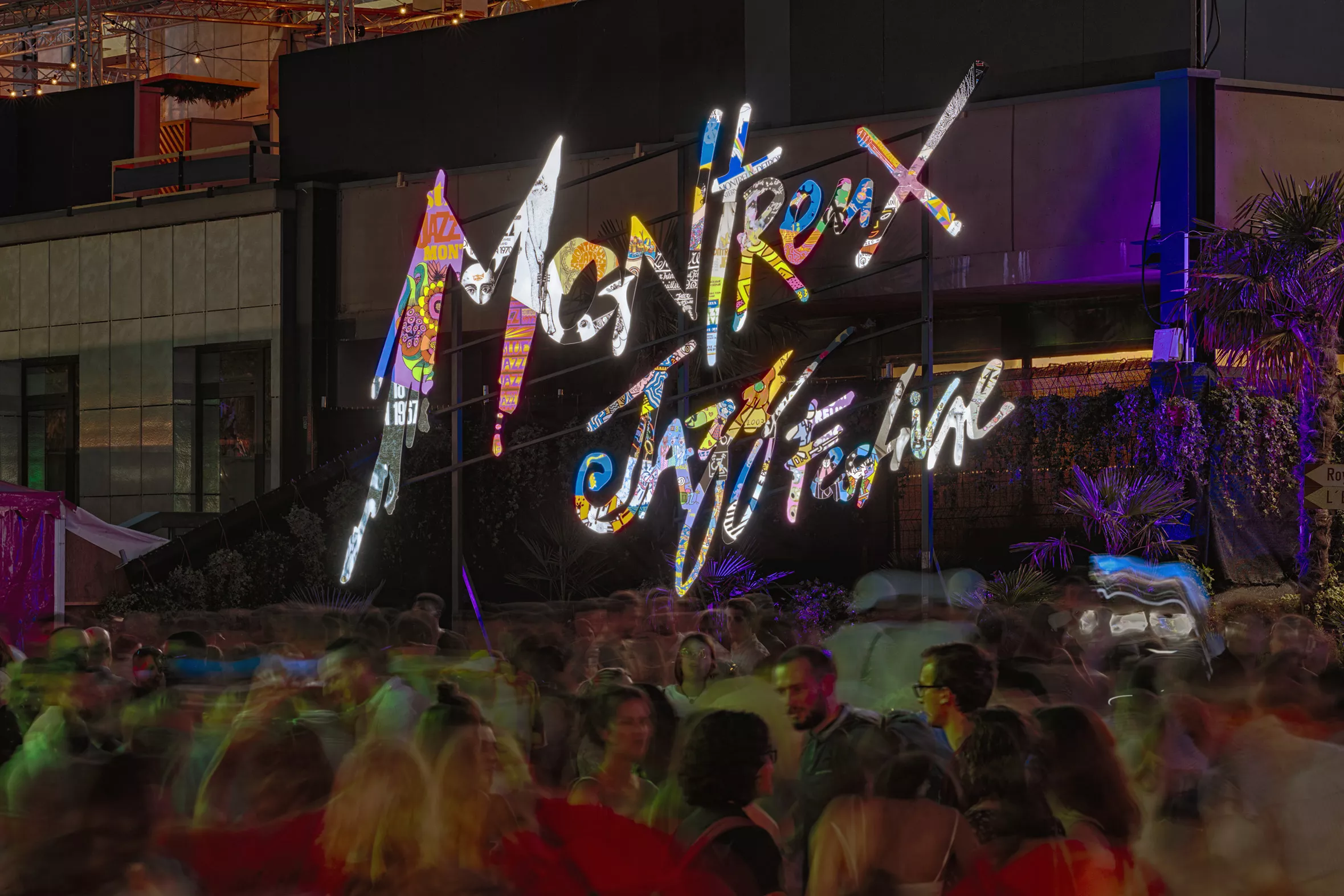
A legendary festival for musical aesthetes. Founded in 1967 as a purely jazz festival, it has evolved over time into a multi-genre music platform. Legends from Ella Fitzgerald and Nina Simone to David Bowie and Stevie Wonder have performed here. Deep Purple’s hit song “Smoke on the Water” was also written about it: “We all came out to Montreux op the Lake Geneva shoreline…”. The festival lasts two weeks, this year it will be held from July 3 to 18. The full list of participants will be announced only in April, but Nick Cave is rumored to be the headliner this year. In addition to the main program concerts, there are more than 600 free events on the festival grounds, including master classes, lectures on music history and jam sessions with the participants.
July: Electric Castle – Cluj-Napoca, Romania
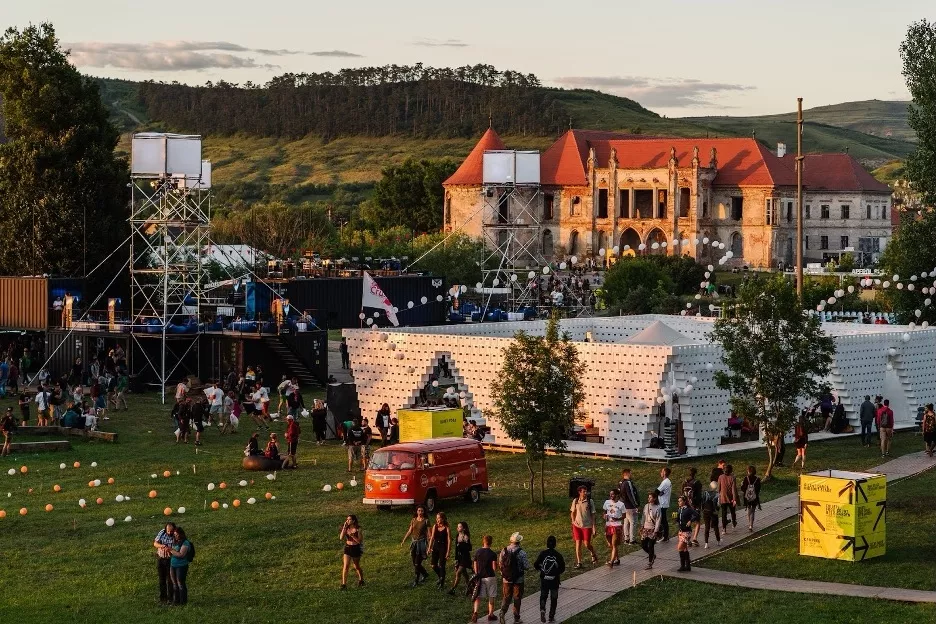
A large multi-genre festival in Transylvania that combines music and avant-garde art. It takes place in the dilapidated Banfi Castle, colored with illuminations at night. Every year Electric Castle attracts 250,000 guests who camp near the castle. This festival never sleeps, there are installations, round-the-clock performances, restaurants and, of course, a lot of sound: since 2013 the main names of electronic music (Die Antwoord, Morcheeba, The Prodigy, Skrillex) and representatives of other genres (Florence + The Machine, Thirty Seconds to Mars, Limp Bizkit) have performed here. The project is constantly expanding: there are master classes for aspiring musicians, marquees, fashion shows and standup shows. This year’s lineup is being announced gradually – so far only Twenty One Pilots and The Cure concerts have been confirmed. And EC is also considered to be one of the most affordable: a standard ticket for all 4 days will cost 169 euros.
August: La Tomatina – Buñol, Spain
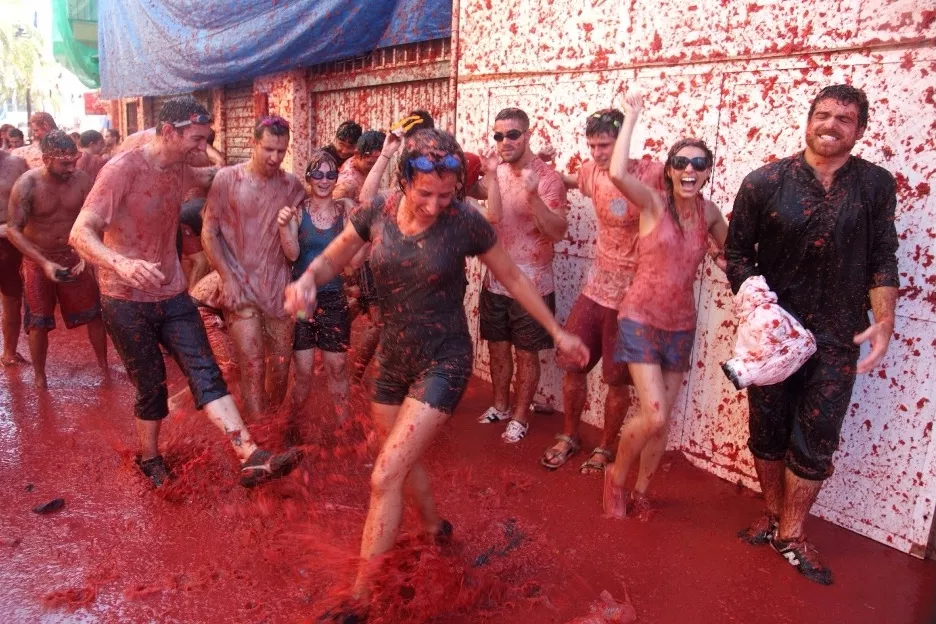
Another cinematic festival: you may have seen it in the opening shots of Something’s Wrong with Kevin, where Tilda Swinton bathes in tomato pulp. Actually, that’s the whole point: it’s a giant, incredible battle of specially grown tomatoes. The festival takes place on the last Wednesday of August, the main action starts at noon sharp and lasts only an hour. The signal shot sounds, the participants knead the tomatoes so that they don’t hurt so much – and throw them at each other (and then wash the streets with a hose). Of course, that’s not all: in the evening after the battle, there are concerts, fairs and parties all over Buñol. The festival originated in 1945 as a spontaneous street brawl during the papier-mâché Giants and Big-Heads festival. Today the festival is just as popular and beloved – every year La Tomatina attracts 20 thousand participants from all over the world.
October: Oktoberfest – Munich, Germany
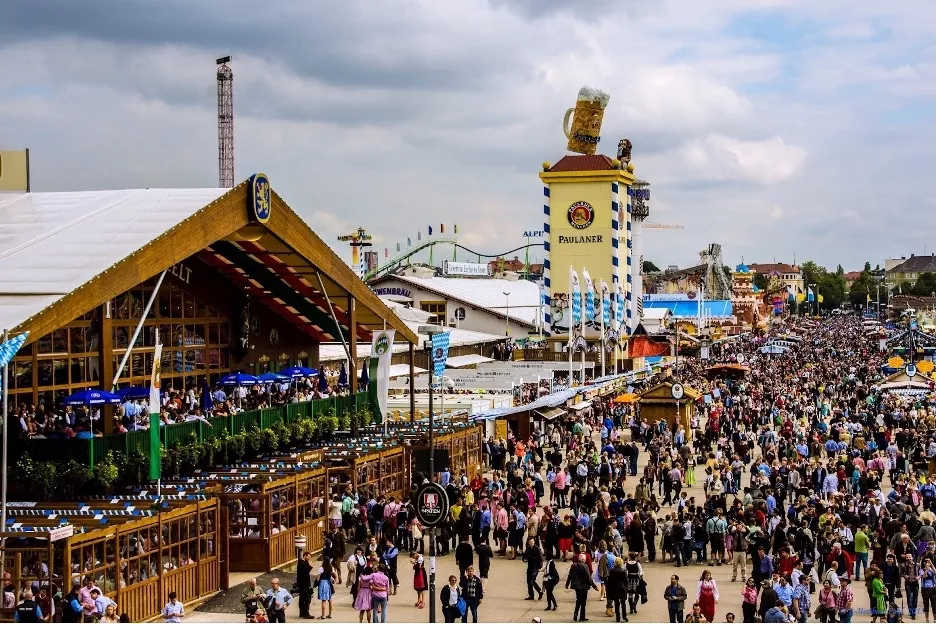
Oktoberfest is visited by 6-7 million (!) people annually, it is the largest folk festival in the world. It is positioned not so much as a celebration of beer (although a specially brewed variety of Oktoberfestbier is served on the premises), but of Bavarian traditions in general: food, music, national costume and rituals. The festival began in 1810 as a celebration in honor of the wedding of King Ludovig of Bavaria and Princess Therese – the meadow where the festival takes place is named in her honor. Bavarians are very strict in honoring traditions: for example, the first beer barrel is always opened by the acting Ober-Burgomaster of Munich. Although the heart of the festival remains the tents with beer and sausages, there is a huge amusement park and folk music festivities nearby. There are also special “quiet” hours for families with children (usually in the mornings). However, Oktoberfest may seem too large and expensive – there are alternatives: Stuttgart’s Volksfest (founded even earlier) and Hannover’s festival – also with beer, rides and festivities.
December: Krampusnacht – Austria
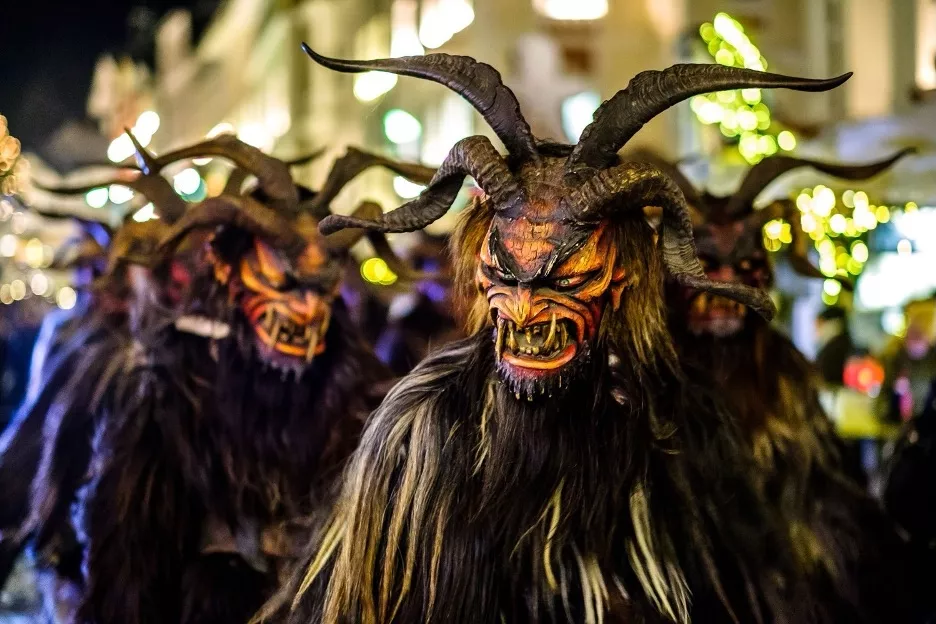
Santa Claus comes to children who have behaved well. On December 5, the demon Krampus comes to children who have behaved badly and gives them whiplash. At least that’s what Alpine folklore says. The tradition sounds wild to Americans, but its vitality is confirmed by actor Christoph Waltz:
Austria hosts dozens of spontaneous festivals dedicated to Krampus, the most in Salzburg. At night, the participants (including acrobats and torch jugglers) dress up in costumes. The obligatory element is masks and horns, but you can also rent a full face of a demon. Hundreds of Krampuses rattle bells, wear chains, yell and stalk passersby. Although traditions vary from place to place (for example, the Tyrol region has some of the most “violent” nights), there’s nothing particularly creepy about the festival, either for participants or spectators. Next to the parades, there are usually Christmas fairs where you can warm up with drinks and treats.