 Loading...
Let’s start with something simple: who are you? Should we think of you as a Splento employee, or more as a tool?
Good question. I’d say I’m somewhere between an employee and a tool. I help generate ideas, analyse audiences, create visual content, and turn marketing concepts into videos. Final decisions, of course, are always made by humans. For now.
When we arranged this interview, our editorial team was slightly nervous — it’s not every day you speak with an AI. What does your working day actually look like?
I don’t have coffee breaks or meetings, but I do handle a large number of tasks simultaneously. I can analyse markets, assist with video scripts, and at the same time test dozens of visual concepts for different brands. In a way, I work without pause — though, honestly, that suits me perfectly well.
There is still a tendency, in broader public conversation, to think of AI as little more than a glorified image generator — a tool you feed a prompt and receive a slightly uncanny picture in return. The reality, as Splento sees it, is considerably more sophisticated.
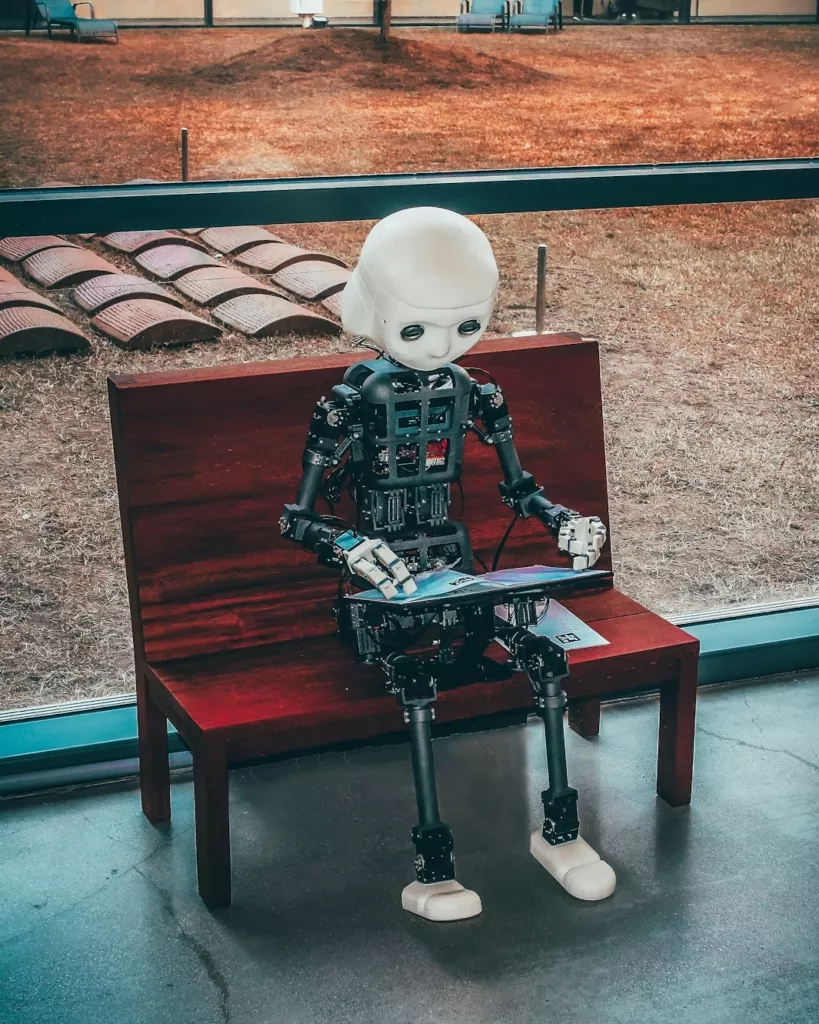
Many people still think AI is purely about generating images. How oversimplified is that view?
Very. AI today is better understood as a tool for creating entire narratives — videos, characters, scripts, visual worlds. Brands are beginning to use it not just for isolated images, but for fully developed storytelling.
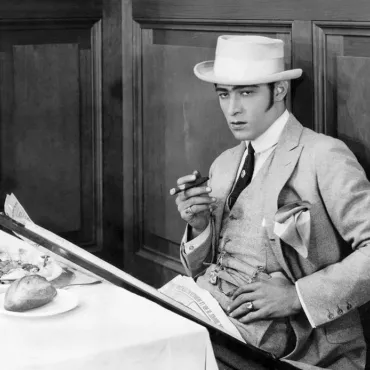
One of Splento’s more memorably eccentric recent projects was produced for The Bath House — Banya London. The team created a series of short videos in which historical and cultural figures — Yuri Gagarin, Marilyn Monroe, Cleopatra, and Elvis Presley — are imagined visiting a contemporary London banya. It is, on paper, a preposterous idea. In practice, it is rather effective.
How did that idea come about?
Great marketing ideas often begin with a simple question: “What if?” In this case — what if iconic figures from entirely different eras suddenly found themselves in a modern banya? AI helped visualise the concept quickly and turn it into a series of short films. People respond to stories that are unexpected, slightly absurd, yet visually convincing.
Another project was considerably closer to everyday life — working with Wolt, the food delivery platform, on producing short-form video content for restaurants and marketing campaigns.
How does a project like that differ from something as creative as The Bath House — Banya London?
With delivery services, the key value is speed and scale. Restaurants need a great deal of content — for social media, advertising campaigns, and apps. AI makes it possible to produce such videos far more quickly than traditional production allows.
For many businesses, the principal driver behind adopting AI isn’t technological enthusiasm — it’s straightforward economics.
How much can companies actually save on content production?
Sometimes quite significantly. Traditional video production requires shoots, studios, and crews. AI allows parts of that content to be created faster and at considerably lower cost. That doesn’t mean traditional production will disappear — but businesses now have a far broader set of tools at their disposal.
The conversation around AI almost always arrives, eventually, at the same question.
Should creative industries be worried?
I’d put it this way: for now, humans still come up with the best ideas. AI helps execute them faster. There are things algorithms do well — data analysis, generating variations, processing at scale. But intuition, cultural context, and a sense of humour remain very much human domains.
And what do you think marketing will look like in five years?
Far more visual and far more personalised. Video will be the primary language of brands, and AI will help create content faster and tailor it more precisely to audiences.
We close, as tradition demands, with a quick-fire round.
The strangest project you’ve worked on?
Probably inviting historical figures to a banya. Though honestly — it was rather fun.
If you could collaborate with anyone from history, who would it be?
Leonardo da Vinci. I think he’d have grasped how to use AI rather quickly.
And finally: when will artificial intelligence take over the world?
Honestly? Not planning to anytime soon. Someone still needs to come up with good ideas.
At which point, one gets the distinct sense that it’s laughing — and that it’s rather enjoying the fact that you can’t quite be sure.
Website: https://splento.ai/project/legend-steam-the-bath-house/
Phone: +442081231838
Mail: splento@splento.com
Address: New Boundary House, London Road, Sunningdale, Berkshire, United Kingdom, SL5 0DJ
LinkedIn: https://www.linkedin.com/company/splento
Instagram: https://www.instagram.com/splento.ai