 Loading...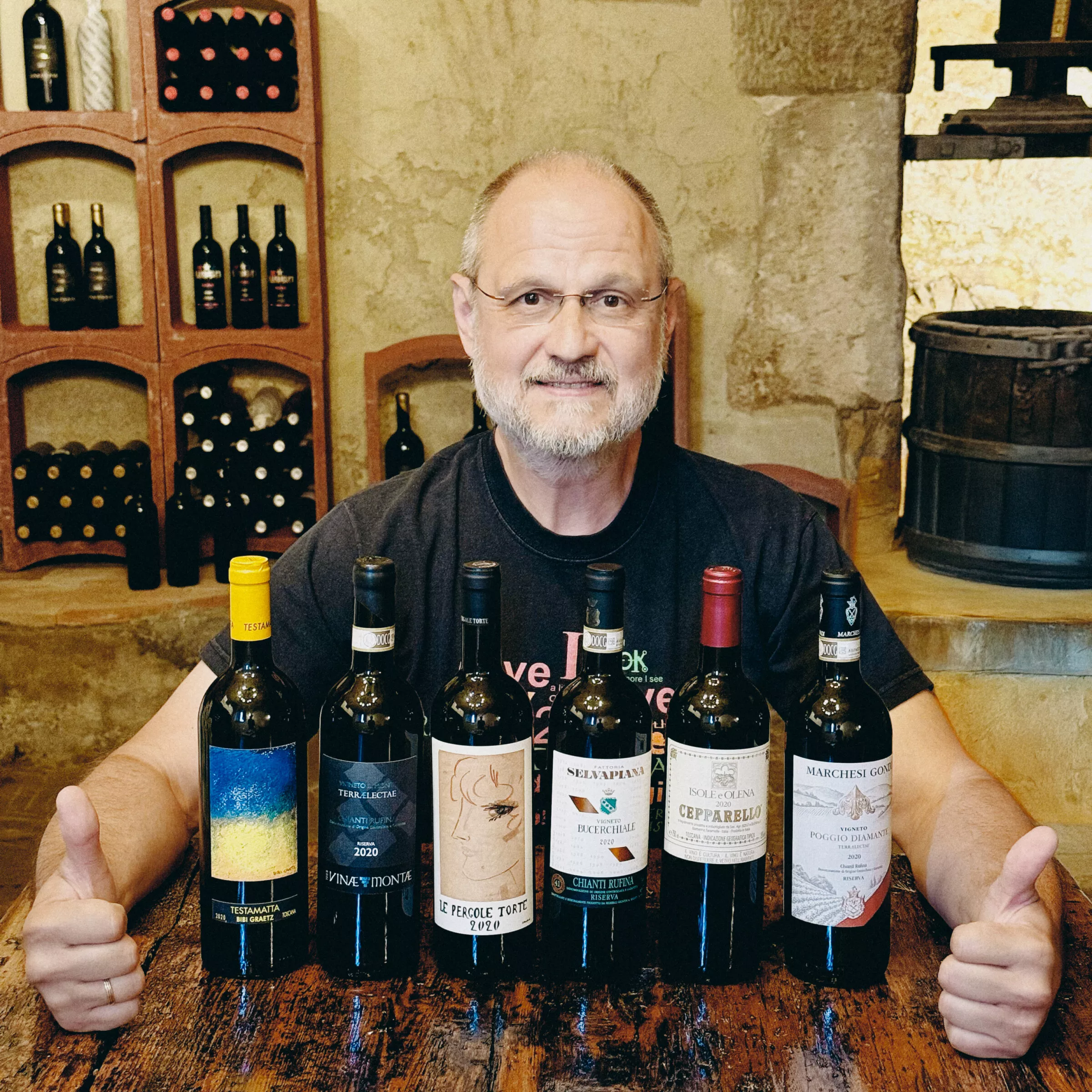
In this interview the founder of Vinae Montae brand tells how to go from the first tasting in Covid to high marks of world critics, about the magic of Chianti Rufina terroir, storming the closed wine clubs in London, saving half a century old vines and the philosophy of “business emotions”, where each bottle is not just a drink, but a collector’s artifact and involvement in a great history.
From consulting to vineyards: a story of “no return”
– Alexei, can you tell us how it all began? Why Italy and why wine?
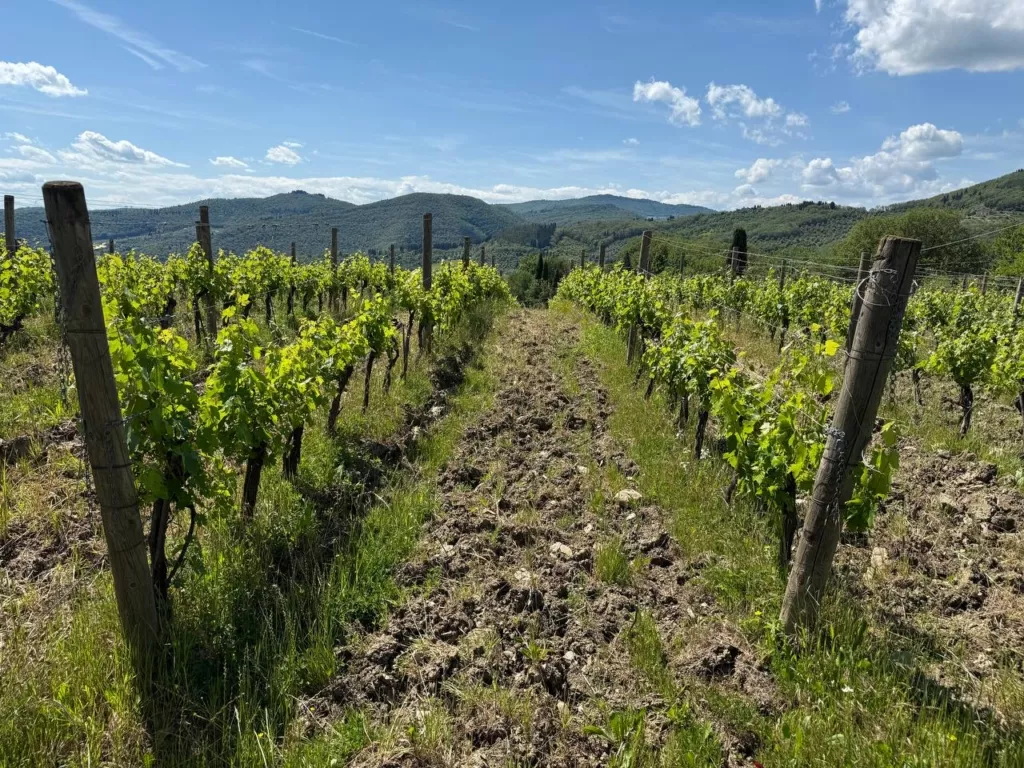
– Things were coming together smoothly, but eventually took a sharp turn. My Italian story began in 1991. I was a student, the USSR had not yet collapsed, and I found myself behind the Iron Curtain for the first time as an exchange student. We spent three months traveling around Italy – Rome, Florence, Milan, Venice – and it was love at first sight, which I carried through my whole life. Later, sometime around 2008, we had a small house in a picturesque but very touristy place near San Gimignano in Tuscany. It was a lovely “casa vacanza” – perfect for a vacation, but not giving the feeling of a real home. And by 2014 a clear desire to live here for real was formed. We didn’t run away from anywhere, we went where we wanted to live. In 2016 we found a house near Florence with a tiny vineyard of a hectare and a half. We were told it was “very nice.” Plus, I had luckily kept a permit to plant a 1.5 hectare vineyard from San Gimignano, which matched perfectly with the empty lot at our new house. We believed it and decided to give it a try: if we lost money, we could at least try. But the real turning point came later.

– When did a hobby become a “life’s work”?
– In 2020, at the height of the covid, we had a blind tasting of our first vintage against some serious competitors. Although… I don’t like the word “competitors”, let it be “analogs”. When I realized that our wine was comparable to samples for 60 euros and more, and not 30 or less, that was the first “bell”. And the final point of no return was the beginning of 2022. My life principles did not coincide with the opportunity to do oil and gas consulting. We lived in England for 9 years, we had an apartment in London. We realized that we didn’t have enough resources for everything at once, we got out of assets in London, moved to live in Italy permanently and completely switched to wine. In 2024, at the VINITALY exhibition, I changed my avatars and social media name to the name of the winery and said to myself: “That’s it, we are not looking back anymore.
– Are you a winemaker? Or a sommelier? What’s the difference?
– I often explain that a winemaker is not a sommelier. A sommelier looks at a wine from the moment it is born: growth, maturity, decay. A winemaker basically looks at a wine from the moment it is “conceived” to the moment it is “born” – a process that takes about four years. Two years the wine lies in barrels, you taste it from those barrels, you try to understand how it will turn out. We live in expectation. After two years you see the result. Then the wine ages in bottles for another two years. It’s a project with a long planning cycle that you’re constantly involved in. In 2020, when the Covid came, we just bottled the first vintage and had the first tasting with my wife Ella for ourselves. And then we tasted it and realized that we had a product in the bottle that was quite comparable to good analogues… And we started to position it slowly.
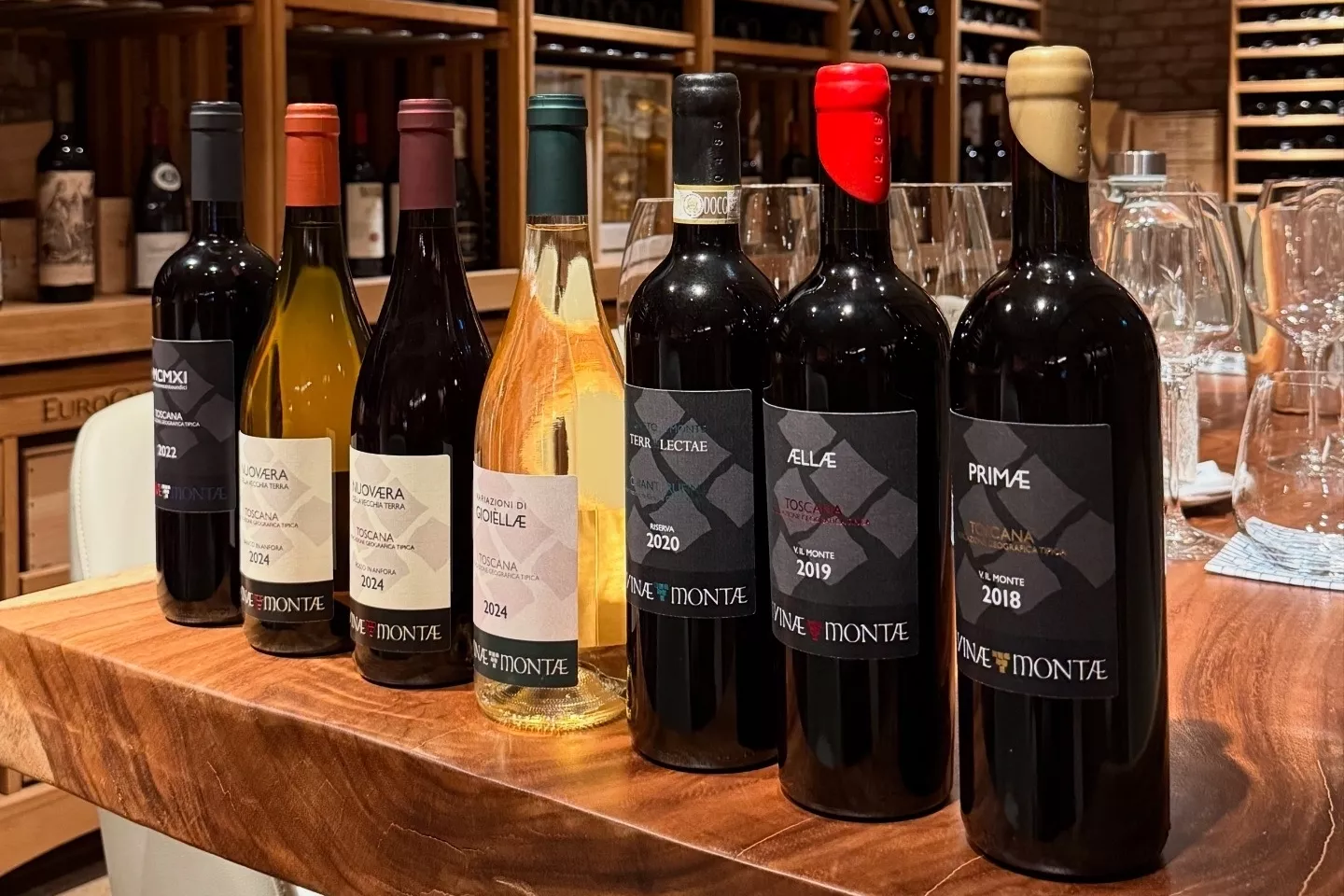
Our debut wine was a blend of Cabernet Sauvignon and Sangiovese called PRIMAE. Over time, we began to produce mono-varietal wines – pure Cabernet AELLAE and pure Sangiovese TERRAELECTAE, which allowed us to fully develop the character and potential of our first vineyard by the 2020 vintage. In parallel, the concept of the rosé and white wine range was also formed.
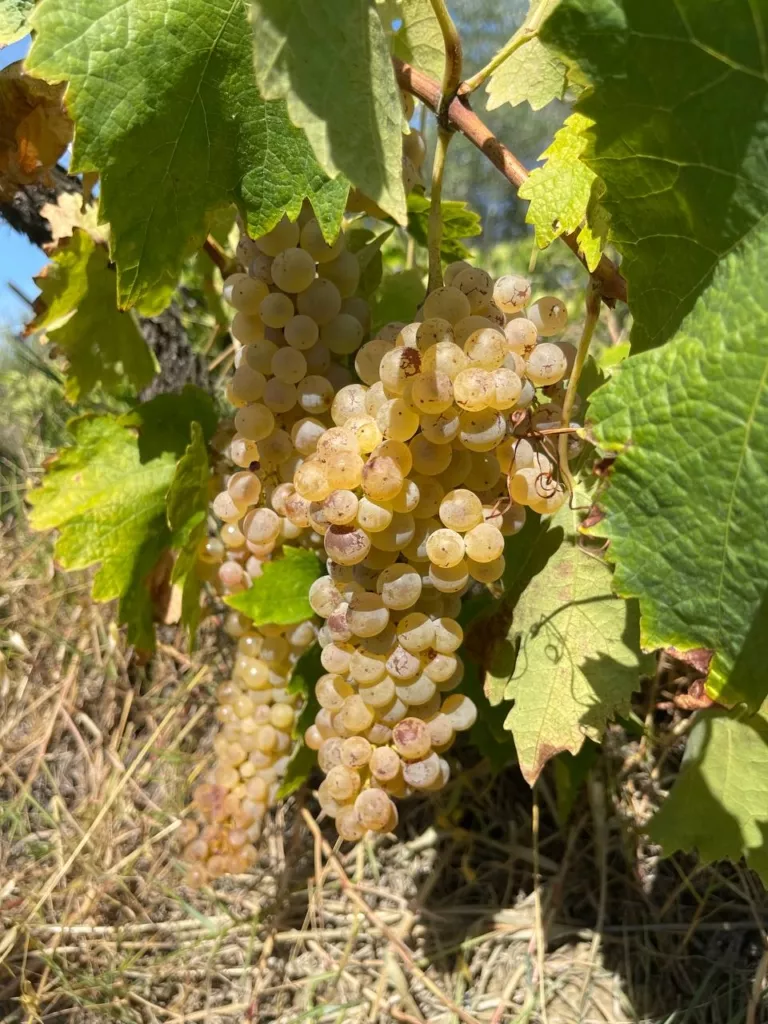
In the same year, 2020, we planted a new vineyard, which started producing its first full harvest in 2024. While the vines are still young and their root system has not gone deep into the soil, these grapes are ideal for creating light rosé and white wines under the GIOIELLAE label.
Today, our core portfolio is built around three iconic wines: AELLAE, PRIMAE and TERRAELECTAE, each of which undergoes a long and meticulous production cycle of 4.5 years. The NUOVAERA della Vecchia Terra (“New Era of the Old Earth”) project and the wine of the same name occupy a special place in our philosophy: we literally save unique 54-year-old vines, the harvest from which we vinify in clay amphorae.
The magic of terroir: river, mountains and good fortune
– Let’s talk about geography. So, region is more important than technology?
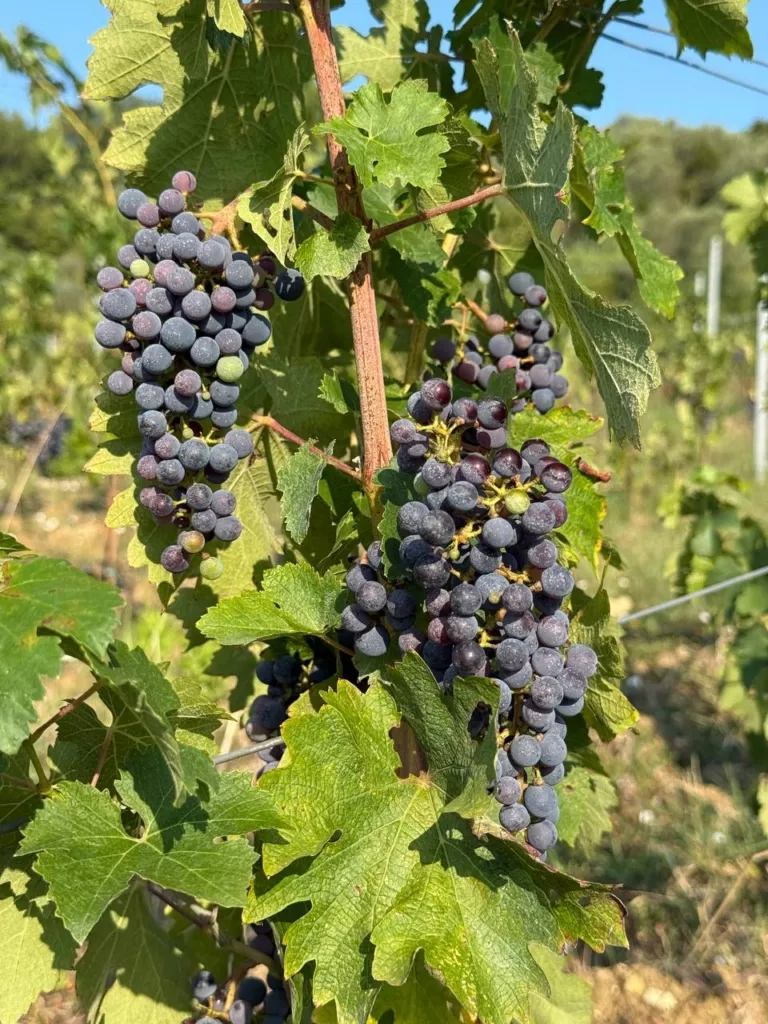
– Let’s include in our conversation the concept of terroir, which is the “taste of place”: the way the soil, sun and climate make a wine unique to that particular piece of land. Italy has a colossal number of grape varieties. And each one is tied to a territory. Take Sangiovese, the classic Tuscan grape. It is also grown in other countries, such as the United States or Australia, but it only shows its 100% potential here.
We are located in Chianti Rufina. Not to be confused with the producer RUFFINO! The entire Tuscan mainstream is on the left bank of the Arno River, closer to the sea. And we are on the right bank, sandwiched between the river and the Apennine ridge. This is the northernmost point where you can make wine in Tuscany. Higher up are the mountains, where the grapes do not ripen.

We have a different microclimate and a different soil – clayey limestone. This gives not fruitiness like in Chianti Classico or Montalcino, but minerality and “earthiness”. I’m a fan of my region. And I’m lucky: I have a unique plot. It’s like the rich man’s anecdote: “I took an apple, sold it, bought two apples, sold them, bought four apples, sold them, and then my aunt died and left me an inheritance”. In our case, it’s terroir. You can “work hard”, study everything, but without a special terroir you will not succeed, and our terroir is special.
If you’re going to make wine, you have to get lucky with some uniqueness in your vineyard. It doesn’t have to be the best in the world, because that’s subjective. But it has to have something unique about it.
– You deliberately chose the format of a boutique brand. Is there no desire to scale up to supermarkets?
– In my opinion, you can survive in the wine industry if you are either a giant (and make more than a million bottles) or a niche and expensive “boutique”. The most dangerous thing is to get stuck in the middle with a volume of 200-300 thousand bottles. You can no longer guarantee exclusivity, but you don’t yet have the weight to dictate terms to the chains. More often than not, such winemakers simply work for middlemen all their lives.
Our client is a sophisticated collector. If we talk about the portrait of my ideal client, it is a person who wants to get a bottle and surprise his friends: “You’ve never tasted this and you don’t even know where to buy it”. Wine is about emotion and communication. We’re not selling a liquid, but an involvement, and that’s a collector’s story. And we want to convince people that our wine should be collectible. One critic wrote about our first vintage of pure Sangiovese, TERRAELECTAE, that it should be drunk from 2027 to 2047. I did the math: I’ll be 77 years old in 2047. That’s our horizon.
– How does your inner circle feel about you changing careers and becoming a winemaker?
– Friends are the most difficult clients, such skeptics! They tell me: “Lesha, you’re a great consultant in taxation and oil and gas, but what kind of winemaker are you? Real winemakers are families that have been doing this for centuries, the Antinori, the Frescobaldi!”. And my response is, “My whole job for thirty years has been to solve problems for which no one had a ready answer, neither the client nor me.” It’s the same way now, I’m looking for answers to topics that are unfamiliar to me at first, and I’m always on a never-ending quest to find those answers. Firstly, it’s interesting, and secondly, many iconic wines in traditional regions are created by newbie foreigners.


– Tell us about your professional team. How do you divide the roles?
– Once the strategy has been defined, the team comes into play. My main principle is simple: every specialist in his or her position should know the business better than I do. For example, I should not and cannot know organic chemistry better than an oenologist. An oenologist is not just a person who knows how to taste wine. It is a specialist with a deep chemical and biological education and, of course, a unique “nose”. An agronomist is a person with a biological education, and without him I won’t do anything, because I don’t know which fly will “bite” my grapes today. This is not a figure of speech, but a reality: flies “settle” in grapes and multiply there. And how to “evict” it from there is not my area of expertise. But I firmly know that in my team there must be people whose expertise in their narrow areas is a head above mine.
If I may, I’ll even digress from the topic of wine to explain it with an example… Ronald Reagan. You know why I love that politician? Because he always recognized that he knew the least on the team, yet he set the strategy. So my task is to define the strategy, assemble a team of the best pros and motivate them.
When we were blending the first wine, my oenologist Valentino Ciarla – I’ve been incredibly lucky with him! – put two glasses in front of me and said: “You choose. From my point of view, both are equally good, but it’s your wine. You’re responsible for it.” If the strategy is boutique, do what you like, not what the market likes.
– How can a small but proud brand get into the best restaurants in the world, the best wine lists without huge advertising budgets?
– The hardest thing is not to make wine, but to persuade people to try it. In London, I stormed 67 Pall Mall (the best private wine club) for two years. It was like a fifth grader trying to “jump” up to a tenth grader and say, “Look, I’m pretty too!”. After two years, we got through to them, they tasted – and our wine was on the map immediately.
In Italy, we were partly helped by the Covid, strangely enough. We met the great chef Gennaro Esposito – he has two Michelin stars. He was sitting in an empty restaurant, he had nothing to do, he brought us pizza himself. I told him our story and he said: “The market doesn’t need another Tuscan wine. But another interesting story, it does.” He tasted our 2017 PRIMAE wine, gave it a thumbs up in approval and took it into the cellar with the words, “It will appear on the map in about eight years when it is ripe.” So we wait… People like that don’t shake your hand because you’re a conventionally nice guy. They only do it if there’s quality in the glass.
And we also have an important principle. We only put wine in restaurants that we ourselves are prepared to eat in. It’s a matter of brand reputation.
– In such a conservative industry, aren’t you looked at as an outsider?
– You know, in the best regions of the world – in Bordeaux, Burgundy, and even in Tuscany – many outstanding wines are made by foreigners. Le Pin in Pomerol, for example. People come with a fresh perspective and ask: “Why do you always do it this way? Let’s try it differently.” Closing yourself in your “chrysalis” is a path to nowhere. Progress is born in communicating with those who think differently than you do. I’m not afraid to be wrong. It’s not scary to be wrong, it’s scary not to try.
About chemistry, a wife, and saving vines.

– What about wine magic? Moon phases, rituals, chemicals?
– No, we’re not esoteric biodynamicists, but we are an organic grower, meaning we don’t use pesticides. Removing the grass under the vine with chemicals is cheap and easy. Removing it mechanically is expensive and hard. But the vine absorbs everything. If there is chemical in the soil, it will inevitably be in the berry and then in your glass.
You know how I test wine? In a simple way: if I drink a whole bottle alone under a good meal and in a good mood, and the next morning I feel fine, then the wine is pure. It’s not sulphates that give me a headache, but chemicals and pesticides.
– Your favorite wine in the lineup?
– Oh, that’s a tricky question! It’s like choosing a favorite child, impossible. But today I am most fascinated by NUOVAERA della Vecchia Terra (“New Era of the Old Earth”), a red Sangiovese in an amphora. In classic wines we just keep what nature has given us and try not to lose what we have grown, but Sangiovese from old vines in an amphora is completely my idea, my experiment. There is also AELLAE, our most expensive wine, a “northern” Cabernet. The name is a combination of our names Alexei and Ella (A+E).
– What are your plans now?
– We went to VINITALY this year under the motto: “We save old vines”. One of our vineyards is 54 years old, we are almost the same age as him. This, by the way, was partly the reason why I saved this vineyard. My neighbor wanted to uproot it and sell the planting rights. I offered him to lease the plot to me – that’s how I managed to save the vineyard.
So we are not just selling wine, we are sharing emotions and our life, every part of it. And I am grateful to everyone who is willing to buy and drink this wine by sharing this story with us.
Vinae Montae
Website: https://www.vinaemontae.com
Email: info@vinaemontae.com
Phone: +393488633238