 Loading...
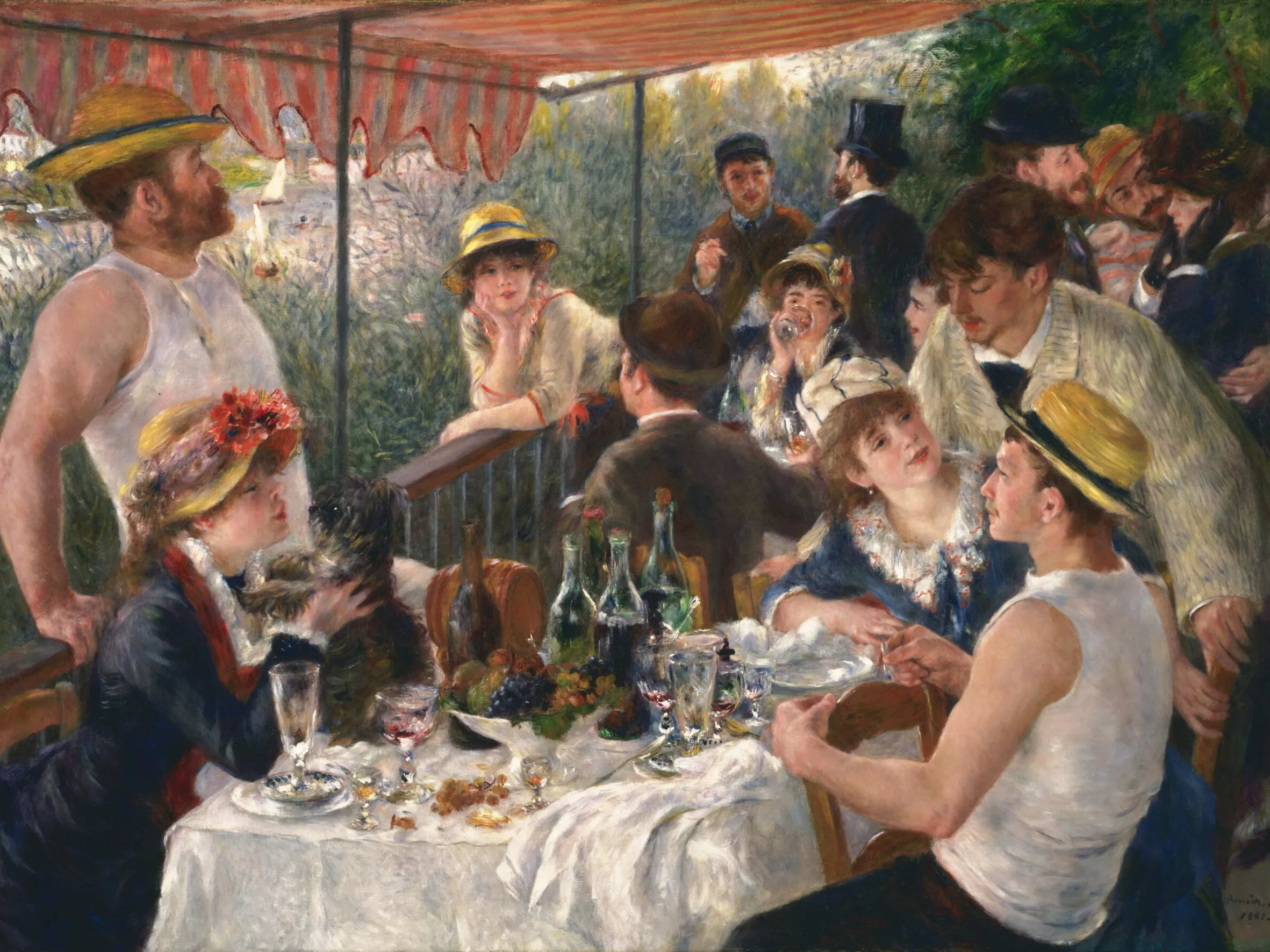
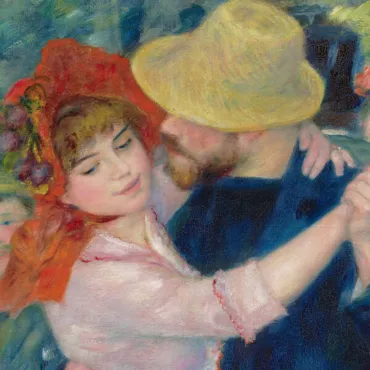
At the Musée d’Orsay – exhibition “Renoir and love. Happy Modernity.” It is extremely popular not only because in Paris for the sake of it returned for a long time not seen here “Frogman” (1869) from Stockholm, from London – “Umbrellas” (1881-1885), from Los Angeles – “Walk” (1870), from Boston – “Dance in Bujivala” (1883) and from Washington – “Breakfast rowers” (1880-1881). And almost all the Renoirs of France are exhibited side by side.
Men and women, viewers and historians, artists and art historians disagree about it. The works of the artist, born in 1841 and died in 1919, turned out to be unexpectedly relevant and even controversial, although it would seem that all disputes and doubts about Pierre-Auguste Renoir remained in the glorious times of the Third Republic, the “salons of the outcasts” and mockery of the Impressionists. “Renoir and Love. Happy Modernity” poses an uncomfortable question: is it permissible to talk about beauty and love in the most ghastly times of world history? Is it forgivable to be known as an optimist among the humiliated and insulted? The organizers of the exhibition clearly cannot answer what one would like to hear: “Not only forgivable, but the only possible.” They are trying to defend Renoir against critics of the past and present, but they cannot do so openly.
We are left to wonder how at the same time could appear the idyllic “Breakfast of Oarsmen” and, say, “The Battle in the Cemetery of Saint-Priva” – the bloody melee of the Franco-Prussian War, the work of the brilliant French battalist Alphonse de Neville. One stumbles upon it while walking through the row of Renoirs in the halls of the Orsay – a comparison not envisioned by the curators, but an inevitable one. If you look at his work with the history of France in mind, there is a sense of almost defiant, bellicose calm. He lived in an era that was not at all disposed to serenity, but in his painting there is neither anxiety nor catastrophe. Dancing, strolling, flirting, the sun’s glare on the water. These days, for such a stance the artist would be thrown out of decent society, accused of escapism, of fleeing from reality. “In my opinion, a painting should be pleasant, cheerful and beautiful, yes, beautiful! In life is already too much hard to depict it,” – said Renoir, when he was forced to explain: with whom he, the master of culture.
Many people believed then, and still believe now, that they have already drunk all the world’s bitterness, that what is happening to them is indescribable and has never happened to anyone. Pierre-Auguste Renoir saw two wars, two sieges of Paris, the Paris Commune with barricades and shootings in the streets, political crises, social upheavals, the change of the republic to the monarchy and vice versa. He served in the army as a cavalryman, hiding from the communards, then from Versailles, endlessly starved, lived on centimes, received arrogant refusals, trembling with fear for the lives of his sons, Pierre and Jean, who fought in the First World War and wounded at the front.
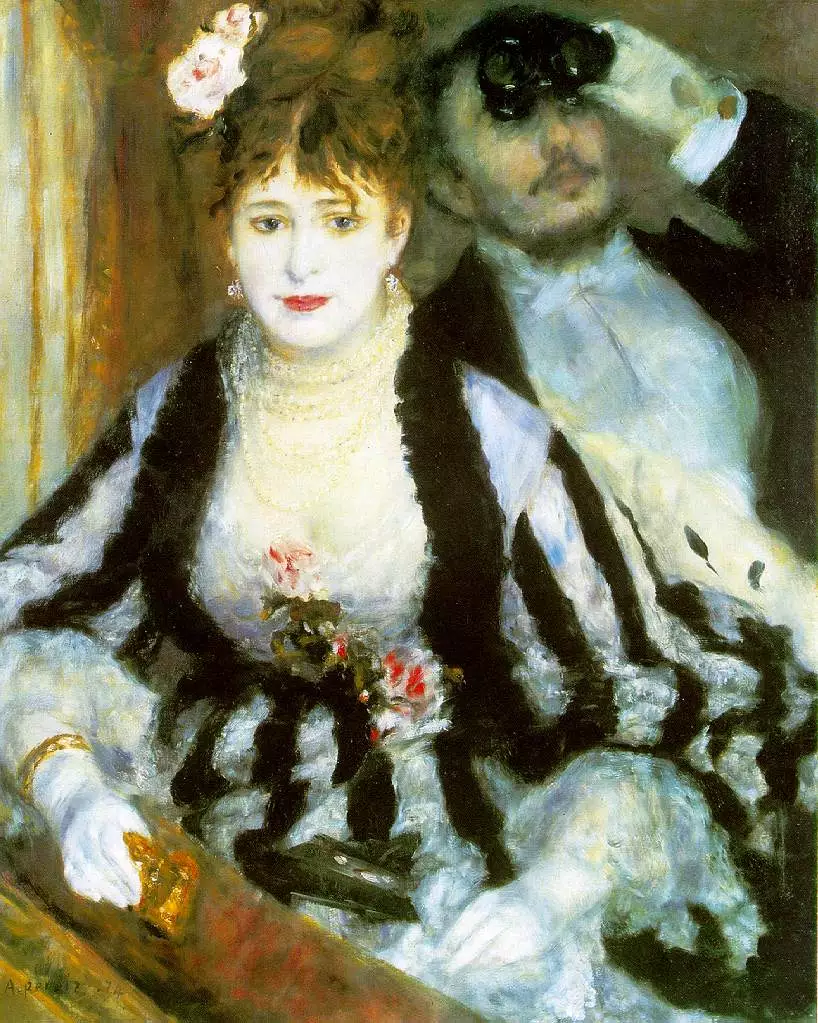
The artist had another happy for himself and unbearable for critics ability: he worked quickly and a lot, never inventing in advance for his things politically and socially significant themes. And whether important topics can come to mind at a rate of once every five days – in such a rhythm Renoir wrote his paintings. The exhibition includes his portrait of Richard Wagner. Accidentally meeting in Palermo, Renoir persuaded him to pose, painted the portrait in half an hour and still scolded himself for “overdrawn”, did not stop in time.
He was not interested in the theory and literature surrounding painting, but in painting itself – while working, he solved the riddles of color and form. In the memories of him constant stories about how he painted a woman from the back and could not understand how to achieve the desired effect, and then suddenly found a light or reflex and in a quarter of an hour solved the problem to his own satisfaction. And allegedly even before his death, when he saw the bouquet of flowers that were soon to be placed on his coffin, he said that he suddenly saw and understood something in them that he had not understood for eighty years.
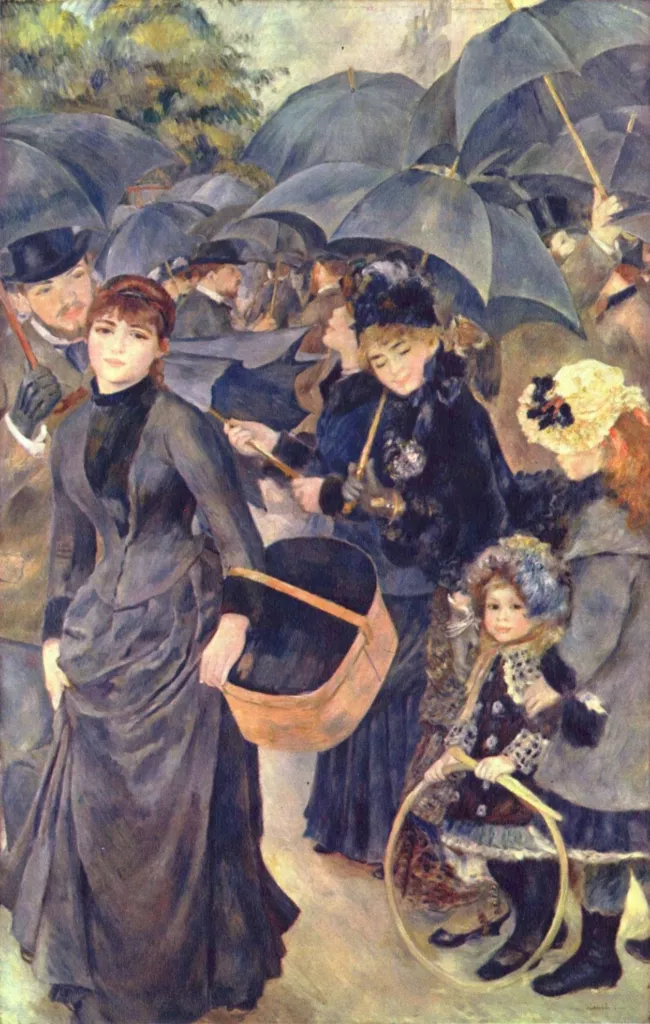
His images have outlived not only their time, but also the very boundaries of painting. They entered the cinema and were repeated in “Country Walk” by his son, the great director Jean Renoir, who recreated on film “The Swing”, “The Froglade” and “The Breakfast of Rowers”. One of the sections of the exhibition is called “Country Walk”. Not to mention that a year after his father’s death, Jean married his last and favorite model, Catherine Essling, Renoir’s “Blonde with a Rose”.
We saw the story of this latest love triangle in the 2012 movie “Renoir. The Last Love” in 2012, where the passion for young Catherine, called Dédé in the house, binds father and son. Love becomes a message from one generation to the next, a symbol of beauty and life that one Renoir reveals to the other. The father sees in this woman a perfect model, the son – a beautiful actress, who played in his films a dozen and a half roles.
We should certainly not consider a successful and renowned award-winning artist a fortune-teller and reproach him for being unconscious. Much, of course, depends on how we see him: a handsome dandy from his youthful self-portraits or a bristling sickly hedgehog with a crazy look and tassels sticking out of his fists in later photographs. He painted even when his body refused to serve: after fractures, with fingers disfigured by arthritis.
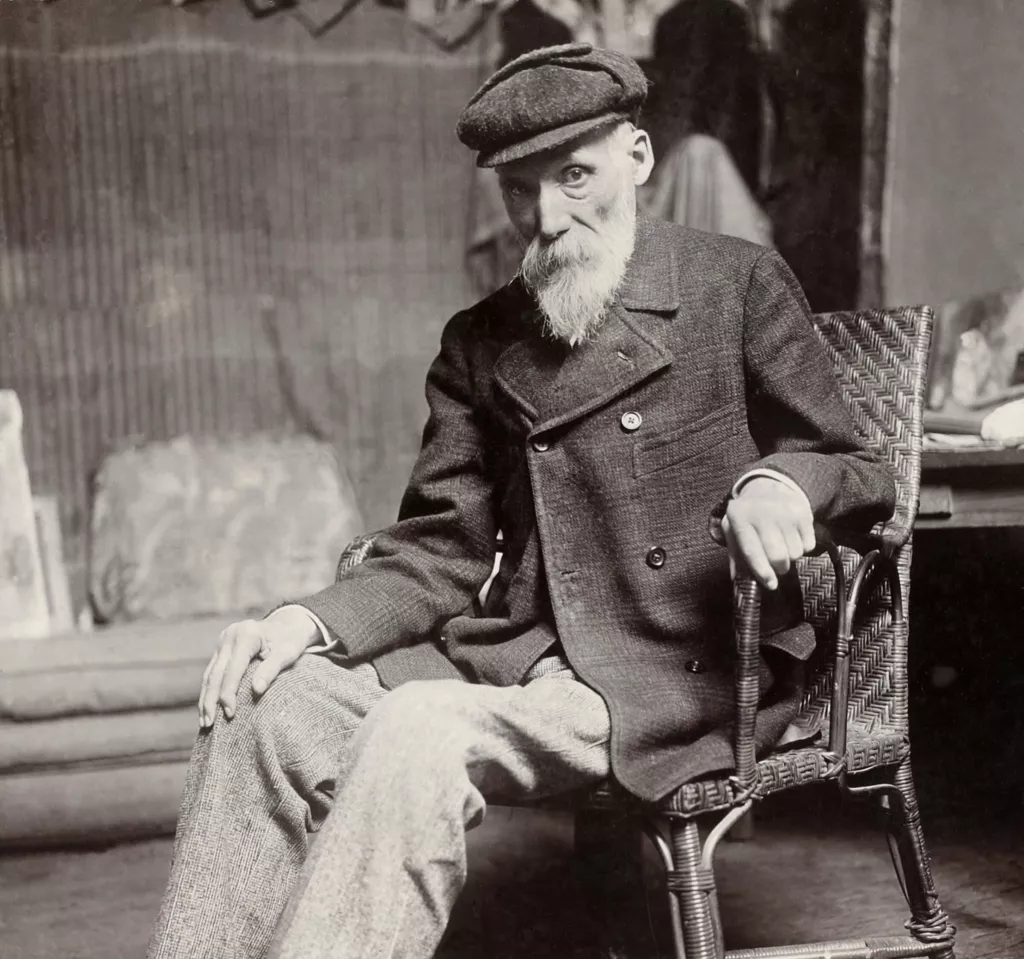
Renoir worked until the last day, suffering in spite of and absolutely not wanting to rest. He was in a hurry, even refused buyers, explaining that he would like to leave his children more paintings, which even then could ensure their future. The most difficult time for the old man was the night, when there was no light and there was only pain. But in the morning he was lifted up, washed and taken in a chair on wheels to the easel, where he could write again, that is, live. Such persistence is as striking as his lightness of style, his happy outlook on people and nature, especially in this combination – a man in constant physical pain creates a world in which there is almost no pain.
And yet the moralists still cling to him. Renoir was a man of his time, with the prejudices and habits familiar to us from his friends Maupassant and Zola. He could talk about models, girlfriends, wives, his own and others’, with the cynical candor of a former dragoon that would baffle the modern pampered viewer. The women in his life were not only the heroines of his paintings, but also his maids, his lovers, the mothers of his children, unequal beings on whom he depended and whom he used shamelessly at the same time.
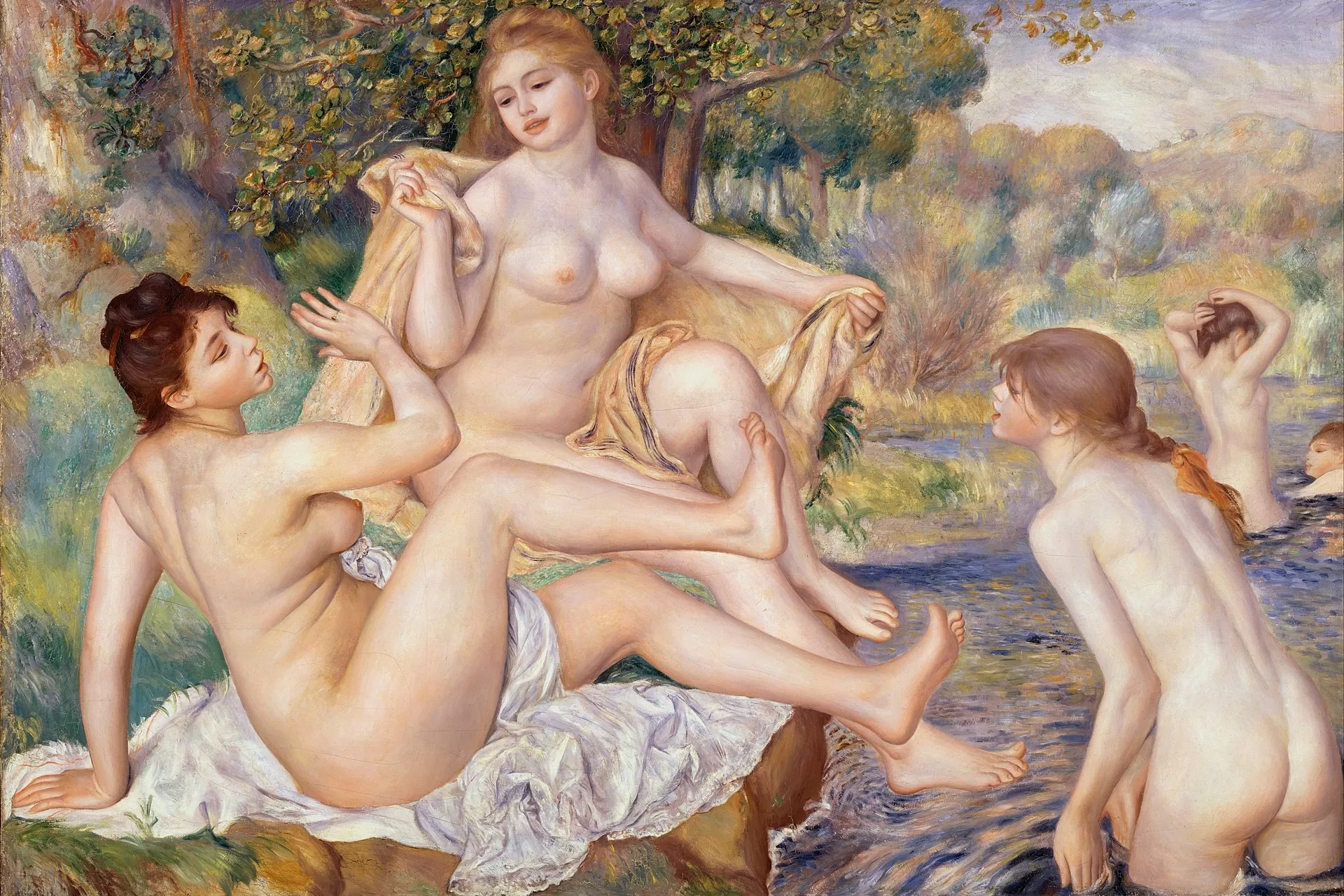
“These sketches I made of my maids,” he told the gallerist Ambroise Vollard. – I had several who were beautifully built and posed with angelic patience. But I’m not very picky. Any ass will do for me, as long as it reflects the light well.” These words have been quoted more than once by contemporary critics who reproached the artist with a rude and uncomradely attitude towards women. Many articles have been written on the dissertable topic of “Renoir and the ass” – I have read them. They cite an anecdote about an old man teaching Amedeo Modigliani how to paint nudes: “When you paint a nude woman, you should sort of caress her seductive ass with a brush…” – “I’m not interested in asses at all!” – the proud Italian burst out and must have spat. Modigliani himself was dragged to the police because his nudes had elaborate pubic hair. Let us not be arbiters in such delicate matters: there is no arguing about artistic tastes.
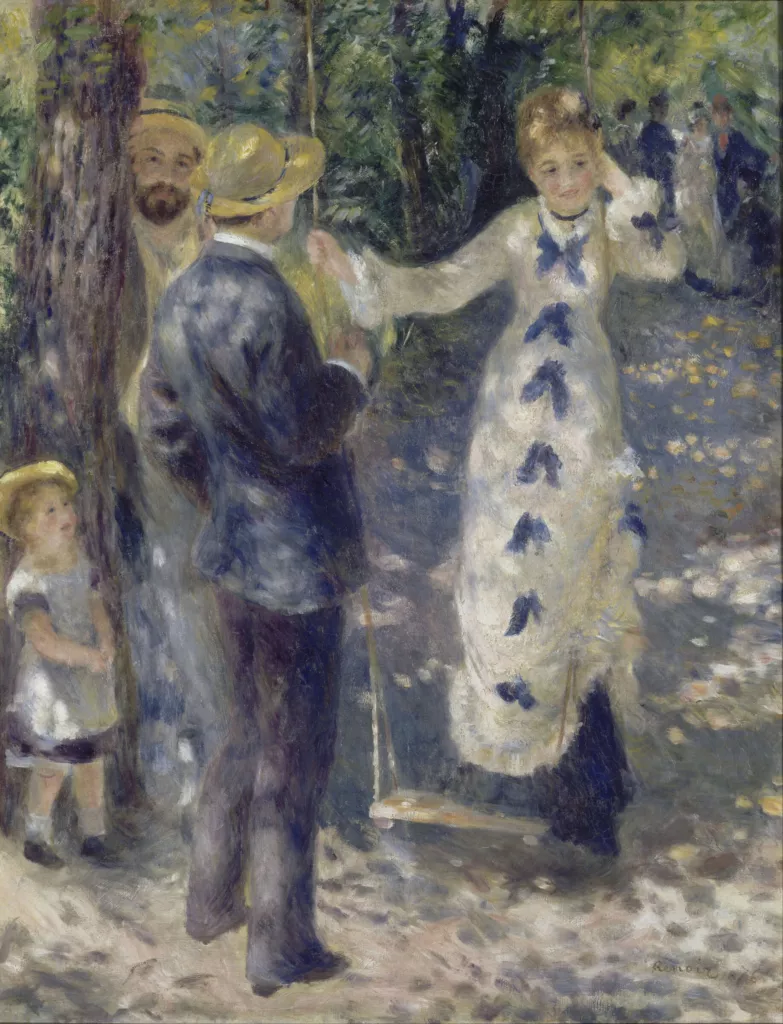
Still, better to be a sexual maniac than a political one. “I have known artists who did no good because instead of painting women, they seduced them,” Renoir recalled. And look at “Ball at the Moulin de la Galette,” or “The Swing,” or “The Breakfast of the Oarsmen.” These are not just scenes of merriment. There is tension, a play of glances, the hidden relationships of characters – recognized or invented by the artist. A woman surrounded by men – she is free or vulnerable. She chooses or is chosen. Who is stronger and more important in this fight? Hardly the stupid men.
“Happy Modernity” – the title of the current exhibition is not without challenge, because this art does not argue with the world. It comforts it. In an age when the artist is expected to take a stand, Renoir remains an uncomfortable example of a master who chose joy rather than struggle. Does a master have to witness catastrophes to become great? And must he carry this sense of catastrophe into his art? Or is it his right and privilege to create a space where life looks better than it is? Is it a deception? But why? Or maybe life really is better than we see it?