 Loading...
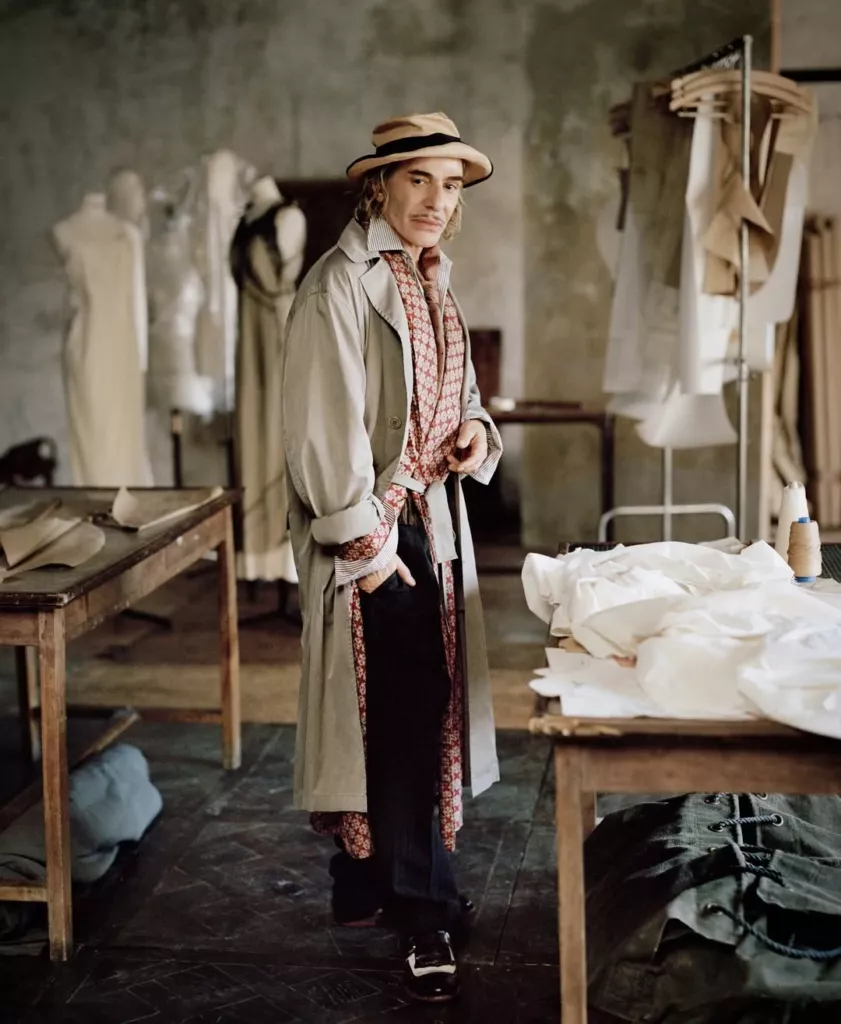
By the end of 2010, he was a fashion superstar, the designer of his generation, Anna Wintour’s favorite, the creative director of Christian Dior, and a heavy drinker prone to outbursts of aggression.
Those were the last dark days before the rise of cancel culture, when talent and prestige almost automatically shielded people from accountability for misbehavior of varying severity. There were some amusing incidents as well—for example, when guests at the Ritz were unable to enter the elevator for about three or four hours because it was occupied by a naked man growling at them and claiming to be a lion; Dior recognized its creative director as the king of beasts, apologized—and the matter was swept under the rug, or more precisely, into a black velvet bowler hat of his own design.
There were, however, some that were far less amusing.
The chronicle of the fashion god’s fall from Olympus began in October 2010. The scene of his fall and crash to earth was the trendy Parisian brasserie Le Perle on Rue de la Vieille-du-Temple in the Marais, near where Galliano lived and where he went to get drunk. Vogue wrote about Le Perle: “People go there to be seen.” In other words, people literally went there to sit next to celebrities, and one day their dreams—which they should have feared—came true: they sat next to John Galliano. He called a woman named Fatiya Ummedur a “fucking ugly Jewish bitch.” Two Italian women, who were subjected to roughly the same epithets, turned on their camera and reminded the Nazi-saluting Gibraltarian that he himself wasn’t exactly a blue-eyed Aryan. “No, but I love Hitler,” Galliano said, wishing the women and their ancestors a trip to the gas chambers. The next neighbors in line, Geraldine Block and Philip Virgitti (he called her a “dirty Jewish face” and him a “fucking Asian bastard”), have already filed a lawsuit.
The *Independent* later reported that neither Blok was Jewish nor Viriditti Asian, just like all the others he had humiliated and insulted on the basis of their ethnicity: in other words, John Galliano’s anti-Semitism and racism came literally from the depths of his subconscious.
At first, the lucky fashion director, failing to notice the shift in the wind, filed a counterclaim, accusing the couple of defamation. But then The Sun published the video. The designer’s defense team had to change their strategy on the fly. In court, the enemies were no longer Jews, but alcohol, sleeping pills, and Valium. The court found Galliano guilty and fined him 6,000 euros. On March 1, 2011, Dior shut down the “zoo,” and the director was fired.
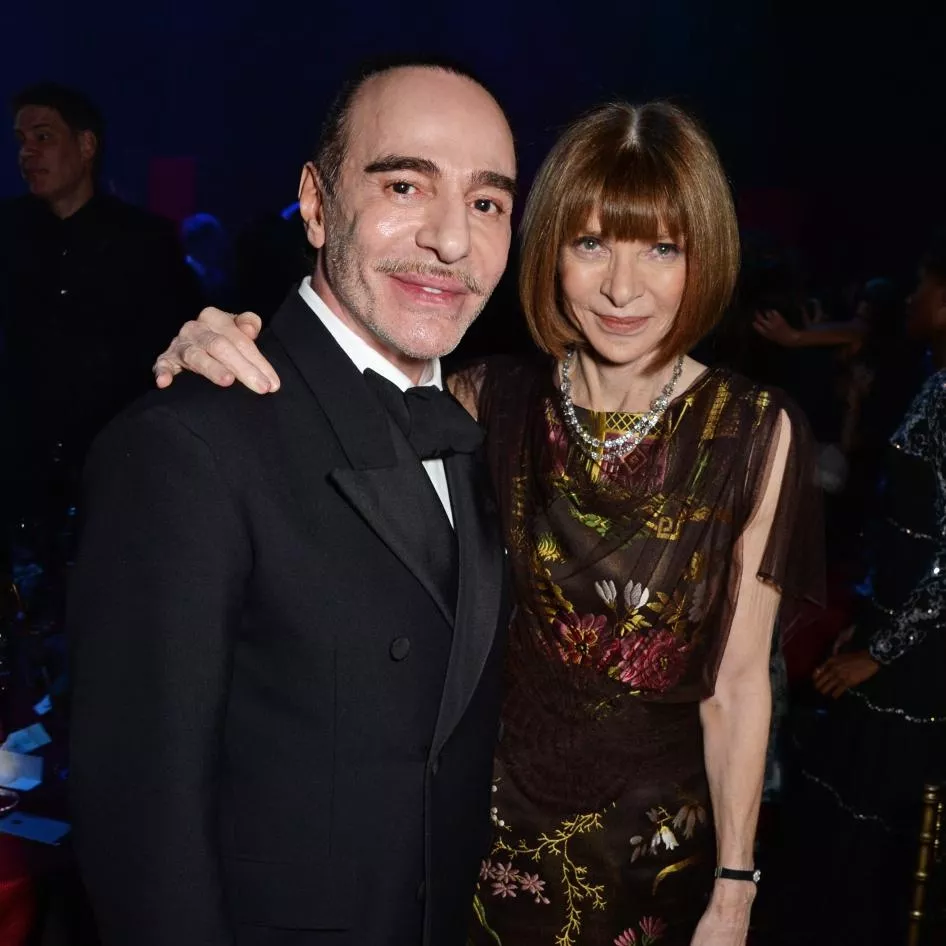
And so, hello, new life—no more advances, no more bars, just sobriety. Waking up a convicted criminal, unemployed, and a has-been, Galliano finally headed where he should have gone long ago—to rehab in Arizona. Two years and three months later, he gave his first “sober” interview to Charlie Rose, in which he asked for forgiveness; he met with ADL Director Abraham Foxman and even made a penitent—albeit somewhat theatrical—trip to Auschwitz.
Forgiveness came quickly: the culprit is simply too talented for it to be any other way. By separating creative merit from moral judgment—and distinguishing the man from his genius, as has happened time and again throughout history—Maison Martin Margiela appointed John Galliano as its creative director in 2014. Less than three years after his dismissal, the industry gave him a second chance—and it has never regretted it. Gaultier once transformed Dior from a respectable heir to a theater of haute couture, restoring the status of the runway show as a spectacle and bringing back the fairy-tale quality of the couture gown. At Margiela, he did almost the opposite: rather than destroying the brand’s language, he learned to speak it in his own voice, combining their signature deconstruction and love for “things turned inside out” with his own exuberant theatricality; in January 2024, the Maison Margiela Artisanal collection show in Paris was a triumph and went viral.
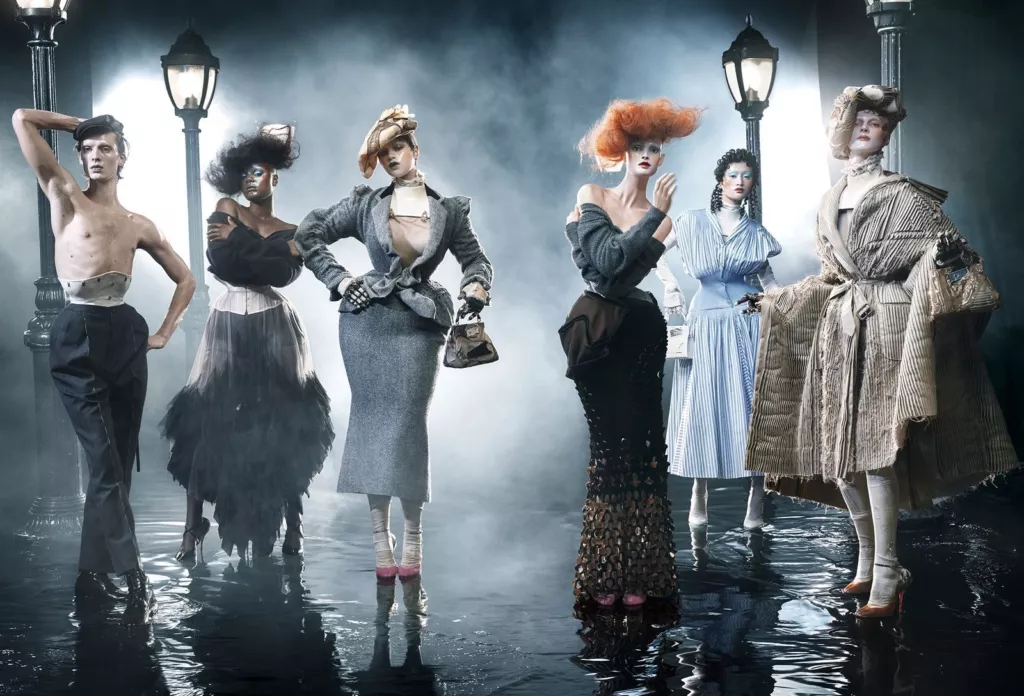
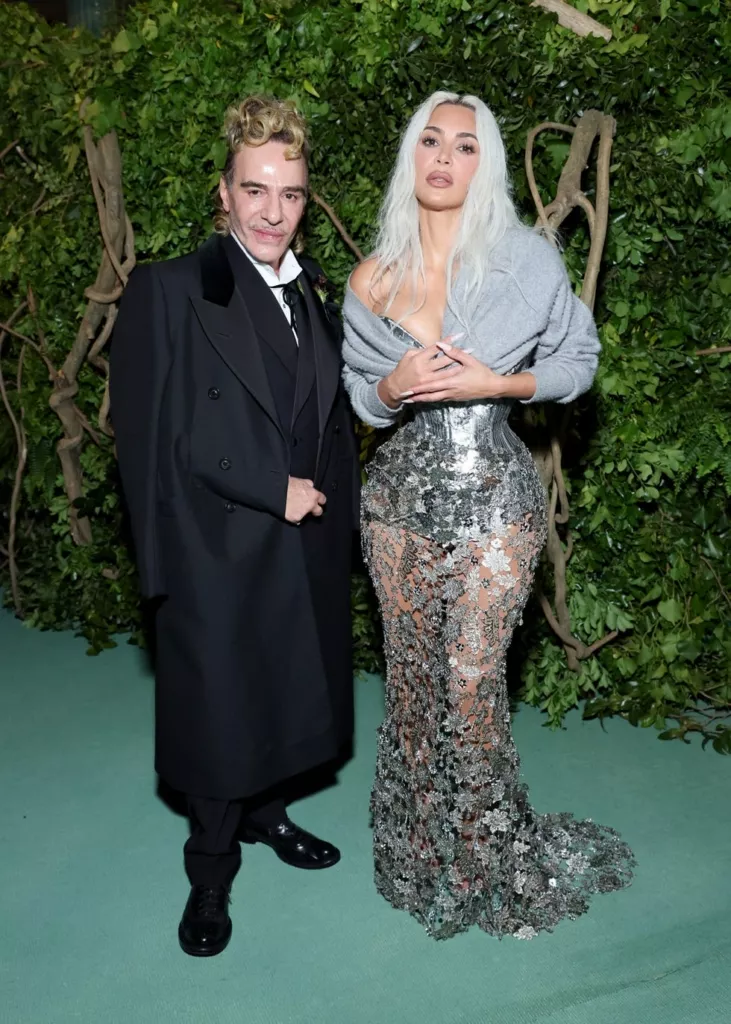
So it seemed only natural when, in July 2026, the Met announced “Horizons,” a solo exhibition featuring John Galliano. This was only the third time in the museum’s history that an exhibition had been dedicated to a living designer—following Yves Saint Laurent in 1983 and Rei Kawakubo in 2017. “John Galliano: Horizons” was scheduled to run at the Met from May 9, 2027, through January 9, 2028. The exhibition was planned to cover Galliano’s entire career—four decades of creativity—from his 1984 graduation collection, *Les Incroyables*, at Central Saint Martins to his time at Givenchy, Dior, and a decade at Maison Margiela, which culminated in that very famous Artisanal collection. The exhibition was conceived as a three-part series; the “Bearings” section was intended to address the scandal, his dismissal, and his return—in other words, no one intended to gloss over anything.
That’s when a wave of new cancellations began—or, more precisely, ripples from the old ones began to spread across the water.
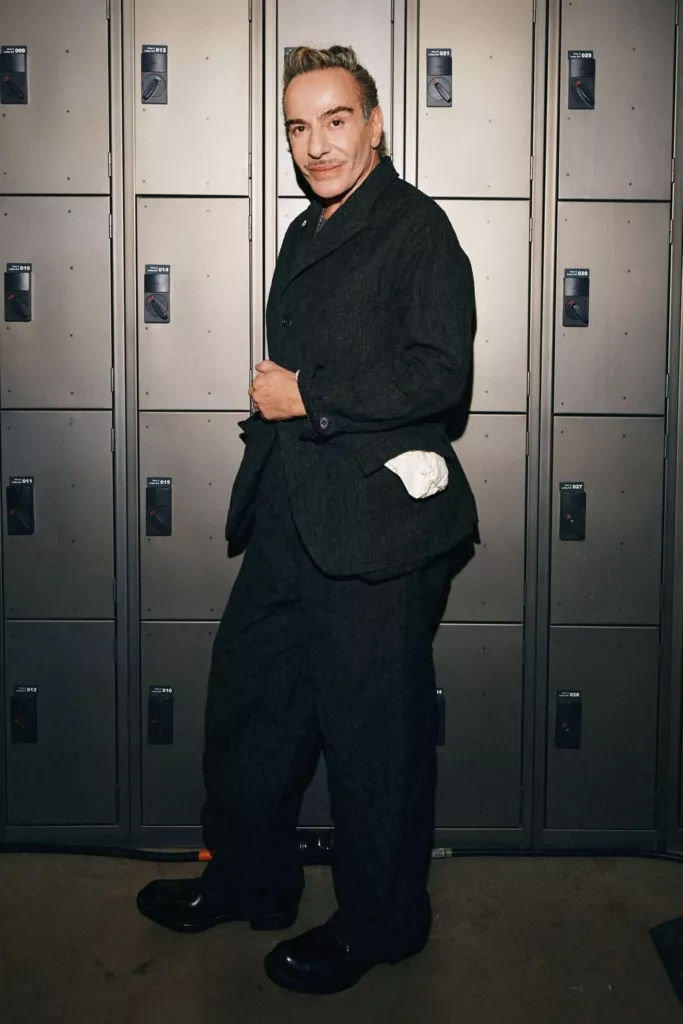
The first to voice her protest was Julie Menin, speaker of the New York City Council, whose parents and grandmothers survived the Holocaust. She was joined by Jonathan Greenblatt, head of the Anti-Defamation League (ADL): he personally visited Met Director Max Hollein. A domino effect ensued: Arne Glimcher, an influential art dealer and donor, warned the museum that he would exclude the Met from his will if the exhibition went ahead. Alice Tish, a major donor, wrote a letter to Hallain in which she called the decision to exhibit Galliano a “management failure” and accused the museum of whitewashing his reputation. Alice’s leverage was also financial: her husband, Thomas Tish, had donated hundreds of thousands of dollars to the Met. In short, by August 30, pressure was mounting from several fronts: it came from the Met’s financial backers and, more seriously, from the city’s political powers that be. Menin, incidentally, reminded the museum that the city allocates 3 million to it annually. The exhibition’s fate was ultimately sealed by a fateful coincidence: the Met Gala was scheduled for May 3, 2027—exactly on Yom HaShoah, the day of remembrance for the victims of the Holocaust. A few hours before the final meeting, John Galliano sent a letter himself. The official wording was cautious: “After much reflection and discussion with all stakeholders, I have decided, with great sadness, that it is best for the exhibition not to take place at this time.” Anna Wintour and Andrew Bolton, the exhibition’s organizers, called the decision “courageous”—though what else could they say? For many years, they had believed that a great artist was allowed a little more leeway than others, and that a public admission of guilt fully atoned for the offense: on their personal scale, the magnitude of the damage caused was clearly less than the magnitude of the artist’s talent. It seems that even the most calculating people in the world miscalculated here.
And this is where the most interesting ethical questions arise: Is revoking a license a second time following a misdemeanor committed fifteen years ago—which was followed by repentance and treatment—a matter of principle or of holding a grudge?
Galliano, in essence, had already been forgiven by the industry: he had regained his position, his place on the runway, and the public’s admiration. But it’s one thing to allow someone to work, and quite another to canonize them. A solo exhibition at the Met—one that tells the unvarnished story of the scandal, the responsibility, and the consequences—would automatically mean a place in the pantheon. And this is where the cultural community draws the line: what Galliano has lost irrevocably is the right to cult status. In other words, the top hat remains, but the halo has been removed. Another matter is that a counterforce and a more powerful authority emerged to challenge the influence of Anna Wintour, who for years had legitimized the privileges, permissiveness, arrogance, and haughtiness of talented people. It was as if a clash of titans had taken place, and she came out the weaker.
And this raises the question: in our world, which still recognizes only the rights of the powerful, whose “no” is actually heard, and whose is lost in the vast ocean of injustice?