 Loading...

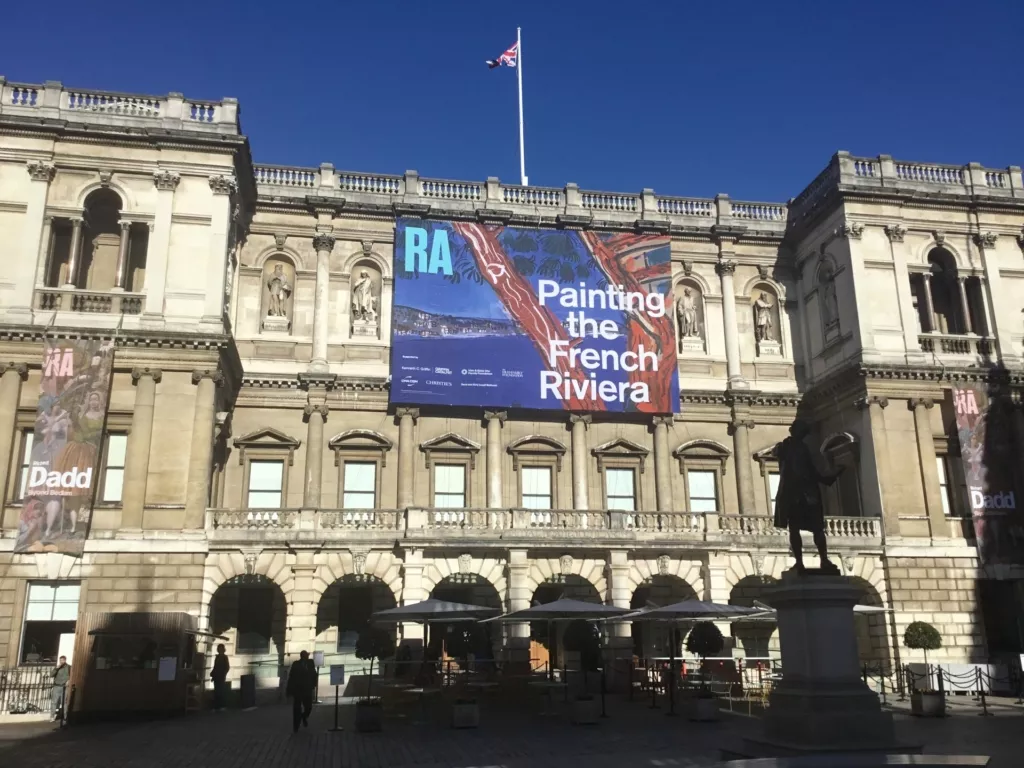
They were always drawn here: the light, the colors of the sea, the warmth… Why go on and on about it? The Riviera is the Riviera. Although until the mid-1860s, these places were considered a winter resort for the wealthy. It wasn’t proper for high society to spend time here in the summer. It was too hot. But the mild ZIMA and sunny spring were the perfect time for those suffering from rheumatism and lung ailments. Russian princes would come—recognizable even in civilian clothes by their proud bearing and military bearing—and Queen Victoria of England would pay visits; she adored welcoming spring here (her last words before her death were: “Oh, if only I were on my beloved Riviera right now!”), and those suffering from lung ailments made their way there by land and sea. By day they strolled along the Promenade des Anglais in Nice; by night they waltzed at balls or gambled at the casinos.
Artists weren’t particularly drawn to this place, preferring the north, the cliffs, and the storms. To true romantics, the Riviera’s serenity seemed too saccharine.
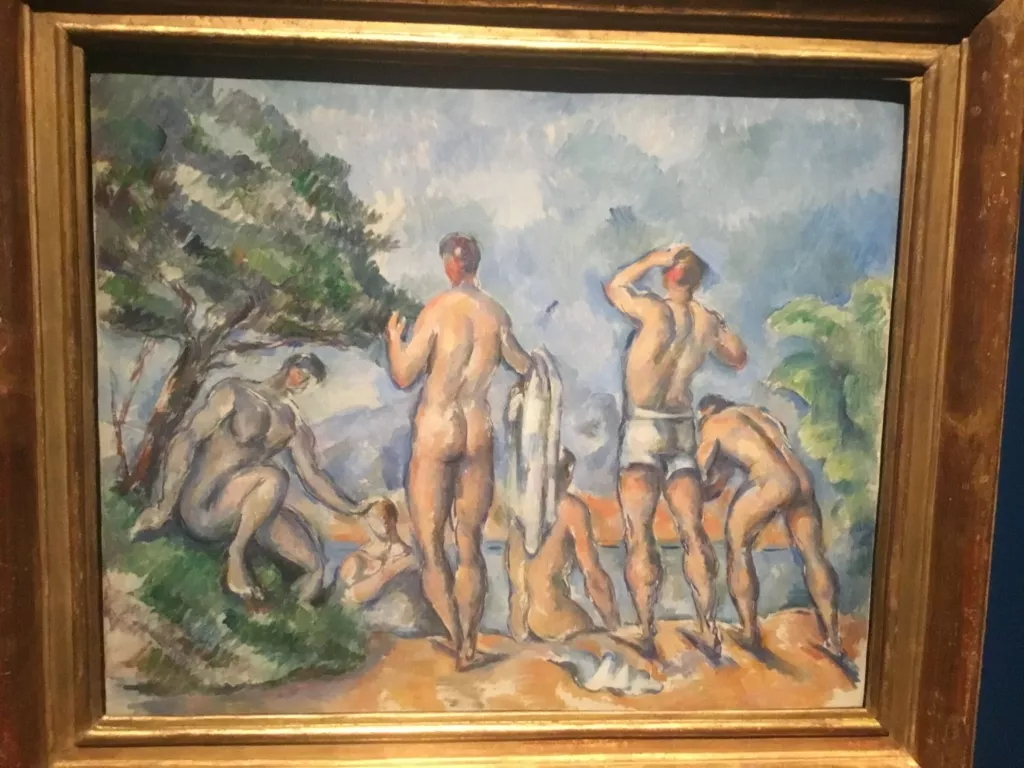
Paul Cézanne was the first to break this taboo. A serious, bearded gentleman, he settled in the fishing village of L’Estaque near Marseille in 1860, where he discovered a strange, unfathomable harmony between the rugged, mountainous landscape and the aquamarine sea. He was the first to formulate the principles of modern painting, where form dictates content, where color and light are absolutely intrinsic and self-sufficient, and where any subject or landscape can be easily interpreted through the use of a cylinder, a sphere, or a cone. The exhibition features the Cézanne-esque “Bathers”—a small canvas, yet one that possesses such modern power, such fierce energy of defiance against the tedious academic canon. Different lighting, a different principle, a different canon!
And then Auguste Renoir arrived on the Riviera. He and Cézanne were friends, but they preferred to live in different places. Renoir settled on a house on a hill in Cagnes-sur-Mer, not far from Nice. There he grew old; there he battled the countless ailments that ravaged his frail body; and there, every single day—whether sick or well—he began his day at his easel. “Pain passes, beauty remains”—a motto that Renoir followed throughout his life. His life was full of pain and anxiety, but his paintings radiated warmth and beauty. Moreover, his paints were always mixed with tiny, barely noticeable strands of fur from his beloved cats, who would rub against him in his studio. Today, experts identify authentic Renoir paintings in part by the presence of this cat fur.
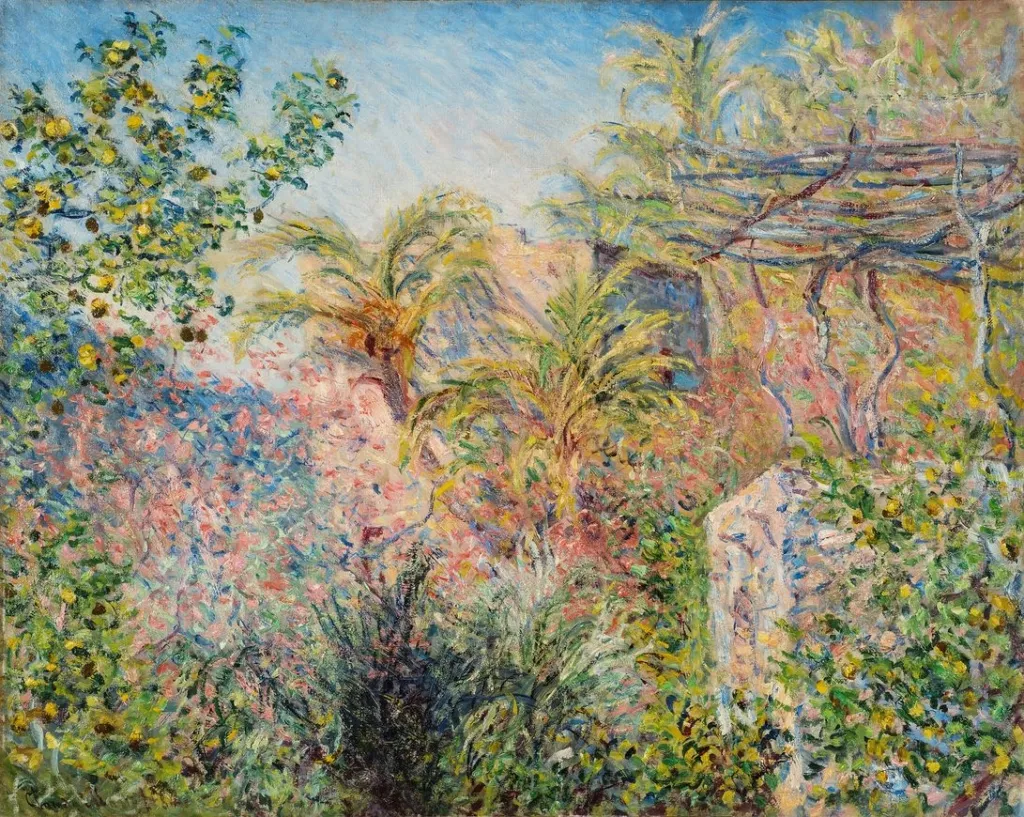
Claude Monet, however, wasn’t particularly fond of the Riviera at first. He preferred Brittany, the north, the cliffs, the cold sea, and the wind blowing in his face. Or perhaps his garden in Giverny, with all its water lilies in the pond and poppies blooming red in the flowerbeds. But in the end, even he couldn’t resist the beauty of these places. At the exhibition, there’s an entire wall of his paintings, created in the town of Bordighera and in the Moreno gardens.
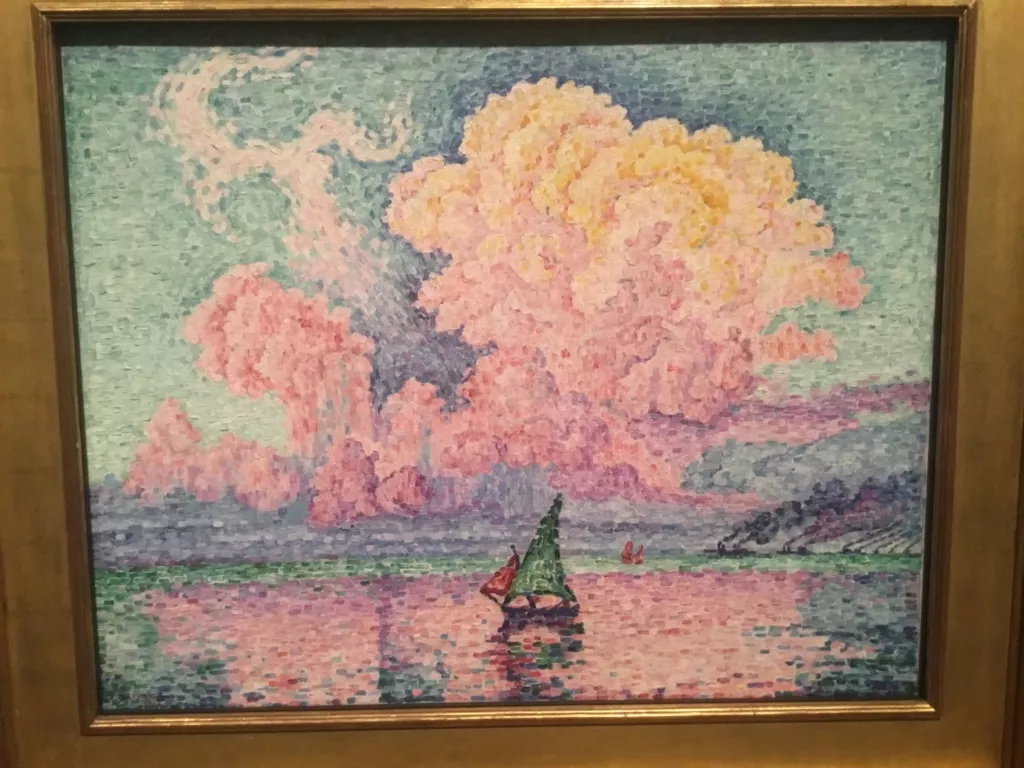
After the classics of Impressionism, we move seamlessly on to the leading figures of Pointillism. Symphonies of microscopic brushstrokes and precise brushwork. Just one pink cloud, painted by Signac at the height of World War I—what a sight! The curators saw it as a symbol of hope. But to me, it seemed like a haunting specter of war in the midst of an idyllic landscape and a calm sea with two sailboats.
Incidentally, artists such as Henri-Edmond Cross, Maximilian Lutz, and the Belgian artist Theo van Russelberg often visited Sinyak’s home in Saint-Tropez. Their paintings are also featured in the exhibition as clear evidence that Pointillism may better than other artistic movements at capturing the sun-drenched radiance of the Mediterranean and conveying all those unique shades and hues of blue, pink, and light blue.
After World War I, the Riviera became a resort where the concept of “high season” was a thing of the past. Here, it’s always high season. All over the world, there’s crisis and depression; everything serves as a reminder that the war happened. It had just ended. But at the Hotel de Paris in Monte Carlo, people were dancing the Charleston and drinking champagne, and the Blue Express arrived daily from Paris and Calais, running strictly on schedule. A train of dreams, a train of hope, a train that carries you away from all the sorrows and misfortunes that lie in wait for you at every turn in the big city. But you’re not supposed to bring them along to the Riviera. The “Lost Generation” found itself right here, on the beaches of Cannes and Antibes, in the hotels of Nice and Monaco.
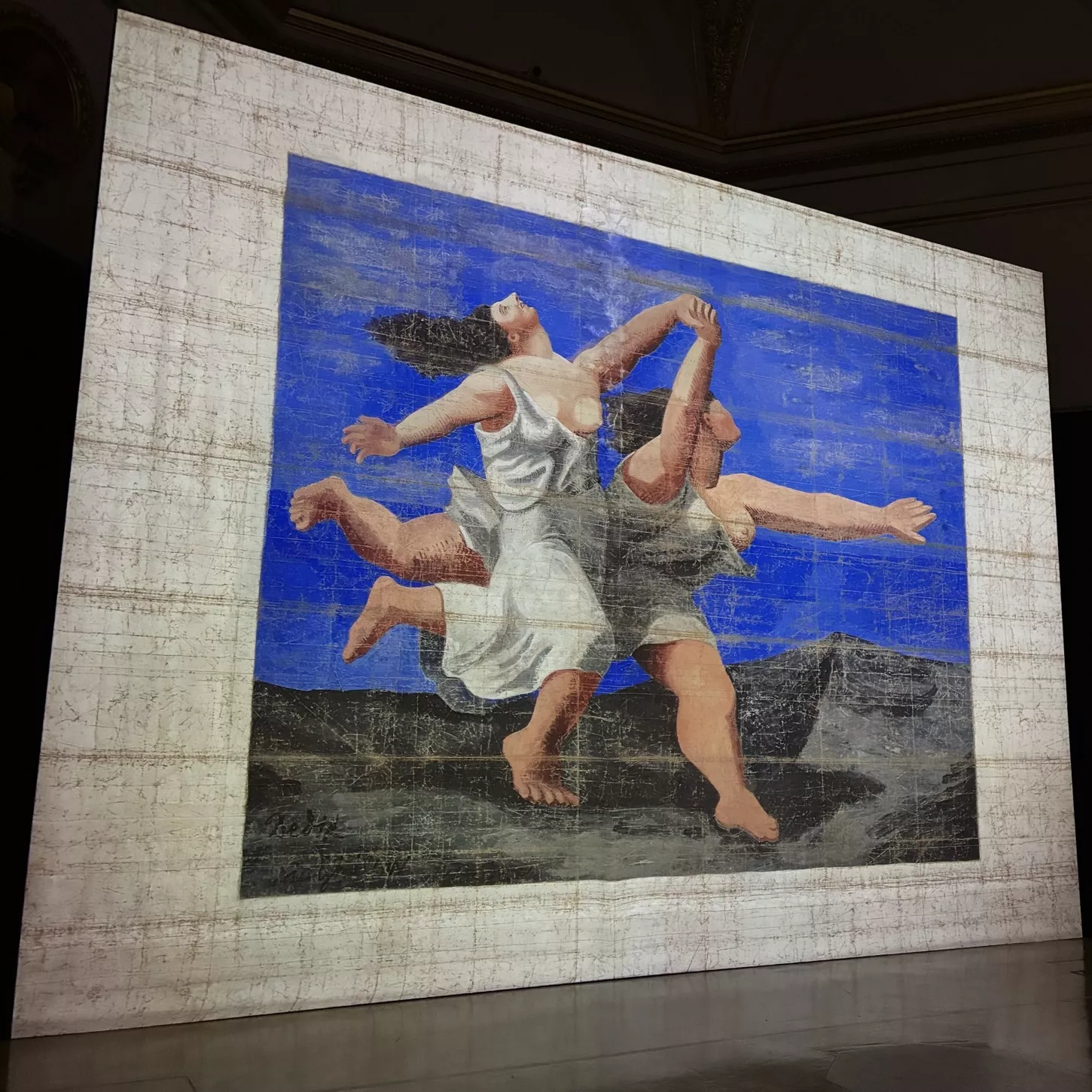
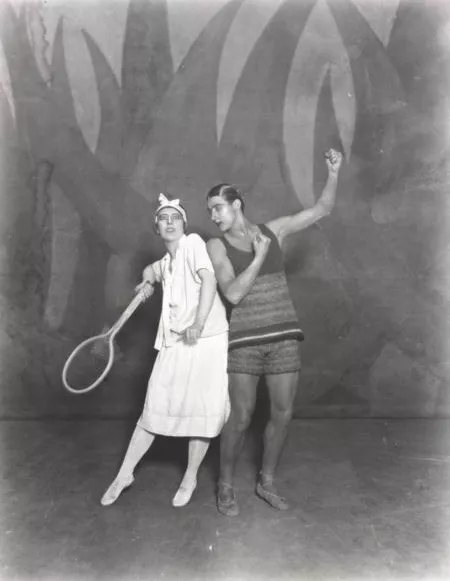
It is symbolic that the main exhibit of the exhibition is a huge, three-meter-long painting by Picasso, which Sergei Diaghilev used as the curtain for his new, revolutionary ballet, *The Blue Express*. Two enormous female giants are rushing off toward an unknown destination along the seashore. It is said that it began as just a small gouache painting, which grew to gigantic proportions thanks to the perseverance and talent of the Georgian artist Alexander Shervashidze, a close associate of Diaghilev. The giant women still soar and run; in the glass display cases are beachwear from Chanel, made specifically for *The Blue Express*, and right next to them is a plasma screen showing excerpts from the ballet. It must be said that neither the music, nor Bronislava Nijinska’s choreography, nor even the Chanel costumes made much of an impression on contemporaries. Some people even tried to boo at the premiere. But the image conceived by Picasso remains stunning to this day.
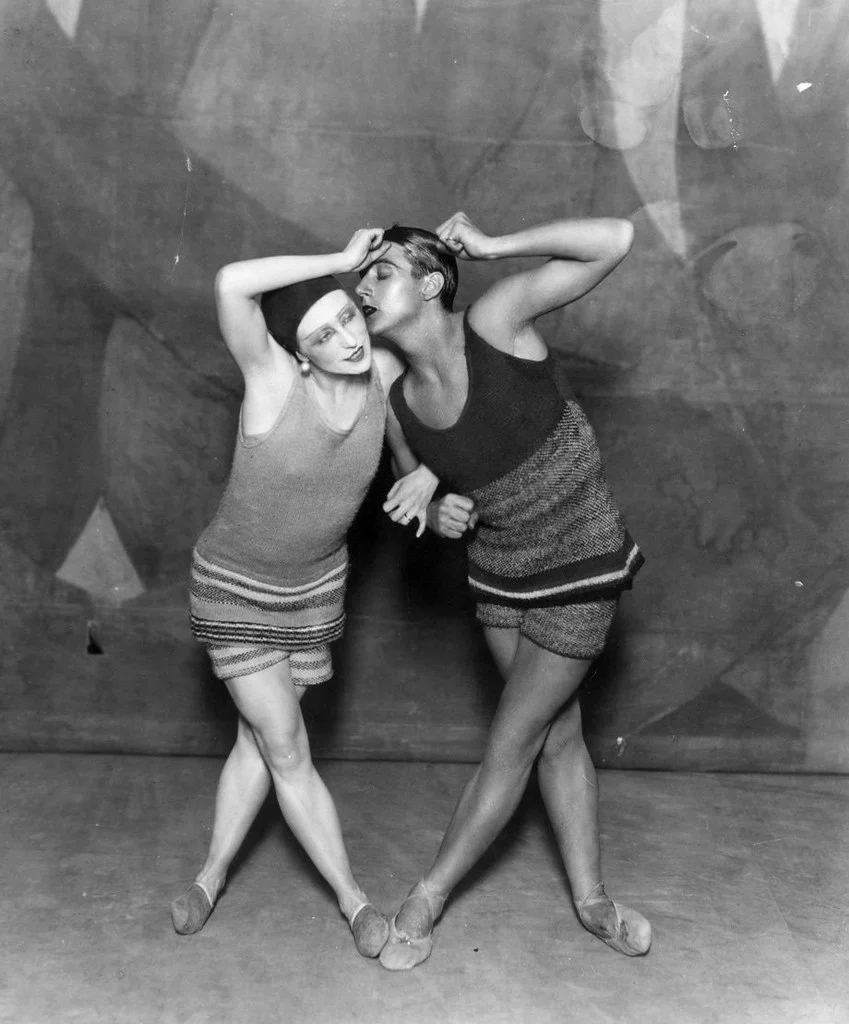
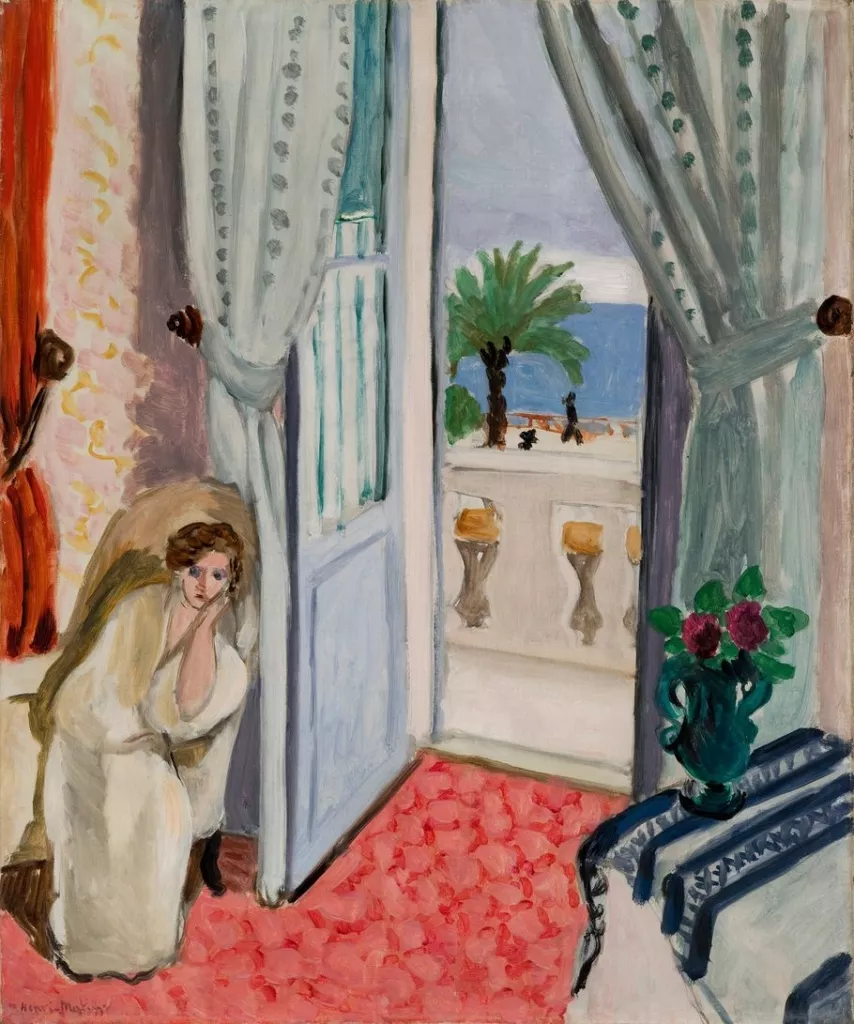
By the way, he himself adored the Riviera. All of his major love stories took place right here, against the backdrop of these sensuous settings. And most importantly—here he could easily paint, write, sculpt, and fire his endless clay vases and plates in the kiln, which are now worth a fortune at auctions. In one of his letters, he made a remarkable confession, saying that nowhere else did he feel such a strong urge to paint centaurs and Bacchantes as he did here. The Riviera awakened primal instincts and an insatiable thirst for creativity. This was true for Matisse, who had, in effect, come back to life here, as well as for Chagall, who found his quiet paradise in the ancient town of Saint-Paul-de-Vence, and Van Dongen, who captured—with just two or three brushstrokes, as only he knew how—the most elegant beauties on the Nice promenade…
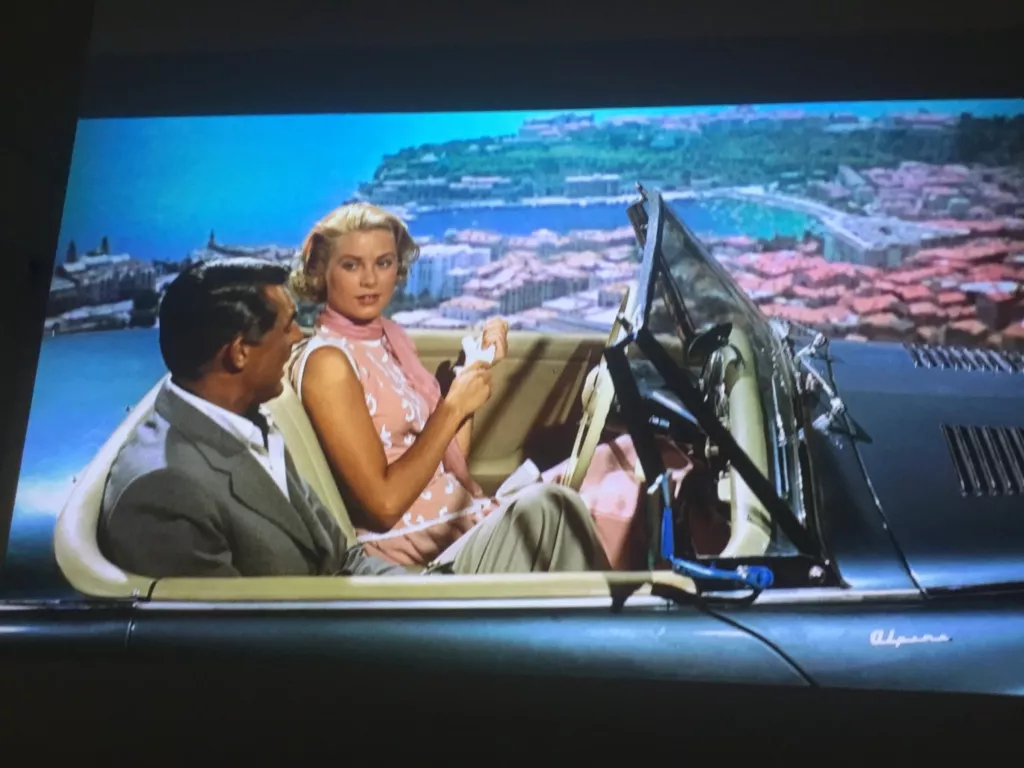
Starting in the late 1940s, filmmakers began joining the artists. It would be impossible to list all the feature films shot at these locations. For some, the first thing that comes to mind is surely *The Pool* with Alain Delon and Romy Schneider; others will surely recall *The Bay of Angels* with Jeanne Moreau, who first appeared on screen as a peroxide blonde, and still others will inevitably be reminded of scenes from the detective film *To Catch a Thief*, where Grace Kelly dashes along a winding road in her Sunbeam Alpine sports car, while the adventurer, played by Cary Grant, is literally on the verge of collapse—whether from fear of being exposed or from reckless speeding. Great cinema, big stars, fantastic landscapes—this is the Riviera of the second half of the 20th century. The embodiment of luxury, bourgeois glamour, and cinematic, glossy beauty.
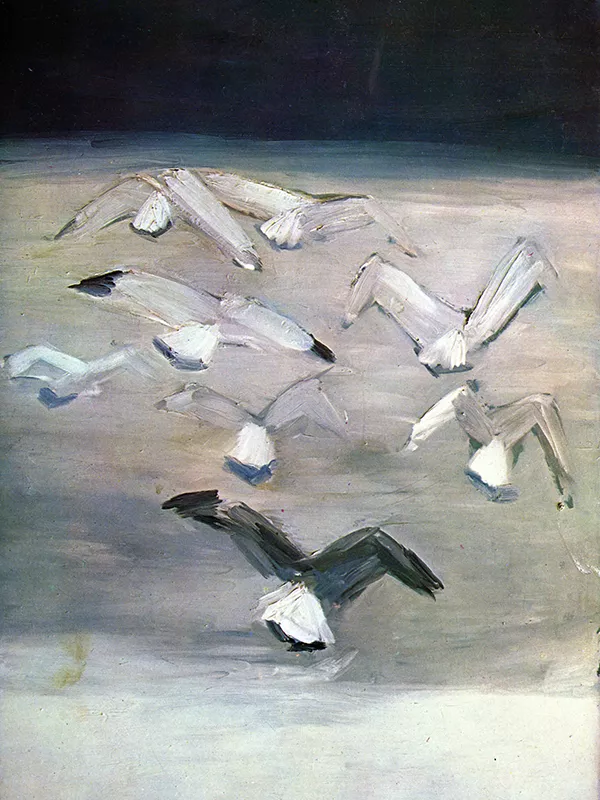
That is why the gray-black canvases by Nicolas de Staël and Yves Klein’s “International Klein Blue” stand out so starkly at the exhibition. Their lives were directly linked to the Riviera. De Staël produced a great deal of fruitful work in Antibes, and Klein was originally from Nice. Their paintings mark the end of the Riviera’s Golden Age.
Both will die young—Klein will die of a heart attack at thirty-four, and Nicolas de Staël will take his own life at forty-one. The shadow of these impending tragedies seems to barely touch their strange paintings: the gray-and-white seagulls soaring against a gray sky in de Stal’s works, or the strange, enigmatic swaths of blue on Klein’s enormous white canvases.
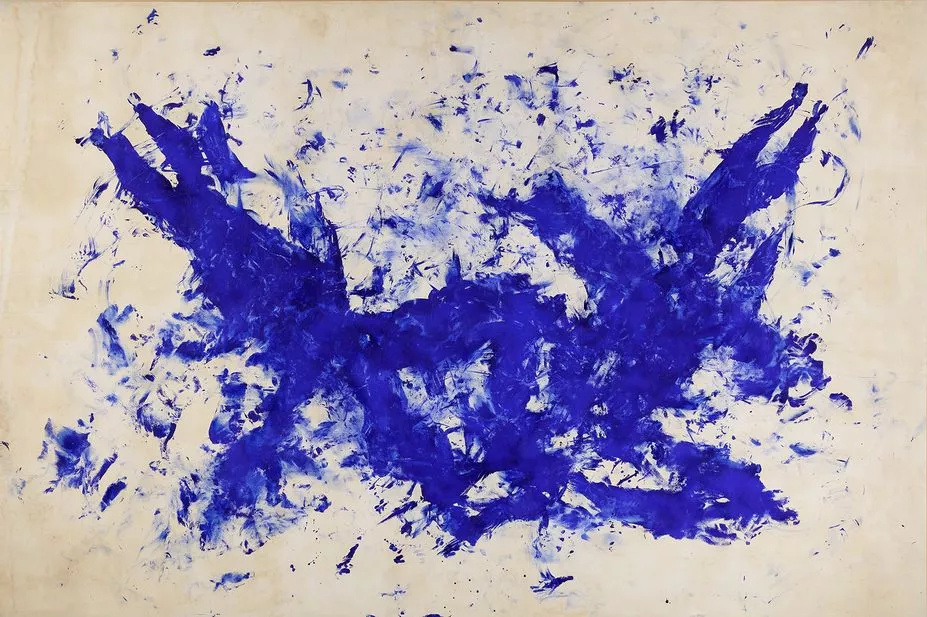
“I learned about emptiness—a deep emptiness, a blue emptiness.” This is Klein’s sky. The color of the divine revelation that once descended upon him, making him a prisoner of that bottomless blue forever. And yet it was the color of the Mediterranean Sea—the first thing Klein apparently saw in his life, and the last thing that flashed before his fading gaze. “My works are merely the ashes of my art,” he would say. But these “ashes” still pound, cry out, prophesy, and burn… Even here, at what would seem to be the most peaceful, respectable, and academic exhibition in London this season.