 Loading...

PeFuruhem Retirement Home
Bostad, Sweden
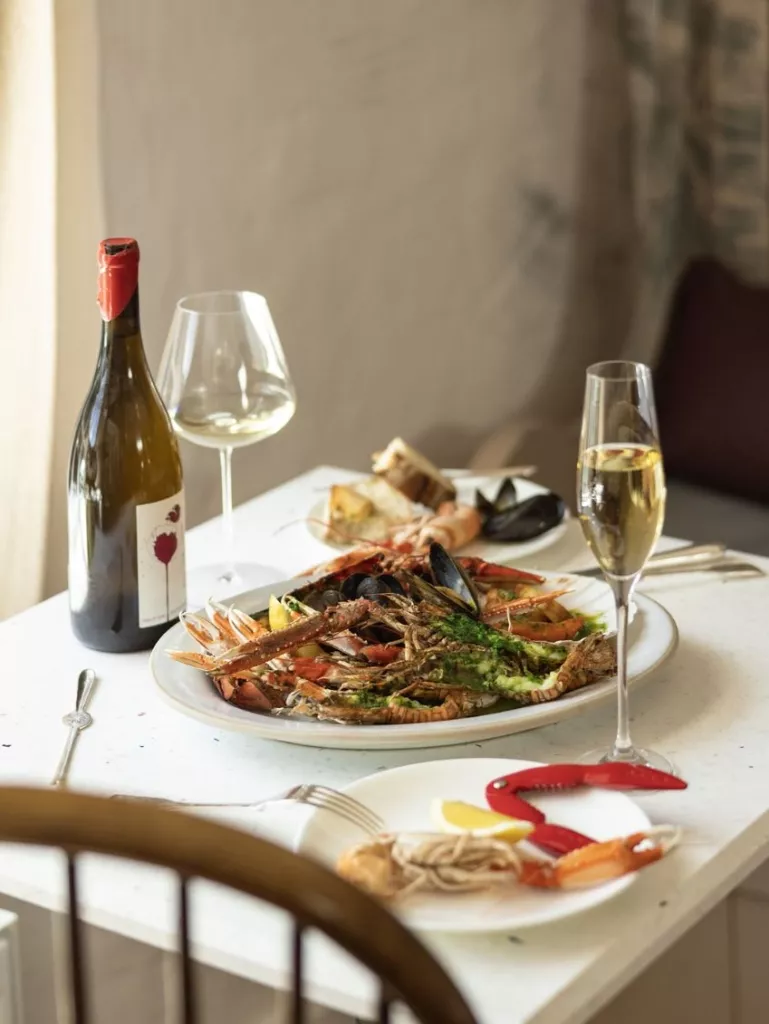
Magnus Nilsson, the legendary chef of Fäviken—which closed seven years ago—is back in the kitchen: in the seaside town of Båstad in southern Sweden, he has opened “a perfectly ordinary” establishment, as he himself describes it, Pensionat Furuhem—a hotel and restaurant. No Michelin-style arrangement of microgreens on giant plates, no deconstruction, no foam, and—heaven forbid—no narrative in the presentation—just high-quality ingredients and flawless cooking.
The restaurant opens at 7 a.m. for breakfast, serving its own bread and cinnamon rolls. At lunchtime, it serves hearty set meals for 20 euros; in the evening, it offers whole fried fish (turbot, for example) and Rabelaisian steaks—Magnus was one of the first to use meat from older cows that had been aged for several months. The more people in your group, the better: the tables are set up so that plates of food can be shared, and portions are easily divided among two or even three people.
The food here is incredibly delicious, the drinks are intoxicating (Magnus started out as a sommelier), and it’s a lot of fun—in short, it’s just like any other place.
Tantris
Munich, Germany
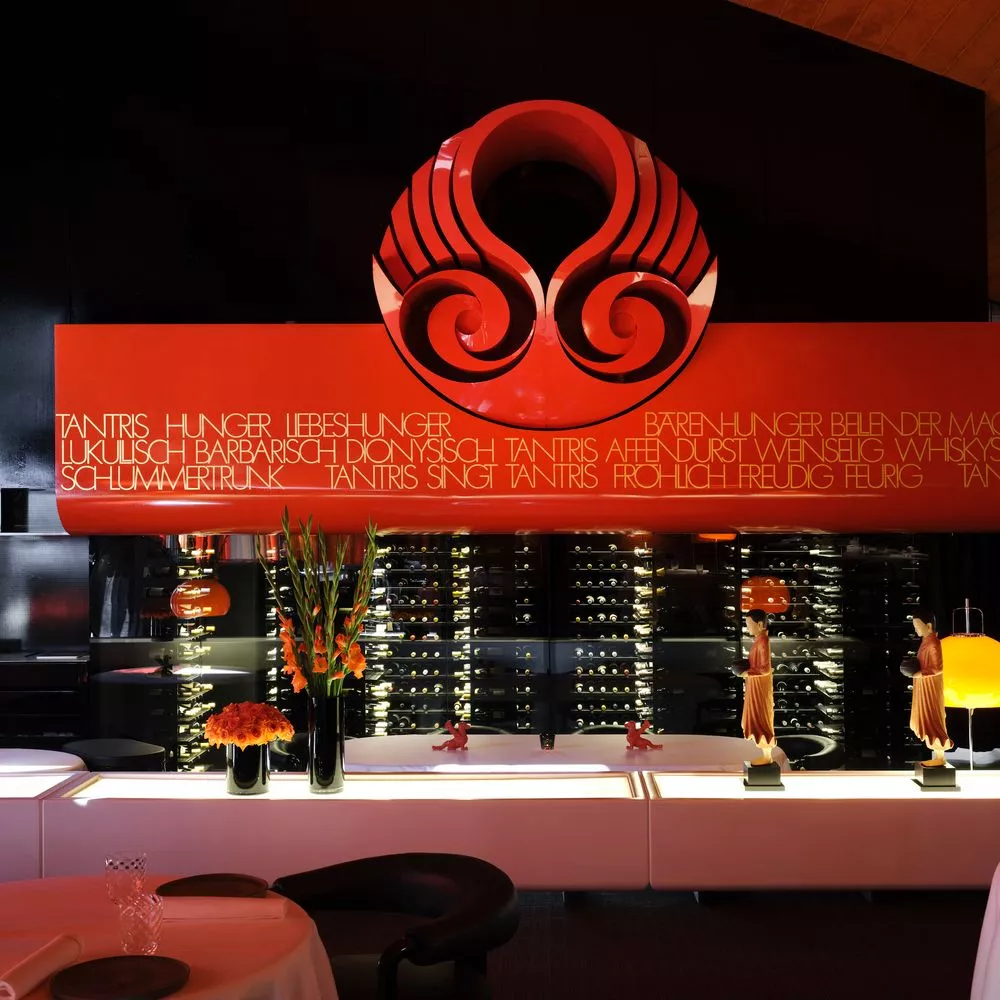
In the early 1970s, Swiss architect Justus Dahinden was commissioned by developer Fritz Eichbauer to build a Brutalist apartment building and the Tantris restaurant in Munich’s Schwabing district. In contrast to the modernist exterior (copper and concrete), the interior of Tantris features a Chinese lacquer style in shades of red, black, and orange—seemingly timeless, yet distinctly 1970s.
A year after it opened, Tantris earned a star in the Michelin Guide; two years later, it earned two more—and it still holds those stars today. Just like its Chinese retro-futuristic interior. At one point, the owners wanted to replace the red lacquer with something more modern, but fortunately, the local architectural oversight authority issued Tantris a preservation certificate.
Today, Maison Culinaire Tantris is a two-star gourmet restaurant (a dozen courses, an elegant interplay of culinary concepts), a one-star bistro opening onto the garden (where you can order à la carte), and a bar serving Michelin-quality appetizers and wine from a cellar housing 35,000 bottles.
Alchemist
Copenhagen, Denmark
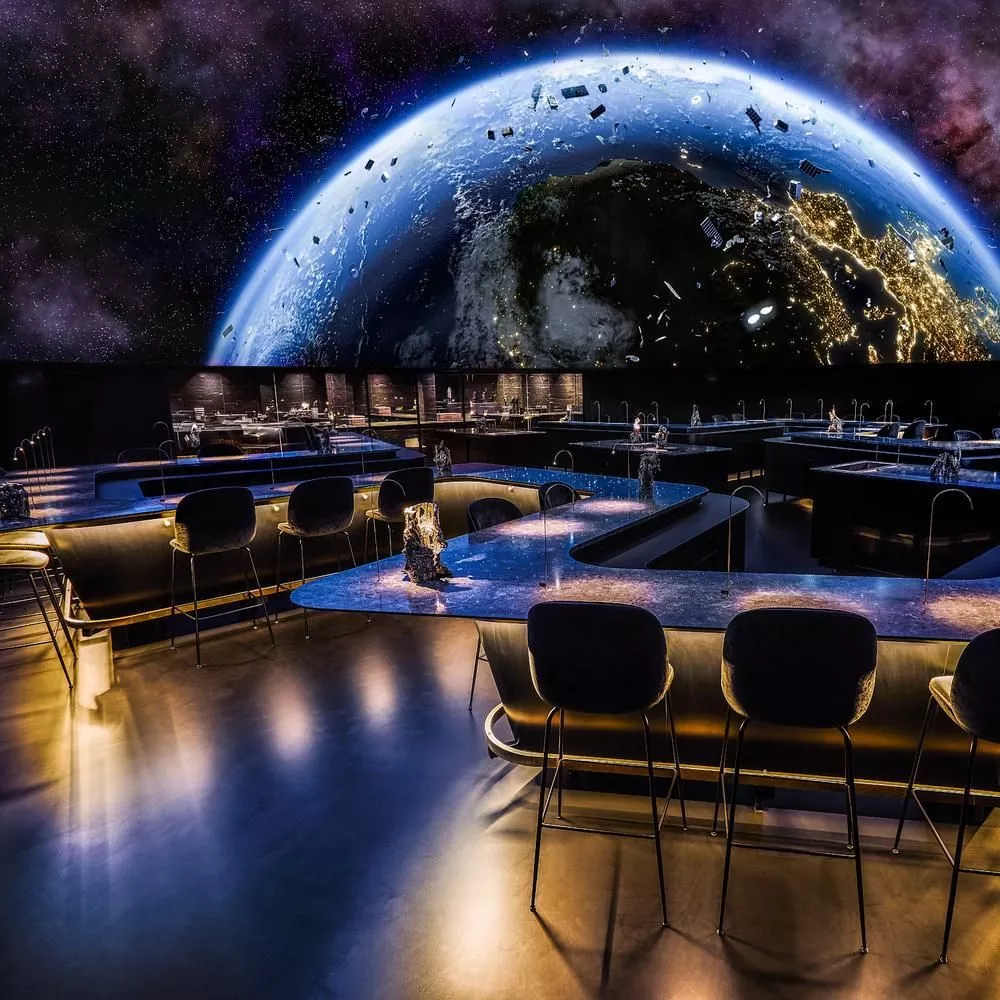
Rasmus Munk is a typical maximalist. When he decided to open a restaurant, he found an investor (who already owned the three-star Geranium at the time) who agreed to cover the €15,000,000 bill. As a result, the Alchemist opened in an old industrial building on the outskirts of Copenhagen. Here, under a gigantic dome (reminiscent of a planetarium), guests—seated in dim light along a winding bar that runs the length of the hall—are served fifty dishes, one after another, over the course of four to five hours. At the same time, images with an alarmist message are projected onto the dome. Indeed, with each new course, Chef Munk urges diners to pay attention to the world’s problems: hunger, war, inequality, ocean pollution, and animal cruelty.
Guests enter the domed hall, stopping along the way for an art performance and an aperitif in the experimental kitchen; after the main courses are served, they take part in a couple more art events and enjoy dessert at the rooftop bar. Guests who arrive at Alchemist at 6 p.m. don’t leave until well past midnight.
It seems there are only two things missing from Rasmus Munk’s life: a third Michelin star (he currently has two) and the top spot on the World’s 50 Best Restaurants list (he’s currently ranked fifth). I wouldn’t be surprised if he hits both of those targets this year. That’s just his usual brand of maximalism.
Sphere by Tim Raue
Berlin, Germany
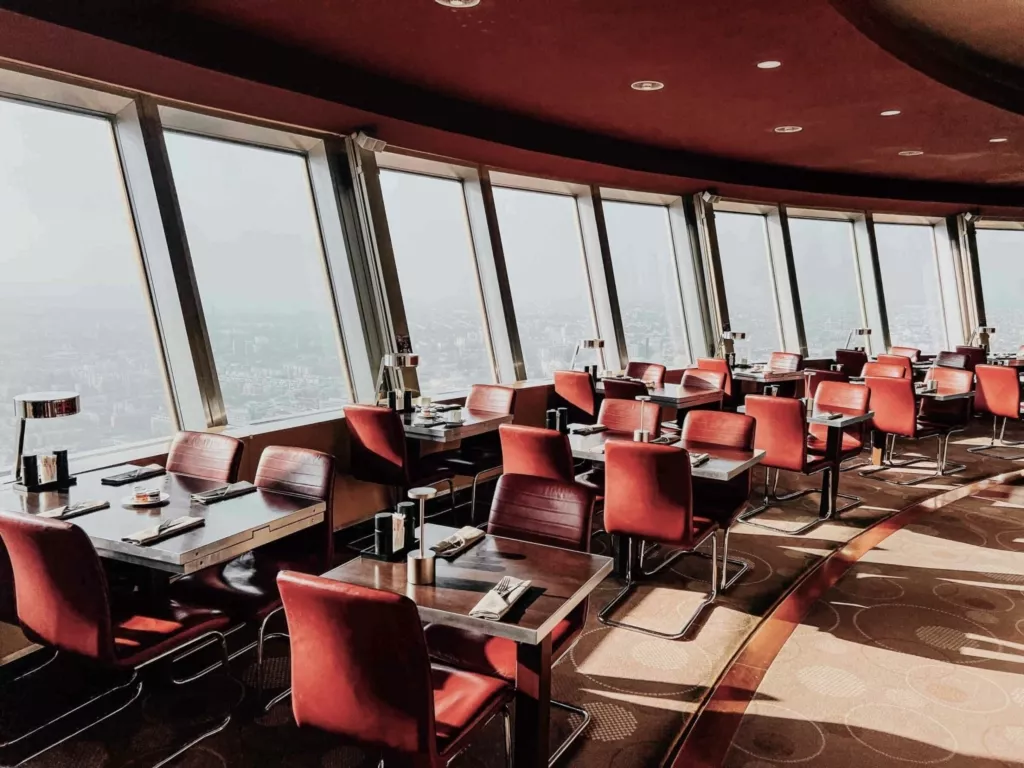
An attraction-restaurant inside the Berlin TV Tower: the dining room rotates in a circle 207 meters above the city. Over the course of two or three full rotations, guests have plenty of time to take in the view of Berlin and enjoy a delicious lunch (or breakfast—Frühstück is served until 11:00 a.m.).
The inclusion of “Tim Raue” in the restaurant’s name indicates that Tim Raue, one of Germany’s most famous (if not the most famous) chefs, creates the menu for the revolving restaurant, and his company manages the restaurant.
Tim Raue has two Michelin stars for his eponymous Restaurant Tim Raue; he is best known as the host of *Who Wants to Be a Millionaire?* and *MasterChef*, as well as the author of popular cookbooks and the star of commercials. He’s also a regular in the social scene and a star of the Netflix series *Chef’s Table*, so every time he appears at Sphere, it causes a stir among the restaurant’s many guests and social media followers.
The restaurant’s menu features Königsberg meatballs, solyanka, pig’s trotters made according to a grandmother’s recipe, pork schnitzel, and vanilla ice cream.
The two Germanys have long since been reunited, but symbols of the former GDR—such as solyanka, a dish beloved by East Germans, or the TV tower at Alexanderplatz—have not disappeared.
Milka Restaurant
Kranjska Gora, Slovenia
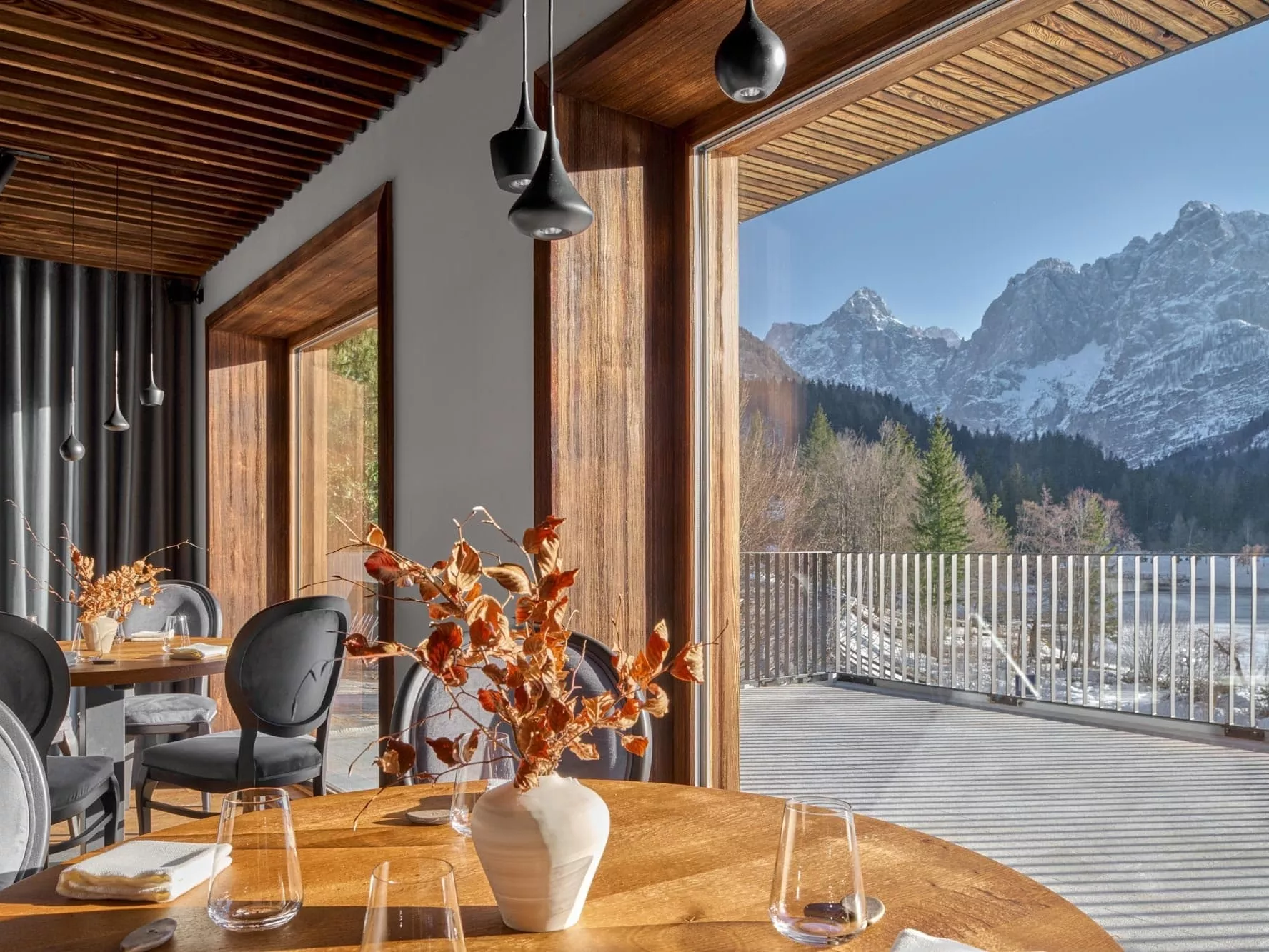
A two-star restaurant in the Slovenian mountains, in the town of Kranjska Gora, on the shores of Lake Jasna.
Milka is exactly the kind of restaurant that’s worth a special trip. It’s hard to imagine ending up in Kranjska Gora by chance. That’s exactly why Milka is also a great place to stay: eat, drink, sleep, and eat again.
Zimas in this part of the world are long and cold, which is why the word “fermentation” for Milka’s chefs isn’t a hipster buzzword or a passing fad, but a familiar practice: food needs to be preserved, and fermentation (in simple terms, pickling) is routine for them. In addition to pickles, the kitchen makes extensive use of river and lake fish, dairy cows and sheep, lamb, and game—and in the summer, anything that can be grown in the garden or foraged in the forest. This is a restaurant celebrating the Alpine terroir and centuries-old traditions that emerged at the crossroads of cultures and languages (it’s just a couple of kilometers from here to Austria and five to Italy).
That said, Milka isn’t a rustic restaurant serving home-style comfort food, but a Michelin-starred establishment offering elegant cuisine served on beautiful tableware. Chef David Jefrain’s menu typically consists of a dozen small appetizers and five or six main courses (such as rainbow trout with chanterelles and sauerkraut, or venison with canned wild berries and black truffles), and the meal concludes with local sheep’s-milk cheese and desserts.
Casa Marcial
Arriondas, Spain
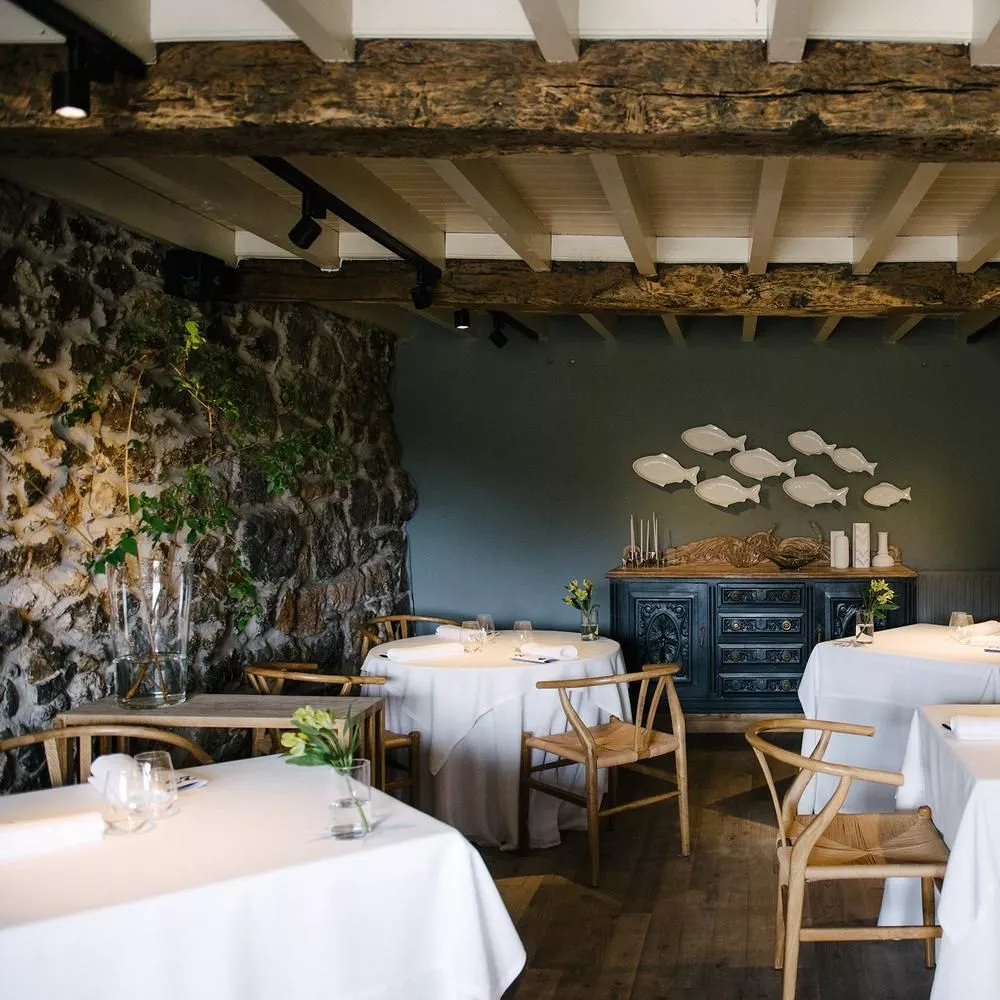
The word “casa” in the name of the Asturian restaurant Casa Marcial (“Marcial’s House”) is no coincidence: the restaurant is actually located in the house where the grandmother of chef Nacho Manzano and his sister Olga (who runs the restaurant) used to make cider and cook pitu de caleya (literally “street chicken”) for her grandchildren, while their father, Marcial, served drinks to the villagers at the local bar. Nacho and Olga were born and raised next door to each other, and the restaurant naturally opened right where they spent their childhood. Except that now, “Marcial’s House” is neither a cider house nor a bar, but a restaurant with three red stars and one green star in the Michelin Guide.
Casa Marcial is surrounded by the Cantabrian Mountains—in fact, it is located right within them—yet Nacho Manzano named the menu at his restaurant after the invisible peak of El Cachucho (4,500 meters high), hidden beneath the waters of the Bay of Biscay.
The menu consists of 25 courses, which may include cod skin soaked in milk, squid in its own ink and with kombucha, wild boar, sea bass (also known as “kachuchu” in Asturian), pasta with goose giblets and rooster combs, as well as that very “street chicken” made according to Grandma’s recipe.
Stunning views (especially from the observation deck), the rustic charm of a family home, a magnificent wine cellar, ingredients of exceptional quality, culinary skill, and creativity—all combine to make this one of Spain’s finest restaurants today.
Fresca
Belgrade, Serbia
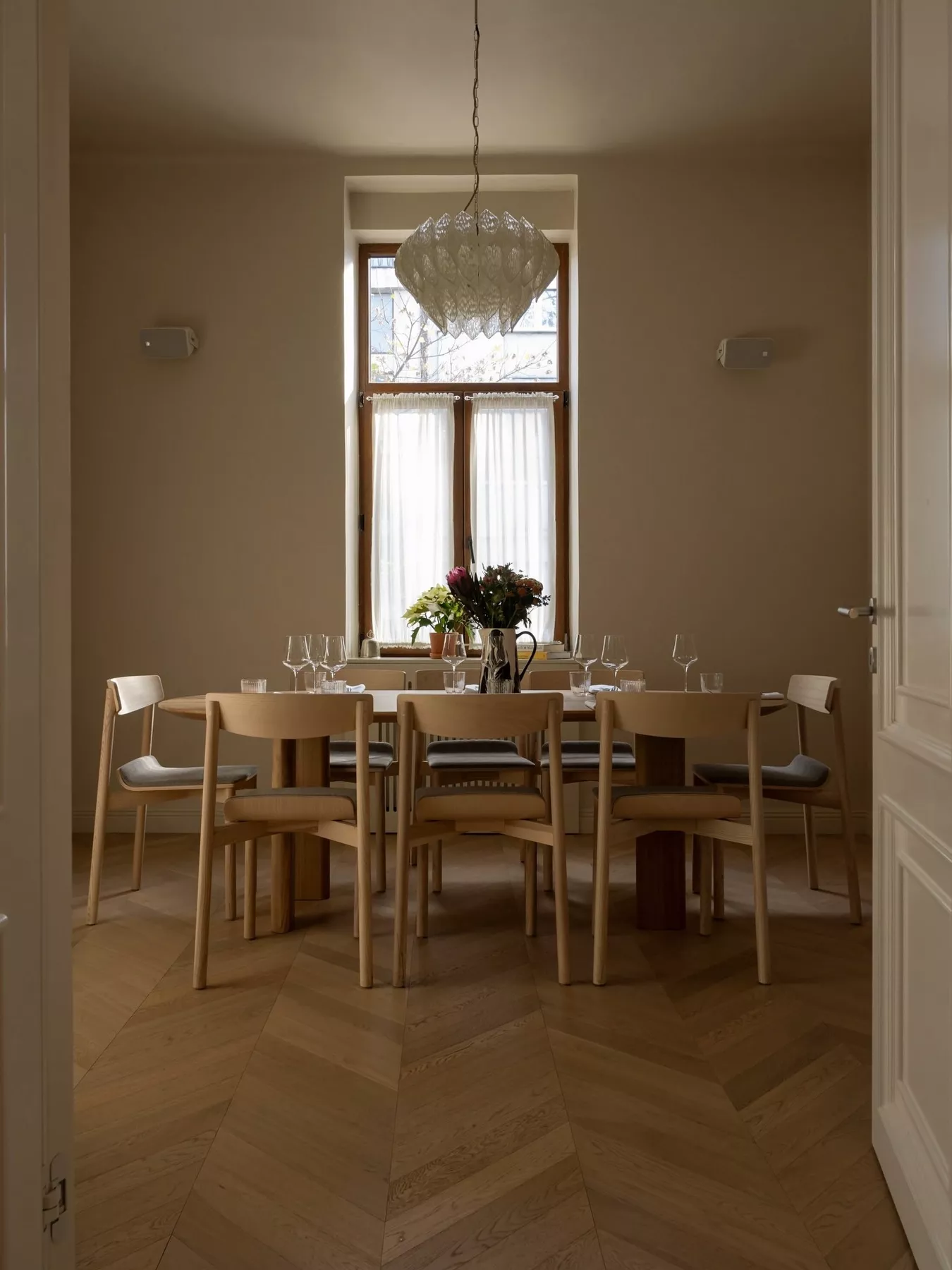
An Italian restaurant featuring Serbian ingredients, a Russian spirit, and French wine.
Chef Natasha Berezova (who ran “Stall by Berezova” at Moscow’s “Depo”) found herself in Belgrade along with her family and another 200,000 Russians who have moved to Serbia since 2022. Natasha can’t sit around doing nothing; she was itching to get started, and the produce at the market inspired her—that’s how the restaurant Fresca came to be last summer. The highlight of the menu is fresh, handmade pasta (pasta fresca in Italian, hence the name); the wine list focuses on champagne; key interior details include vintage lighting and furniture; and its competitive edge lies in its breakfasts.
This piece was included in the literary anthology *ZIMA. STIHIYI*. You can purchase this issue with worldwide shipping in our store or on the “Bukinist” online platform . And even more fascinating literature awaits you on the virtual shelves of the ZIMA Shop.


