 Loading...
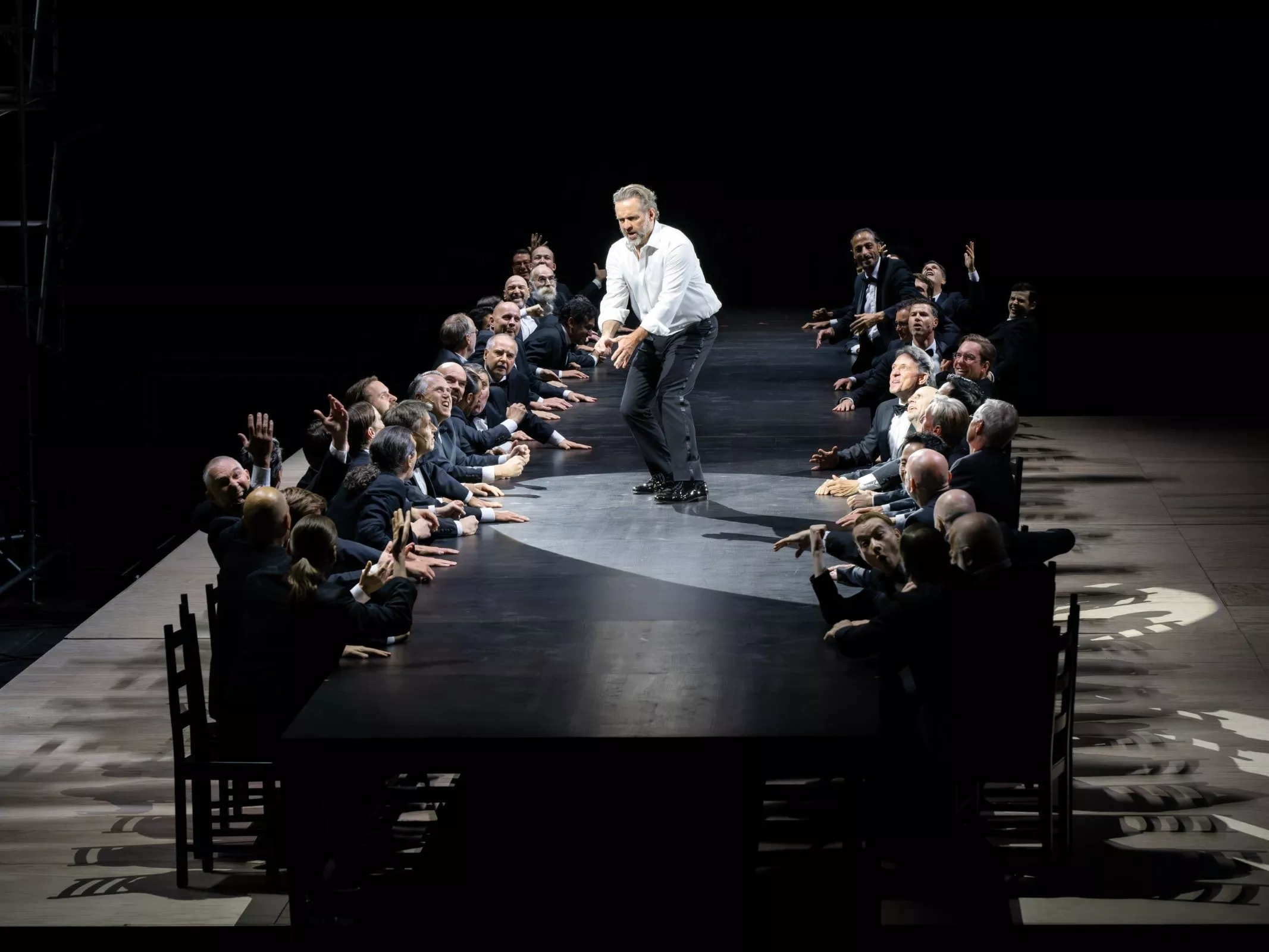
For three hours, literally everything here falls apart: family, the state, the concept of order, the human form, and finally King Lear himself, convinced that he can control all of this as he pleases. And Raimann’s music transforms the act of witnessing the catastrophe into a physical experience. It overwhelms, frightens, and deafens; it suddenly leaves the audience in absolute silence, only to crash down on them once more.
“Lear” is considered one of the most important German operas of the second half of the 20th century, although Reiman himself was long reluctant to tackle it. The story began in 1968, when the great German baritone Dietrich Fischer-Dieskau, who dreamed of playing Lear on the opera stage, asked Reimann to write an opera for him based on Shakespeare’s tragedy. The scale of the task seemed almost insurmountable. Reimann initially refused, but he could no longer shake the thoughts of “Lear” from his mind. He kept returning to the play and later recounted that a separate “folder” had formed in his mind for thoughts about the future work, while his other compositions gradually became paths leading to it.
It took seven years before Reiman finally made up his mind. In 1975, the Bavarian State Opera commissioned “Lear”, and the composer wrote the lead role specifically for Fischer-Dieskau, whom we already know. The premiere took place in Munich in 1978. The opera, which Reiman had once been afraid to tackle, became one of the major works of his life and one of the most significant German operas of the postwar era.
Once you’re inside it, you realize pretty quickly exactly what he was afraid of. Raiman offers the listener virtually no musical refuge or respite. There’s none of that operatic beauty to cling to here; there’s no grand aria that you wait for to begin, only to leave the theater still humming it. His music works differently. It keeps you in a constant state of tension and anxiety, throws you off balance, and at times is almost physically torturous. A dense, menacing sound is suddenly replaced by absolute silence, and a few seconds later the drums deliver such a thunderous crash that your tendons start to tremble. At some point, you stop hearing the music separately from what’s happening. It becomes a portal for plunging into the abyss.
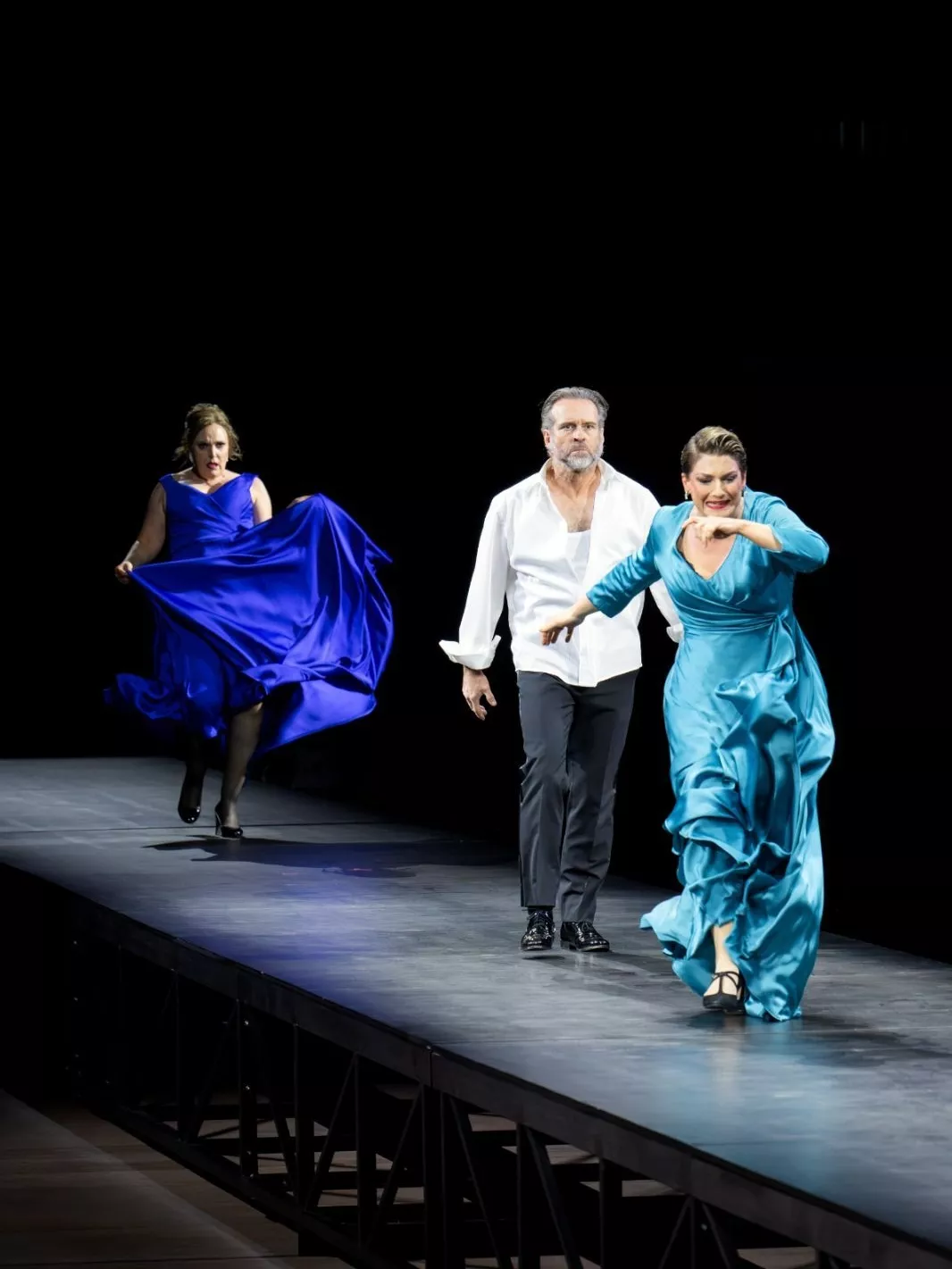
The same thing happens with the voices. There’s no bel canto, no singing for the sake of singing beautifully. The voices clash with the orchestra, trying to break through it: high registers, frenzied tempos, screaming, hysteria. But that is precisely where the beauty of *The Lear* lies. Raimann gives each character her own musical language. Goneril sounds sharp and angular; Regan, nervous and feverish. Even when the sisters sing together, their parts diverge rhythmically: the music knows in advance that there is no real bond between them. Cordelia sounds much more lyrical, as a symbol of true love for her father. And Riemann is given one of opera’s most unusual and beautiful voices; his part is written for a countertenor. All of this is more than just a complex musical structure. Riemann makes us physically feel the loss of a stable world.
And it is precisely this catastrophe that Kosky transforms into a story about power. For him, *King Lear* is, above all, an opera about male arrogance and narcissism. In an interview, the director draws a direct line from Shakespeare’s king to the dictators of our time: Putin, Trump, and Erdoğan. He is interested in what happens to society when a man is given the opportunity to do practically whatever he wants.
The most obvious danger of such an interpretation is that it turns *The Lear* into yet another parable about modern autocrats and forces Shakespeare to comment on today’s agenda. Many directors fall into this trap. Kosky, however, avoids it. Putin, Trump, and Erdoğan remain between the lines and in the minds of the audience; they do not appear on stage. There are no flags, portraits, recognizable costumes, or political nods to the audience here. Kosky is not interested in any specific ruler, but rather in the very mechanism of power: what happens to a person who has not heard the word “no” for too long. And what happens to everyone around him.
That is why Kosky makes a point of not portraying Lear as a frail old man who, on the verge of death, has decided to dispose of his estate. His king is still quite strong. The director compares him to a tycoon at a shareholders’ meeting: he’s made billions, he’s tired of business deals, and now he just wants to play golf and lounge on the beach. All that’s left is to divide up the empire. At the beginning, Lear appears before us as a man intoxicated by his own omnipotence. He decides to divide the kingdom among his three daughters, but demands that they publicly declare how much they love him. The more convincing their declaration of love for their father, the larger their share of the kingdom. Goneril and Regan instantly understand the rules of the game. Cordelia refuses.
And here lies Lear’s main problem: he no longer distinguishes between the state, property, power, fatherhood, and love. Everything belongs to him. The kingdom belongs to him. His daughters belong to him. Even their feelings belong to him, which means that love can be demanded, measured, and demonstrated in public. When Cordelia refuses to participate in this ritual, her father disinherits her and banishes her.
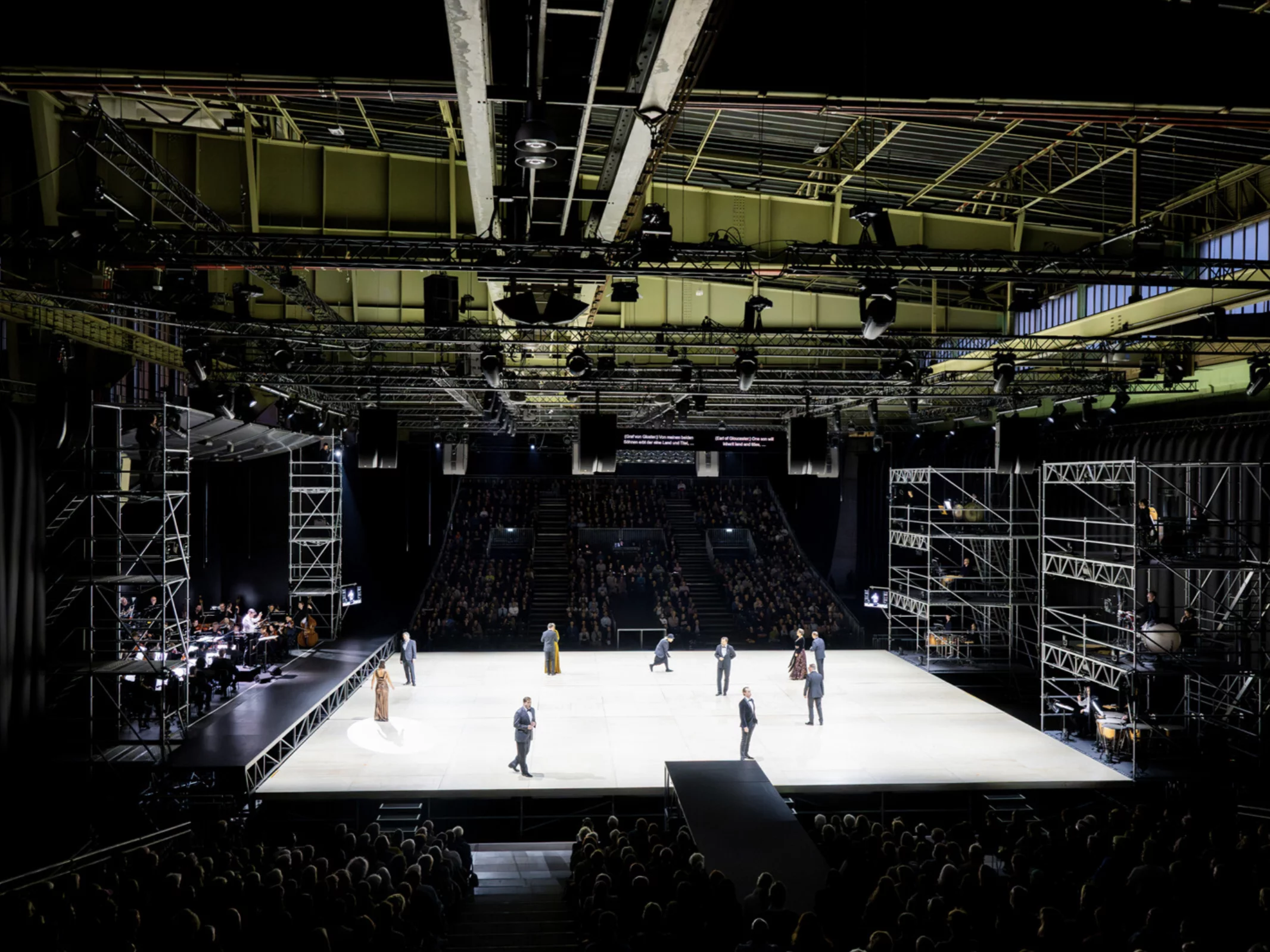
I can’t help but mention one more character in the production. His name is Tempelhof. The airport has existed since the 1920s, but the massive complex with hangars that we find ourselves in was built under the Nazis on Göring’s personal orders as a monumental symbol of the state. Later, Tempelhof became part of the history of divided Berlin, the airlift, and the Cold War. Koski doesn’t attempt to portray this memory. It’s already contained within the walls. The audience sits on both sides of the stage in a huge hangar. At first, we are like an assembly of subjects before whom Lear is conducting a public division of the kingdom. And when the scramble for power begins and everyone is ready to devour one another, that same space transforms into a gladiatorial arena.
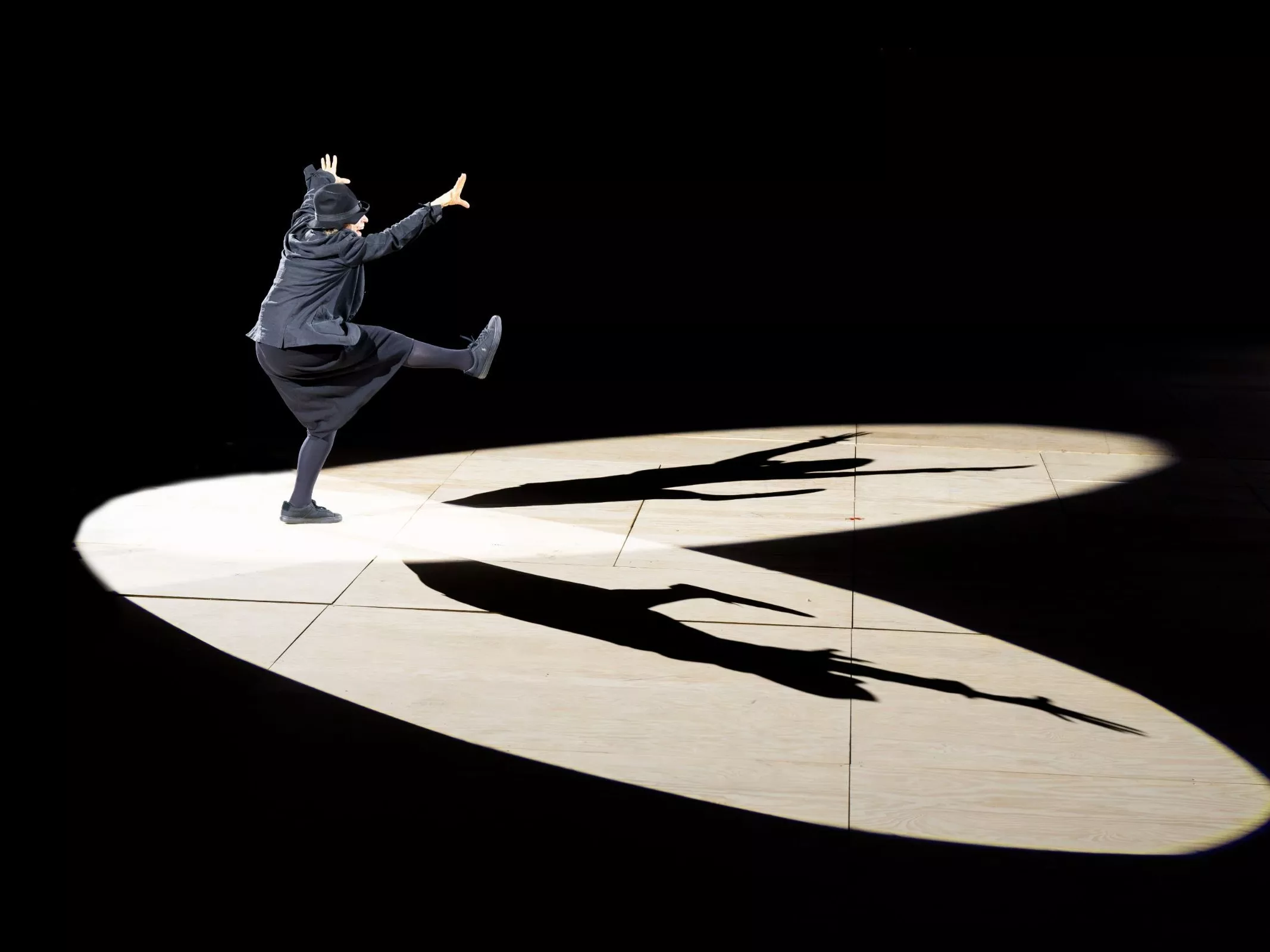
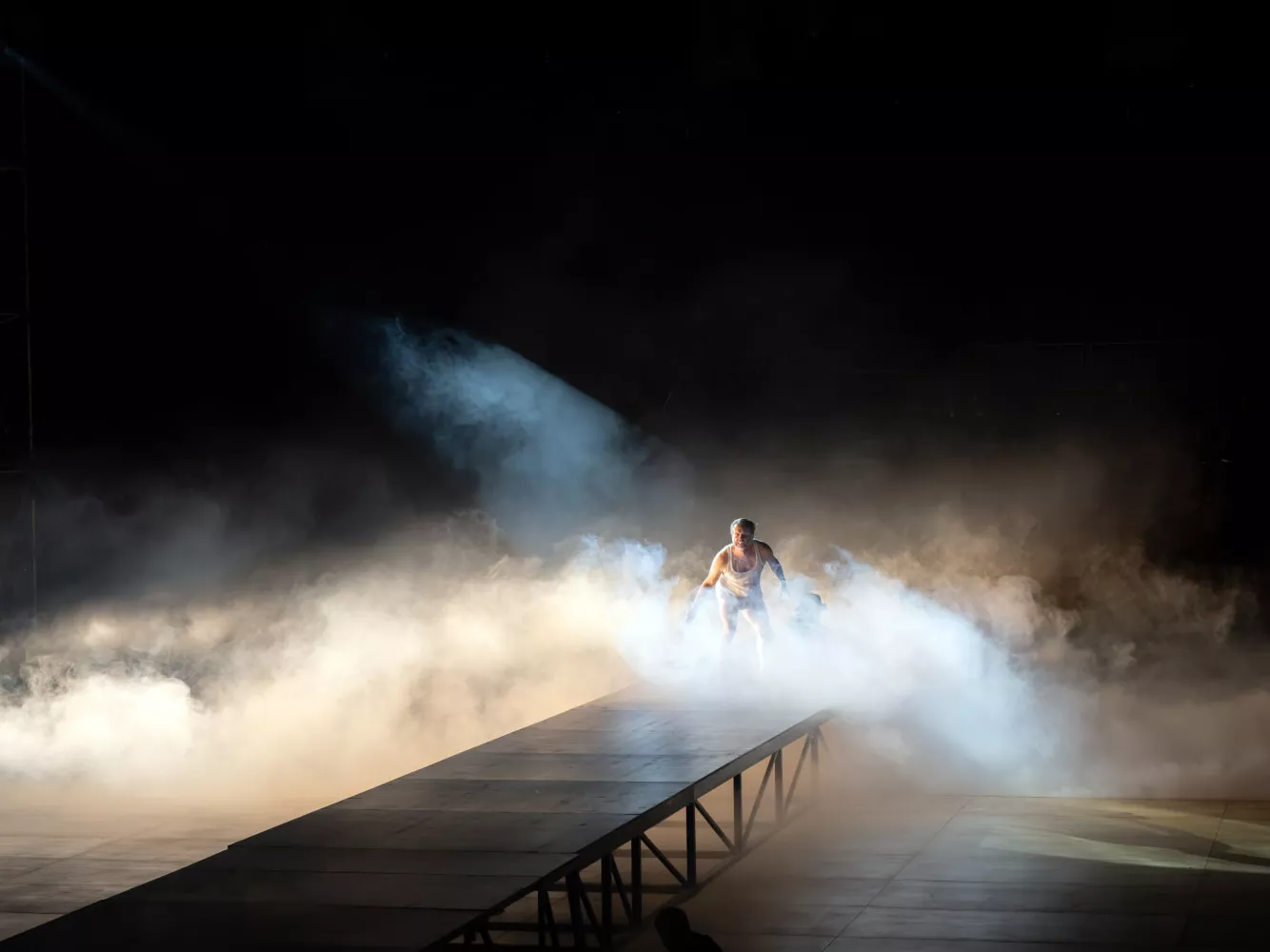
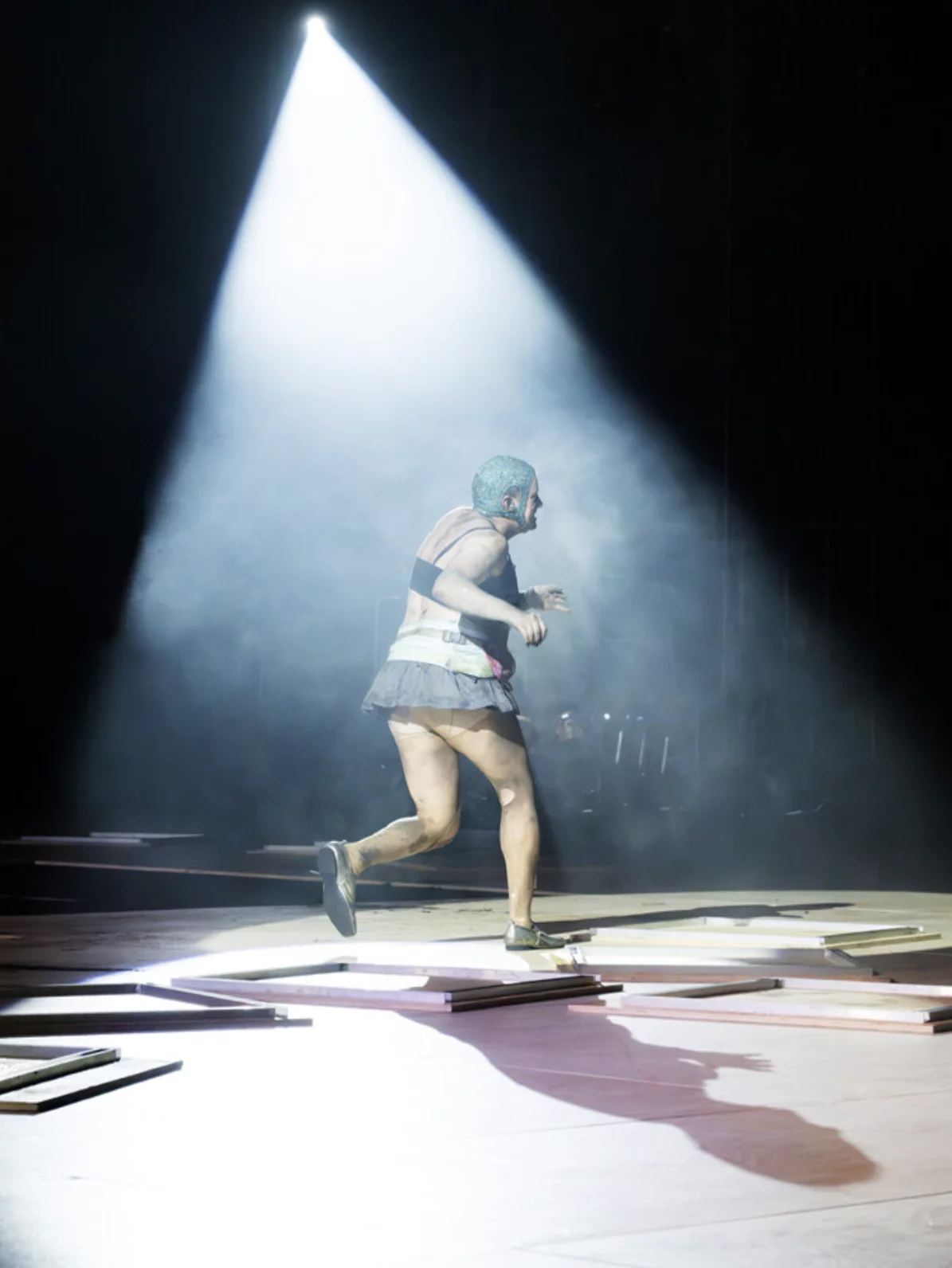
At the same time, Kosky keeps the space almost completely bare. No theatrical gimmicks, screens, projectors, or additional props. An empty stage, light, sound, and people. There’s nothing to distract the audience, and nowhere to hide. But gradually, another boundary disappears: the one between what is happening around Lear and what is happening inside him. Kosky transforms the performance into an almost psychedelic experience, where reality and consciousness exist simultaneously. In one scene, Lear frantically darts between rectangles of light appearing on the empty stage, trying to find a place where he can finally come to rest. But there is no such place anymore. We are no longer merely observing from the sidelines as the king loses his mind. Kosky places us inside his head—and, if it still exists, his heart.
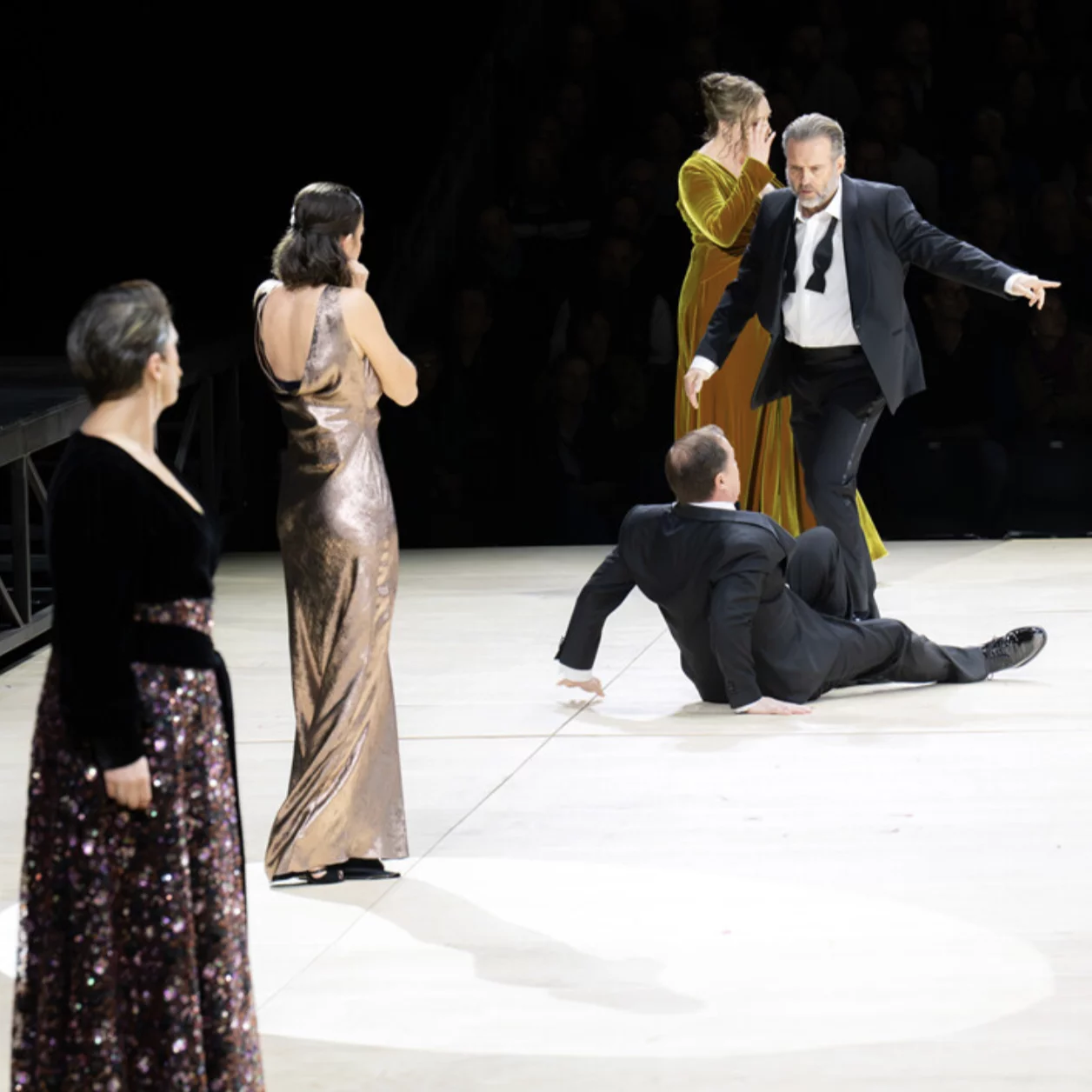
And then the famous storm scene begins. Conductor Nicholas Carter describes it as one of the central moments of the score. It’s not just a thunderstorm raging over the unfortunate king. The storm is raging inside Lear’s head. Reiman conveys this through sound, while Kosky does so through space and light. For several minutes, the orchestra builds to a massive crescendo. The sound grows denser and louder until it turns into a physical force of nature. Carter recalls rehearsals for another production of *King Lear*, which Raiman himself attended. Nothing was ever enough for the composer. He demanded of the percussionists: “Louder! Louder! Much, much louder!” Especially from the suspended bronze plates.
And here, the Tempelhof hangar proves to be not only a directorial stroke of genius, but also the perfect musical instrument. In a conventional opera house, there’s a physical limit to this madness. Here, the sound has space to run wild. The percussion produces rolls of thunder that make your nerves tremble; then everything suddenly plunges into absolute silence, and a moment later, a wave of panic-inducing sound crashes over you once more.
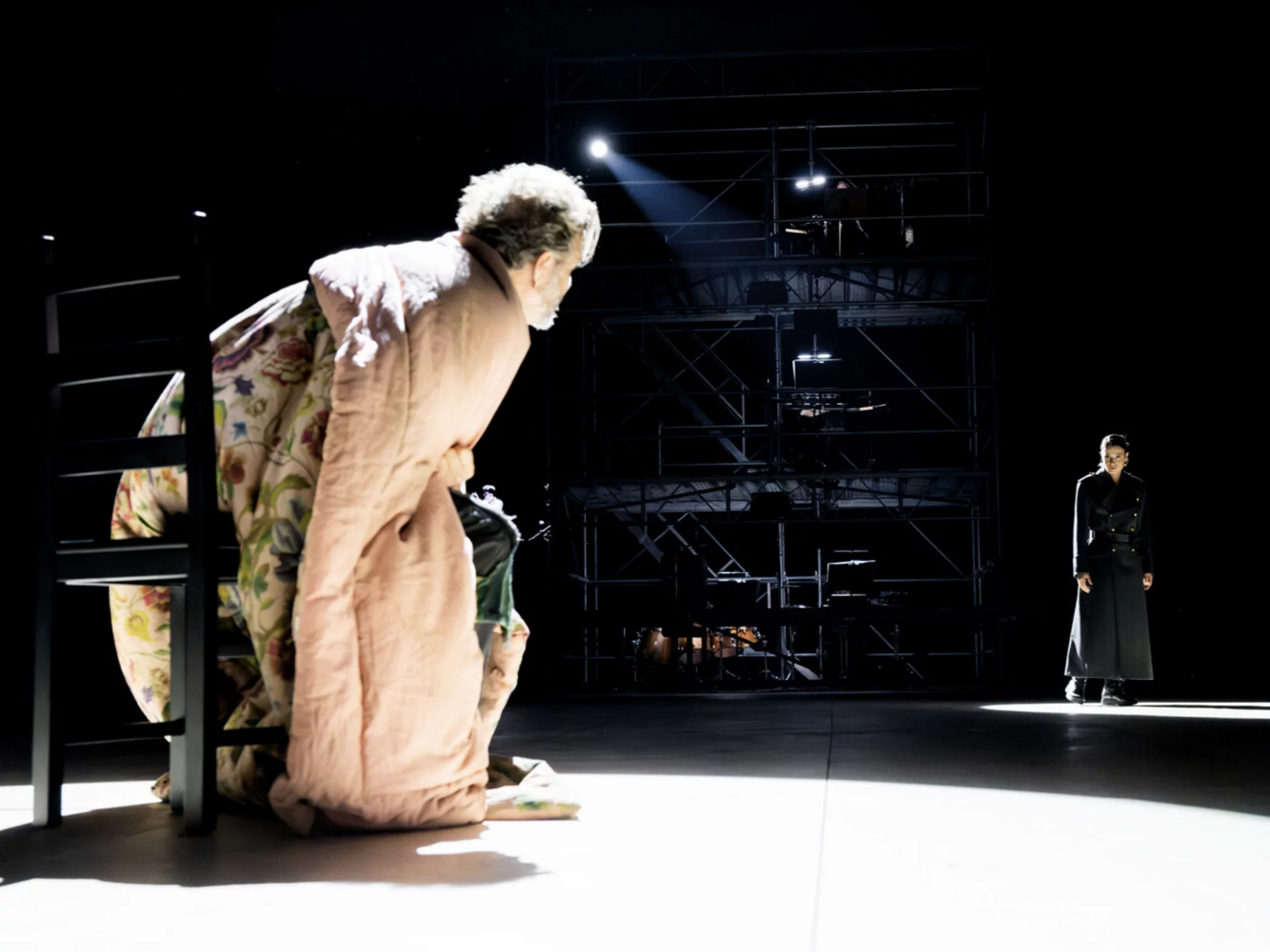
How Kosky works with actors is a topic for another conversation. There’s no operatic artifice. Everyone performs as if they were constantly in a close-up in a movie. The slightest facial expression, a flick of the fingers, a turn of the head, a gait—even the movement of the daughters’ dresses—matters. American baritone Scott Hendricks, in the role of Lear, gradually undergoes a transformation from the absolute ruler of the world to a broken man. His Lear doesn’t just go mad. He physically falls apart before our very eyes, along with the order he created. And, of course, American countertenor Arie Nussbaum Cohen as Edgar, in a denim skirt and a green sequined cap. After all of Raimann’s sonic aggression, his voice—of divine beauty and purity—feels like a healing balm.
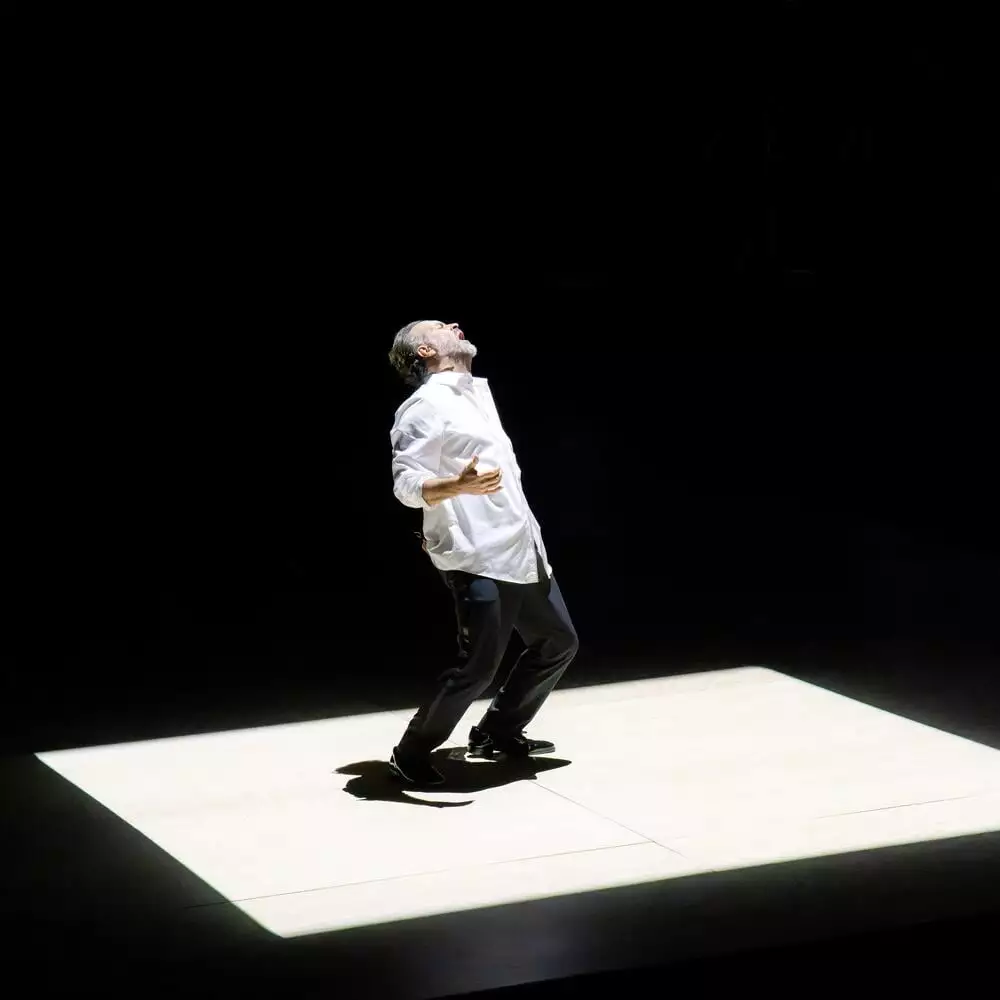
Kosky has another disturbing thought. In *Lira*, there are practically no mothers. There are fathers, daughters, sons, heirs, and men who rule over families and states. Kosky calls nature the absent mother of this story, and suggests we hear the storm as her heart-rending cry. The family becomes a microcosm of the state. Love turns into proof of loyalty, and refusal to bow down into betrayal. In the finale, Lear is left with the dead Cordelia. And then he carries her body off the stage in his own royal mantle. The mantle, which until recently was a symbol of his power, becomes a funeral shroud for his daughter.
But amid all this British chaos, Kosky still leaves a tiny glimmer of hope. Kent, Edgar, and Albany are alive, which means there is some kind of tomorrow. But perhaps the most terrifying thing about his *Lear* is not the madness, nor even the number of dead bodies. It is the speed with which order—which seemed eternal—disappears. The premiere of *Lear* ended with applause only in name. The opera tears open the chest and takes root there with thorns.
I left the hangar at night and couldn’t fall asleep until five in the morning. Rayman’s music kept booming monstrously somewhere inside me, and the image of the royal robe—which had turned into a pumpkin—remained before my eyes. Sorry, a shroud.
Barry Kosky’s production of *King Lear* runs through October 3, 2026. Performances are taking place at the Tempelhof Airport complex in Berlin. Tickets can be purchased via the link.