 Loading...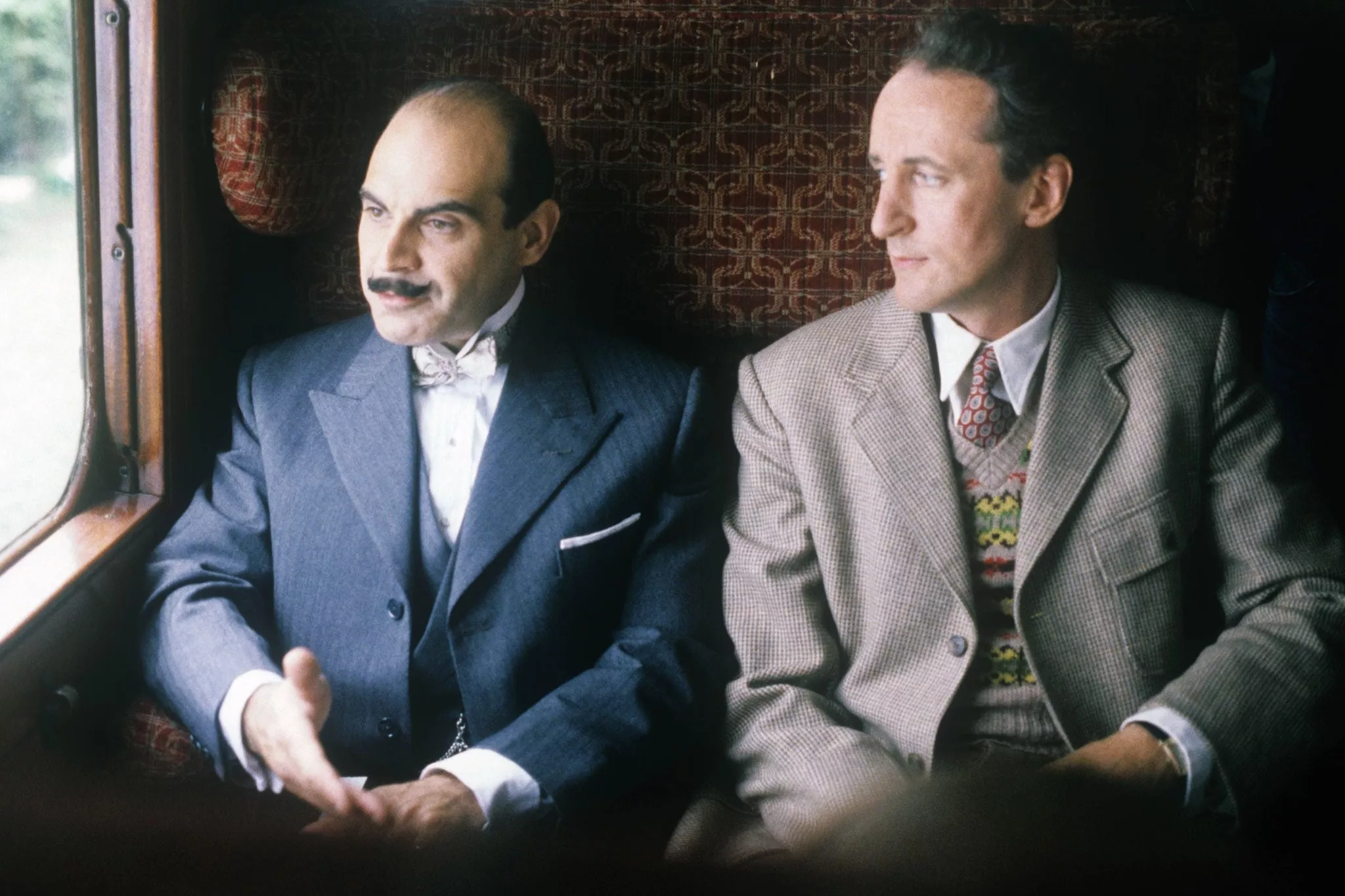
They say David Suchet used to clamp a coin between his buttocks to achieve that signature Poirot gait—a bit penguin-like, very affected, and exaggerated.
After landing the role of a detective at age 44, he played the part for nearly a quarter of a century—and became so identified with the character that he even wrote a book titled *Poirot and Me*. And while Agatha Christie herself disliked her creation and called him a “tiresome, egocentric scoundrel,” Souche cherished and defended him—including against various speculations.
“Some people think he’s gay, but no! No, Poirot is definitely not gay. He fascinates me because he has a very unique kind of sex appeal. Actually, he’s not sexy at all, is he?”
David Sushe
And there are reasons for that—reasons that weren’t even made up by Agatha Christie. In fact, it happened… because of Edgar Allan Poe.
The Unmaterialistic Genius: From Vidocq to Sherlock Holmes
Of course, sleuths and tricksters of various kinds have long been a part of literature—but it is generally believed that Edgar Allan Poe invented the detective genre itself with his story “The Murders in the Rue Morgue.” And with it came the first literary detective, Eugène Dupin, in 1840.
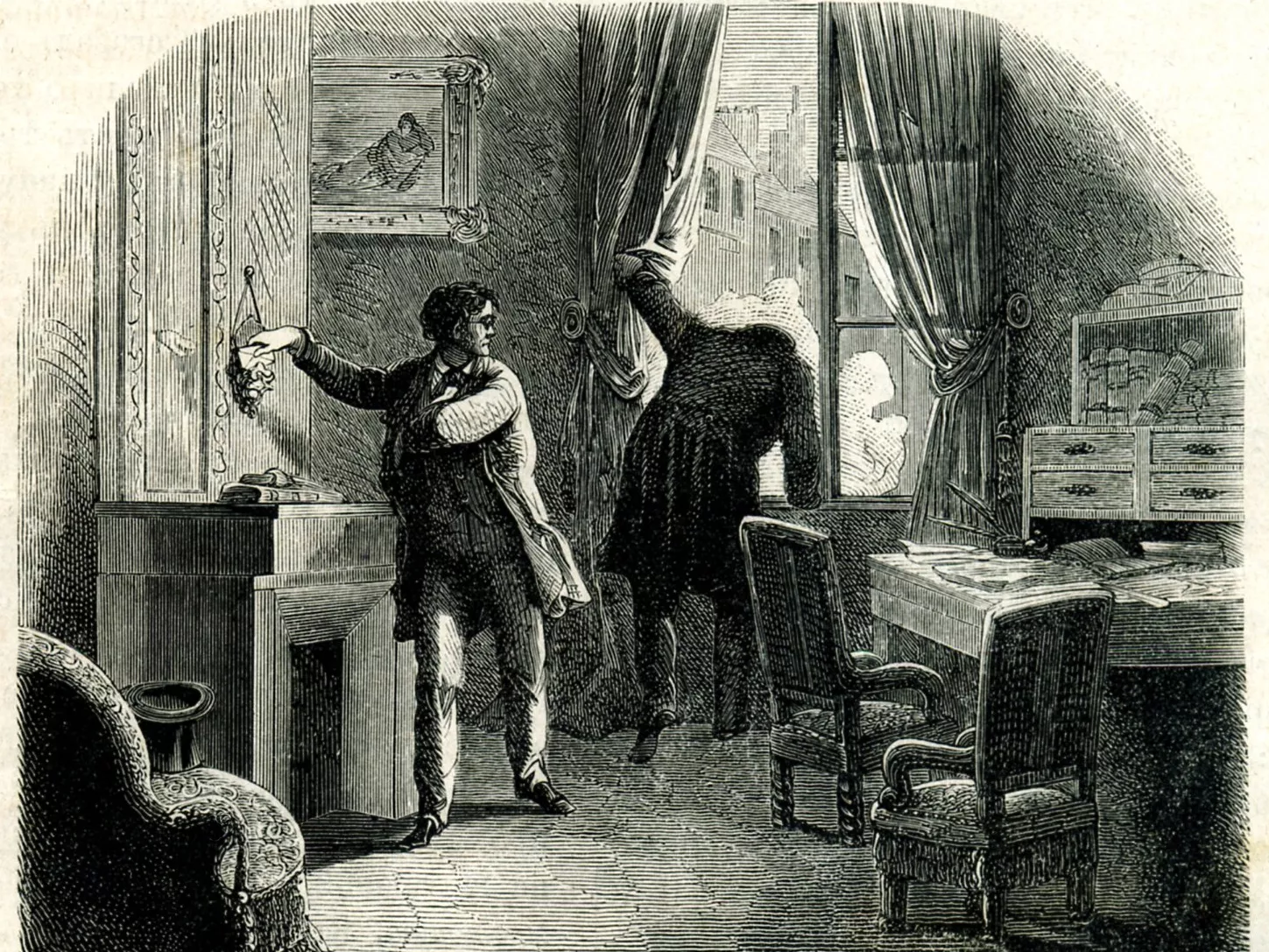
The clever Dupin never held a job; he took on cases as his heart and talent dictated. And so, in “The Murders in the Rue Morgue,” he comes across a report in the newspapers about a strange case: no one had broken into a locked room from which screams were heard; only a razor was found at the crime scene. If you’ve never read this story, we won’t spoil the ending — let’s just say that it’s so unusual that even Kuprin believed that the entire Conan Doyle “fits, along with his Sherlock Holmes, like a glove, into this small, brilliant work by E. Poe.”
Dupin had no lady love, but for a very practical reason—he was simply too poor to get married:
“Thanks to the generosity of his creditors, Dupin had retained a small portion of his father’s inheritance, and, living on his annuity and practicing the strictest frugality, he managed to make ends meet, indifferent to life’s temptations. The only luxury he allowed himself—books—was readily available in Paris.”
“The Murder on Morg Street”
Did Edgar Allan Poe invent this character himself? Well, there is a theory that he was inspired by François Vidocq—a French criminal who later became a detective. Vidocq worked in Paris until 1833, and even by his own admission, he was a dissolute man: sometimes stealing, sometimes earning money, he would spend every last penny in brothels.
Dupin says that Vidocq lacked “any ability to think systematically” and was overly “impetuous in his investigations”—perhaps because of his overly emotional nature. No one trusted the words of a former thief and murderer: everything we know about Vidocq comes from his controversial autobiography, which even Pushkin mocked. Dupin, on the other hand, was a huge hit with readers—noble poverty prevailed.
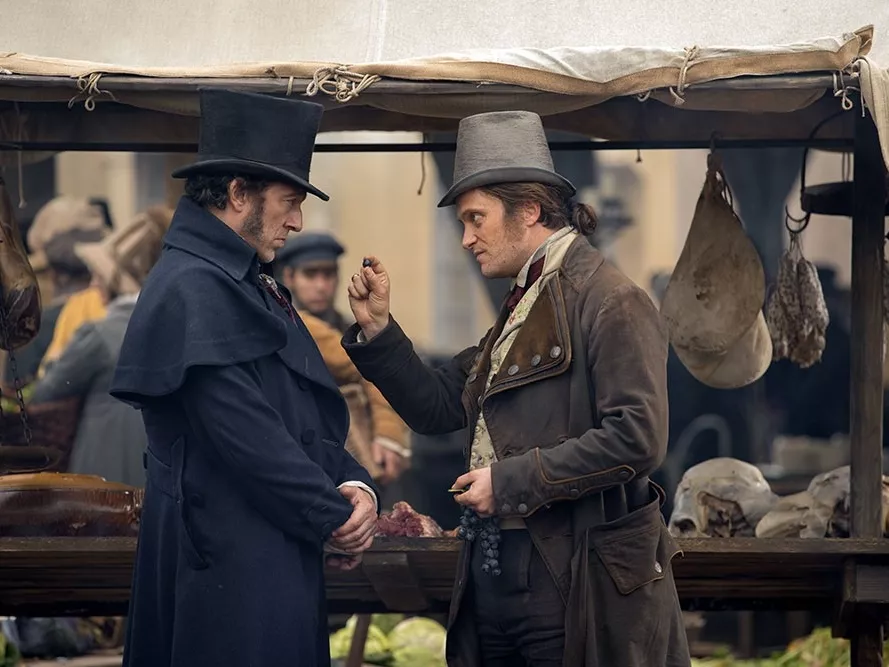
In 1887, Sherlock Holmes made his debut with the publication of the short story “A Study in Scarlet.” At the time, Conan Doyle was twenty-seven years old, but he had already grasped the principle and decided to create a character who was as chaste as possible, one whom nothing would distract from deduction. Moreover, the story was set in Victorian England, with its myriad restrictions on sexual behavior. The only thing Holmes could have allowed himself was a wife he’d married in church. But marriage clearly didn’t fit the image, and it wouldn’t have allowed for such a close relationship with the narrator, his neighbor on Baker Street, Dr. Watson. So, in the end, the detective treats women with sympathy, but also with caution:
“In his dealings with women, he was remarkably gentle and courteous. He did not love women and did not trust them, but he always remained a chivalrous adversary.”
“Sherlock Holmes on His Deathbed”
By the way, many film adaptations exploit this trait, portraying Holmes as practically in love with Watson—which, of course, is a far cry from what Conan Doyle might have written.
Hercule Poirot, the Hedonist and Perfectionist
Poirot appeared thirteen years after the publication of the first Sherlock Holmes novel. A Belgian living in London, he borrowed much from his English counterpart: a dim-witted friend against whom he could shine (Hastings and Watson), and a secretary-housekeeper (Mrs. Hudson and Miss Lemon, tormented by the whims of geniuses), and a police officer with whom he sometimes cooperates and sometimes competes (though Inspector Jepp is far more likable than the utterly dim-witted Lestrade).
The canonical description in the book doesn’t leave much room to portray him as a romantic hero: Hercule Poirot is short in stature, with an “egg-shaped” head, black hair, green “cat-like” eyes, and—of course—meticulously groomed mustache. The witty Substack is already conducting a “research analysis”: an egg + a photograph of the handsome Edward Blümel—well, yes, they don’t look alike at all.
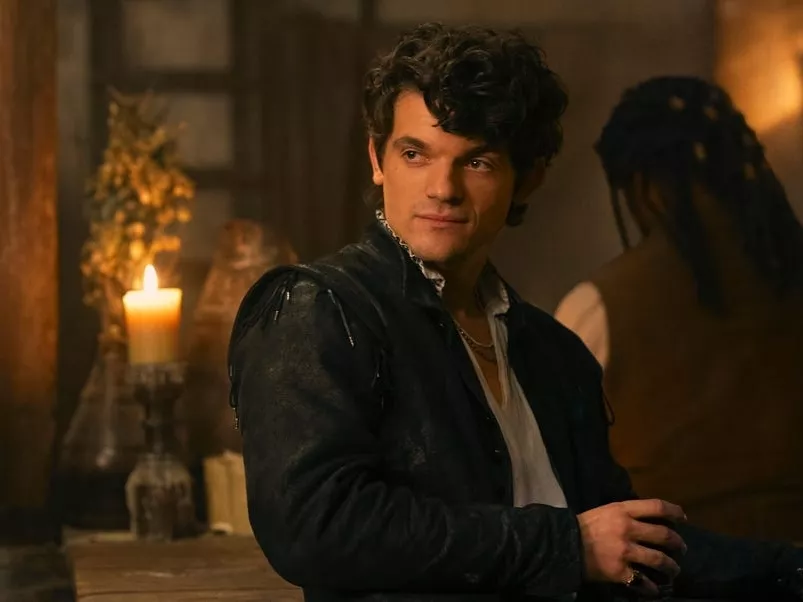
The original Hercule Poirot couldn’t have been all that sexually active, partly because of his age: due to a mistake by Agatha Christie, he was over a hundred years old by the end of the series! “What a mistake I made by making Hercule Poirot an old man from the very beginning. I should have gotten rid of him after three or four books and started over with someone younger,” she lamented. So perhaps she would have liked a younger Hercule.
In 1989, filming began in England on the cult classic series *Agatha Christie’s Poirot*—and it became abundantly clear what made the story so charming. Each episode—slow-paced, even meditative, with that quintessentially British, sharp wit—served as a remedy for viewers’ anxieties, an evening ritual. Even the author of these lines used to fall asleep as a child at the first chords of the saxophone theme song, just as a boxer runs into the ring at the bell. Needless to say! “Poirot” never offends, never shocks—they even apply a rosy tint to the makeup of the actors playing corpses so as not to scare anyone.
Passions, of course, run high: romantic entanglements, murders of jealousy—and Poirot has a knack for spotting romantic conflict before it even begins. In the episode “The Rhodes Triangle,” he warns the cuckolded wife very early on (though there’s a plot twist here) that she should leave the resort if she values her life. He is only human: he can appreciate the figure of a young neighbor, is emphatically courteous to ladies, and may watch a femme fatale with admiration. But their beauty is still not as interesting to him as a box of chocolates and well-starched collars.
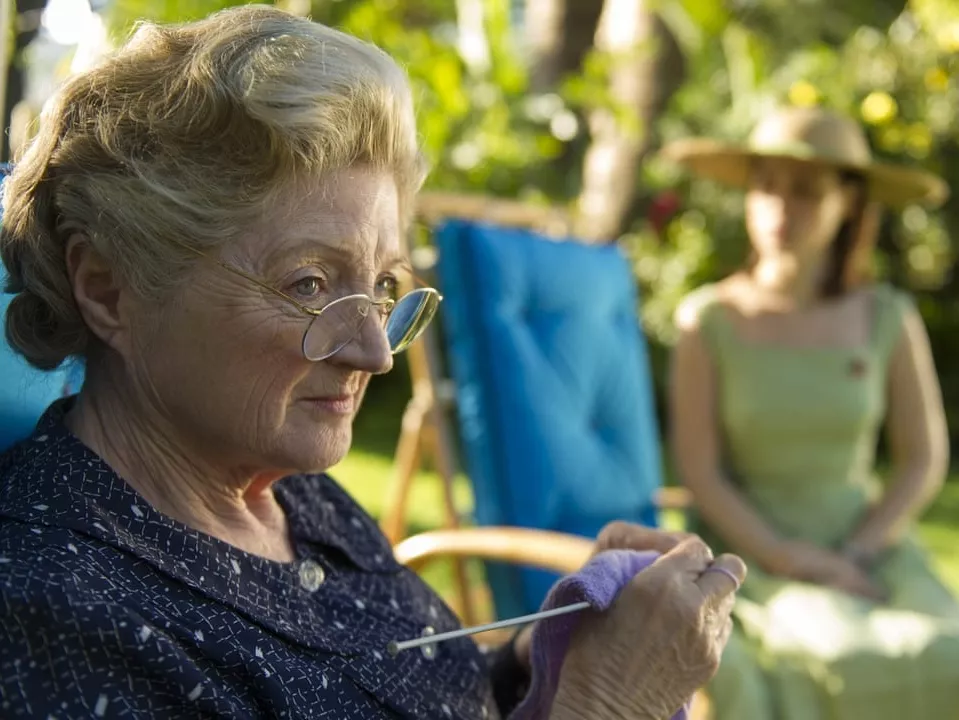
Agatha Christie successfully adapts this trope to female characters as well. In 1930, Miss Marple makes her debut—the brilliant “blue-stocking” of detective fiction. Solving crimes is as easy for her as filling in a Sudoku puzzle. She has a nephew and grandnephews, and really, nothing prevented this cozy, knitting-loving grandmother from having a family of her own. Or—if a partner really got in the way of “the work of the little gray cells” (as Poirot called his craft)—they could have made Mrs. Marple a widow. But no, the tradition is already well-established: for sober cynicism, you need solitude and a certain… emotional wound, perhaps?
Elusive Beauty: Irene Adler and the Birth of Film Noir
In the characters of Poirot and Miss Marple, as Agatha Christie portrayed them, there is no trait whatsoever that would prevent one from forming a relationship with them—except, perhaps, their pedantry and a certain capriciousness; but who has ever let that get in the way! It’s all about tradition—the driving force behind the Puritan detective story, which allows for no liberties, and the figure of the lone genius. And this is most convincingly demonstrated in the United States.
It’s the 1930s, and in contrast to the slow-paced English style, the “hardboiled” detective genre emerges across the ocean. Another decade later, movies began to be made, and the genre was dubbed “film noir”—here, chastity was no longer the norm, but rather a black car, rain, and a femme fatale who was bound to be the protagonist’s undoing. That said, hints of this can already be found in the works of Poirot and Sherlock.
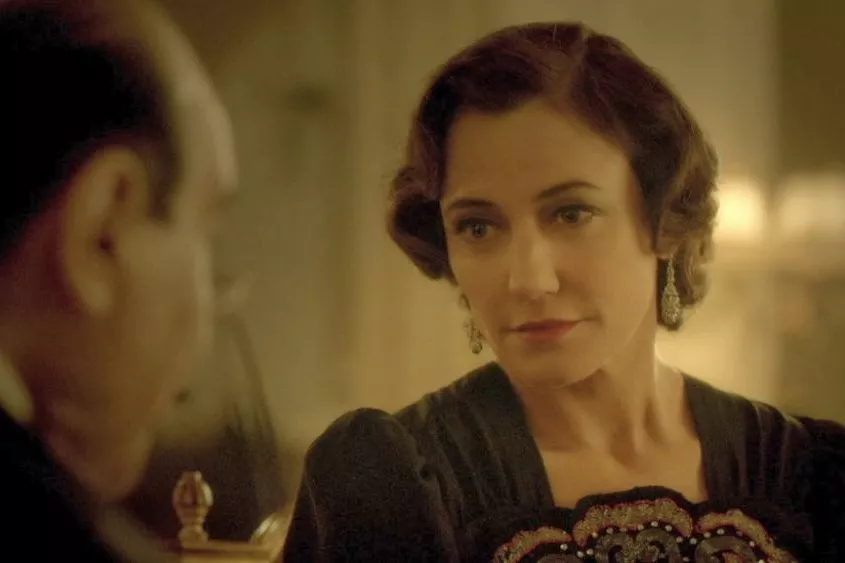
We all know about Sherlock’s fateful infatuation—the only woman who ever outwitted him—Irene Adler. No, no, of course you can’t trust someone like that, and you can’t build a bourgeois life with her—but what a passionate duel it is! Poirot has a lady like that, too—the Russian aristocrat Vera Rusakova (or Rossakoff, as the English call her). Unlike Holmes, this isn’t a case of admiration for her intellect, but a true instance of tender passion. It turns out that deep down, Poirot is an incorrigible romantic.
“Although nearly twenty years had passed since their last meeting, her magic still held sway. Even though her makeup now resembled a sunset painted by a theater set designer, and it was difficult to make out the woman beneath it, to Hercule Poirot she still remained the embodiment of luxury and seduction.”
“The Shore of Good Fortune”
But therein lies the key to why Agatha Christie spares London’s intellect, honor, and conscience from romantic sentiment: his passion for Vera causes Poirot’s moral compass to waver. In *Double Indictment*, he exposes her as a jewel thief, forces her to return the stolen goods, but does not turn her in to the police—and effectively allows her to leave England. That’s not how things are done.
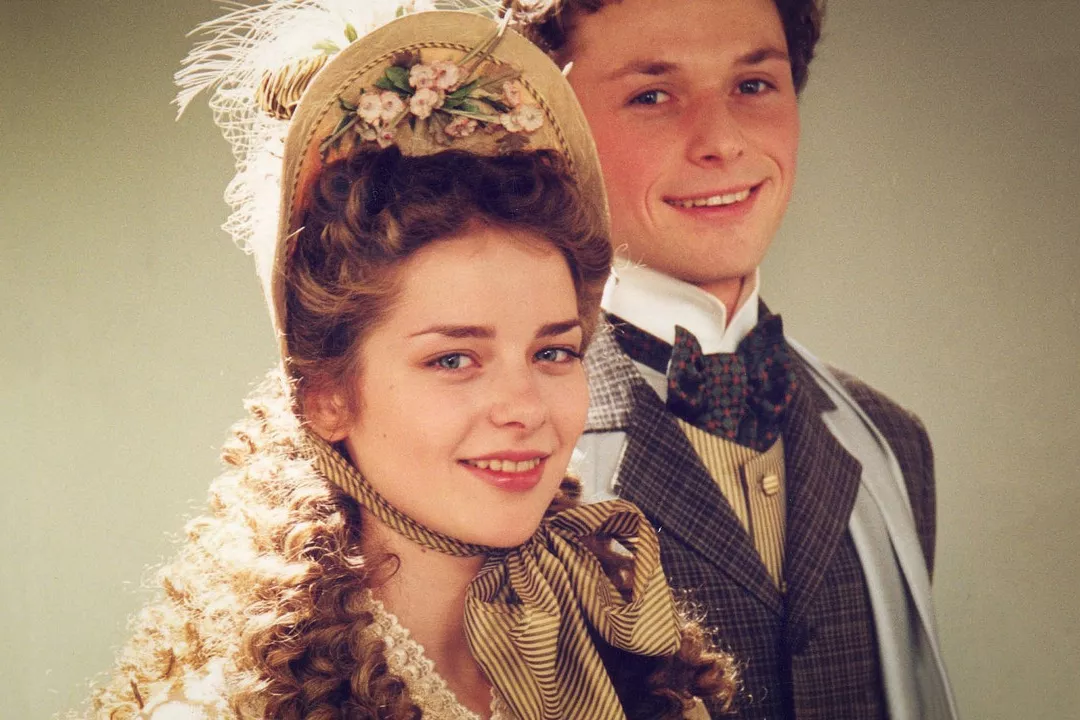
Boris Akunin depicted the death of the Victorian detective in his Fandorin saga. She —forgive the spoilers—dies in the very first novel, *Azazel*, along with Erast’s innocence. But he is a detective of the Russian Empire, not the British one, with his exotic adventures, a whole Don Juan-esque list of conquests, and an article by Oleg Menshikov. He won’t suffer from celibacy, but every subsequent woman is simply part of the next case, not a life partner. And that’s already noir.
Colombo’s Wife, Kamenskaya’s Husband, and Detective Duos
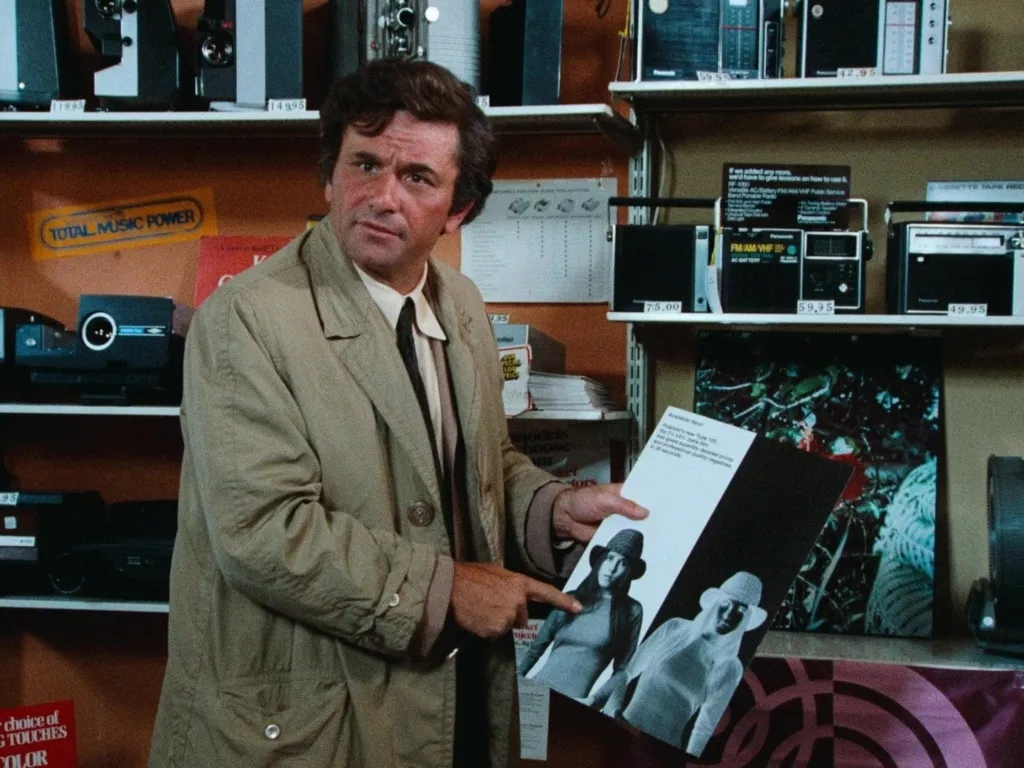
That said, “cozy” mysteries continued to thrive on screen. The creators of *Columbo* had the most fun with the trope of the wife—who seems to be there just for the sake of it, yet also doesn’t quite fit the mold. The detective, played by Peter Falk, is constantly getting her name mixed up (though he doesn’t have a name of his own to begin with)—one moment he’s faking a funeral to catch the killer, the next they have kids, then they don’t—you name it, but over the course of forty years, Columbo’s wife never actually appears on screen (not counting the disastrous spin-off *Mrs. Columbo*, in which Falk himself doesn’t appear).
While Britain watches as the LNER train carries Poirot off to his next case, detective duos are emerging in the U.S., between whom a “slow burn”—a romantic relationship that develops gradually—is taking shape. It all begins with the series *Moonlighting*, and in the ’90s, *The X-Files* makes its debut. A new genre blossoms in full force—the procedural—where you can lean on a colleague’s shoulder and sip black coffee together while poring over crime scene photos well past midnight. A new era begins, one in which mind games alone are no longer enough to entertain the discerning viewer.
And what about Russia? Oh, here in the ’90s, there’ll be a boom in our very own Miss Marples! The most famous of these female detectives, Colonel Anastasia Kamenskaya, does everything she can to avoid going to the registry office, listens to complex jazz, and smokes like a chimney. Marinina pairs her with Chistyakov—a mathematician and just as much of a weirdo—who makes her breakfast, suggests clues for solving cases, and talks about Fermat’s theorem. Of course, Kamenskaya eventually gives in, though their union is anything but ordinary.
Then the world will see a new wave of workplace dramas per se —drawn from the lives of doctors, chefs, lawyers, journalists, and just about everyone else. The only exception might be Dr. House, a sort of medical detective, who won’t be allowed to have a happy family ending.
And so the era of lone wolves—criminal geniuses who don’t waste time on nonsense—will fade into oblivion. And it won’t be coming back: the new “Hercule” confirms that in 2026, it seems everyone has to be very attractive, very sexy—otherwise, the ratings will be low, and anyway, it’s a “sad case of loneliness,” as the press calls it.
But is this case really that sad? And is it worth trying to “cheer it up”?…